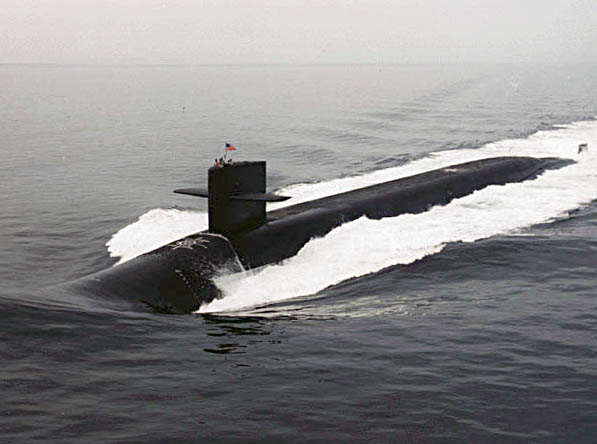
USS Kentucky (SSBN-737)
The USS Kentucky (SSBN-737) is an Ohio‑class ballistic missile submarine serving as a critical component of the United States’ nuclear deterrence strategy. As a platform capable of carrying Trident II D-5 ballistic missiles, she represents one leg of the nation’s nuclear triad. Commissioned in 1991, Kentucky combines advanced nuclear propulsion technology with a sophisticated weapons suite, ensuring a robust and survivable second‑strike capability in times of crisis . Her presence in the fleet underscores the continuous evolution of strategic naval warfare and the integration of cutting‑edge engineering with operational resilience.
Design and Construction Overview
Origins and Strategic Objectives
The Ohio‑class ballistic missile submarines were conceived during the Cold War as a vital element in maintaining a credible nuclear deterrent. The USS Kentucky was designed to operate stealthily in the deep ocean, remaining hidden beneath the waves while ready to launch a devastating missile salvo if necessary. This constant state of readiness aims to deter adversaries from contemplating a first strike, knowing that a responsive and decisive counter‑attack would follow almost instantaneously .
Construction and Commissioning
Built by the General Dynamics Electric Boat Division in Groton, Connecticut, Kentucky’s keel was laid on December 18, 1987. After a series of rigorous construction and integration phases, she was launched on August 11, 1990, and subsequently commissioned on July 13, 1991. Her construction incorporated advanced modular techniques and stringent quality control measures to ensure that the submarine could withstand the extreme pressures of deep‑water operations while maintaining exceptional stealth characteristics .
Technical Specifications and Capabilities
General Characteristics and Dimensions
The USS Kentucky is a prime example of the Ohio‑class design, combining robust dimensions with a focus on survivability and operational efficiency. Below is a summary of her key specifications:
| Specification | Value |
|---|---|
| Class | Ohio‑class Ballistic Missile Submarine |
| Displacement (Surfaced) | ~16,764 long tons (17,033 t) |
| Displacement (Submerged) | ~18,750 long tons (19,050 t) |
| Length | 560 ft (170 m) |
| Beam | 42 ft (13 m) |
| Draft | ~36.5 ft (11.1 m) |
| Crew | Approximately 15 officers and 140 enlisted (operated with dual crews) |
These dimensions are engineered to optimize interior volume for machinery, living spaces, and weapon systems, all while maintaining a streamlined form that minimizes detection in hostile environments .
Propulsion and Powerplant
At the heart of Kentucky’s operational prowess is a single nuclear reactor—a pressurized water reactor (PWR) that provides virtually unlimited endurance at sea. The reactor’s output is channeled through advanced geared turbines that drive a single, high‑efficiency propeller. This propulsion system delivers an estimated 60,000 shaft horsepower (shp), enabling the submarine to cruise at speeds in excess of 25 knots while operating with exceptional silence and low acoustic signatures. This combination of power and quiet operation is pivotal for long-duration deterrence patrols conducted far beneath the ocean surface .
Armament and Missile Systems
The primary mission of the USS Kentucky is strategic deterrence, and her armament configuration reflects that role:
- Missile Tubes and Ballistic Missiles: Kentucky is outfitted with 24 missile tubes designed to launch Trident II D-5 ballistic missiles. These missiles have intercontinental ranges and employ advanced guidance systems, ensuring high accuracy and reliability in any strategic engagement. The missile system’s design allows for rapid launch while the submarine remains in a covert posture.
- Torpedo Armament: In addition to her missile loadout, Kentucky is equipped with Mk-48 torpedoes. These heavy torpedoes provide self-defense capabilities against enemy submarines and surface vessels, adding an extra layer to the vessel’s defensive systems.
This balanced armament ensures that Kentucky can serve both as a deterrent and as a platform ready to counter evolving underwater threats .
Onboard Systems and Crew Operations
Operating a ballistic missile submarine demands sophisticated sensor, navigation, and communication systems. USS Kentucky is equipped with:
- Advanced Sonar and Navigation Systems: To ensure optimal underwater navigation and threat detection, she utilizes both passive and active sonar arrays. In combination with inertial navigation systems, these sensors enable precise positioning and environmental awareness in the deep ocean.
- Communications: A suite of secure communication systems links Kentucky to command centers and allied assets, allowing for real‑time data exchange even during submerged operations. This network‑centric capability is essential for coordinating the broader strategy of nuclear deterrence.
- Crew Operations: The integral role of the vessel is supported by a highly trained crew. Operating under a two‑crew system (commonly referred to as Blue and Gold crews), the submarine maintains near‑continuous patrol readiness. This round‑the‑clock crew rotation maximizes both operational tempo and the well‑being of the crew by providing adequate rest and recovery periods .
Operational Role and Strategic Significance
Strategic Deterrence and Nuclear Triad
The USS Kentucky is designed to function as a “boomer” in the United States’ naval arsenal—a key deterrent against potential adversaries. Part of the nuclear triad, she ensures that even in the event of a catastrophic first strike, the U.S. retains a survivable second‑strike capability through her submerged ballistic missile systems. The sheer range and destructive power of her Trident II missiles form a critical counterbalance in global strategic stability, deterring hostile actions through a policy of assured retaliation.
Patrol Operations and Stealth Capabilities
Operating in complete secrecy beneath the ocean’s surface, Kentucky conducts extended deterrence patrols that can last months. Her stealth design, combined with advanced acoustic suppression technologies, minimizes her detectability by enemy sensors. This silent service is a testament to the sophistication of Ohio‑class submarines and positions Kentucky as an enduring symbol of resilient national defense .
Mission Flexibility and Modernization
Beyond her nuclear deterrence role, USS Kentucky is periodically updated with modern technology and systems to extend her operational life. Upgrades often include improvements in command and control, navigation, and communications systems. These continual enhancements ensure that even decades into service, Kentucky remains compatible with emerging threats and technological advancements, thereby retaining her strategic relevance in an ever‑changing geopolitical landscape .
Modernization and Future Upgrades
Command and Control Enhancements
In order to keep pace with the rapid evolution of digital warfare and cyber threats, USS Kentucky has seen significant updates in her command and control architectures. These improvements allow for more secure data transmission and integration with joint forces, ensuring that real‑time intelligence is available for strategic decision‑making. Enhanced computational platforms, modernized link‑4 secure communication systems, and state‑of‑the‑art electronic warfare capabilities all contribute to Kentucky’s improved responsiveness and resilience .
Stealth, Sensor, and Communication Systems
Emerging threats and advancements in detection technologies have driven efforts to further reduce the acoustic signature of Ohio‑class submarines. Future upgrades will likely focus on enhanced stealth coatings, sensor array improvements, and advanced countermeasure systems. These upgrades are critical to maintaining the survivability of ballistic missile submarines in increasingly sophisticated anti-submarine warfare environments. Ongoing investments in research and development are expected to extend Kentucky’s service life by ensuring her systems remain at the forefront of naval technology .
Conclusion
The USS Kentucky (SSBN-737) stands as an enduring testament to the excellence of U.S. naval engineering and strategic deterrence doctrine. With its robust nuclear propulsion system, advanced missile armament, and highly capable onboard sensors and communication networks, Kentucky is a linchpin in the nuclear triad—ensuring a secure and stable deterrent posture. As technological advancements pave the way for modernization, Kentucky’s evolving capabilities promise to keep her at the cutting edge of underwater warfare, ready to meet both current and future challenges.
.jpg)