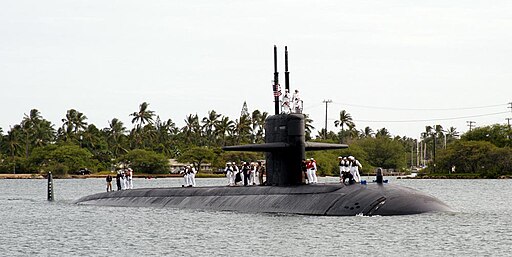
USS Key West (SSN-722)
The USS Key West (SSN-722) is a Los Angeles‑class nuclear-powered fast attack submarine renowned for its balance of stealth, speed, and tactical versatility. Since her commissioning in 1987, Key West has operated as an agile undersea platform capable of intelligence gathering, anti-submarine warfare, and precision strike operations. Named after Key West, Florida, the submarine exemplifies decades of technological innovation combined with rugged operational performance that is vital to maintaining maritime superiority.
History and Design Evolution
Origins and Strategic Role
Conceived during a transformative period in Cold War naval strategy, the Los Angeles‑class submarines were designed to counter emerging underwater threats while maintaining the ability to project power via offensive strikes. USS Key West was built to operate undetected at great depths—capable of interfering with enemy communications and targeting systems while remaining a formidable threat with an integrated arsenal of torpedoes and cruise missiles. This dual mission of stealth and striking power underpins her enduring strategic value in a changing naval landscape.
Construction and Commissioning
The keel for USS Key West was laid down on July 6, 1983, at Newport News Shipbuilding and Dry Dock Company in Virginia. Launched in July 1985 and commissioned on September 12, 1987, Key West quickly established her reputation through numerous deployments and rigorous training exercises. Throughout her service, the vessel has benefited from incremental upgrades to her systems, ensuring that she remains at the forefront of undersea warfare technology.
Technical Specifications and Capabilities
General Characteristics and Dimensions
The USS Key West is built with a careful balance of size, strength, and hydrodynamic efficiency to optimize underwater performance. Below is a summary of her principal technical parameters:
| Specification | Value |
|---|---|
| Class/Type | Los Angeles‑class nuclear‑powered fast attack submarine |
| Displacement | ~5,800 tons (surfaced) / ~6,200 tons (submerged) |
| Length | 110.3 meters (361.9 feet) |
| Beam | Approximately 10 meters (32.8 feet) |
| Draft | 9.4 meters (30.8 feet) |
| Complement | Approximately 16 officers and 127 enlisted personnel |
The vessel’s dimensions facilitate a compact, hydrodynamic hull that minimizes acoustic signature, a critical factor in remaining undetected during covert operations.
Propulsion System and Performance
At the heart of USS Key West lies a robust nuclear propulsion system that affords material endurance and nearly unlimited range at sea. The key elements include:
- Nuclear Reactor: Powered by a single S6G pressurized water reactor, the propulsion system ensures that the submarine can operate submerged for extended periods without refueling.
- Turbine and Shaft Assembly: Coupled with the reactor are two steam turbines that drive a single propeller. This setup produces approximately 35,000 shaft horsepower, propelling Key West to speeds of around 20 knots on the surface and exceeding 25 knots while submerged.
- Acoustic Suppression: Advanced isolation techniques integrated into the propulsion system help to reduce noise, enhancing the vessel’s stealth during operations in contested environments.
Armament and Offensive Systems
USS Key West is outfitted with a sophisticated array of weaponry, enabling it to perform multiple mission types from direct engagements with enemy submarines to launching precision land-attack missiles. Key features include:
- Torpedo Tubes: Four 21-inch torpedo tubes provide the platform for launching Mk 48 Advanced Capability (ADCAP) torpedoes. These weapons are essential for anti-submarine warfare as well as self-defense against surface threats.
- Vertical Launch System (VLS): One of the distinguishing features of USS Key West is her capability to deploy Tomahawk Land Attack Cruise Missiles (TLAMs) via a 12-tube vertical launch system. This allows for high‑precision strikes against land-based targets from beneath the waves.
- Reload Capability: The submarine’s design permits the storage and rapid reloading of additional weapons, ensuring readiness even during prolonged engagements.
Sensor, Communication, and Navigation Systems
A state‑of‑the‑art sensor suite is crucial to the operational effectiveness of USS Key West. Her systems include:
- Sonar Arrays: Key West employs both active and passive sonar systems—a combination of bow-mounted arrays and towed arrays—that provide comprehensive detection of both surface and underwater targets.
- Periscopes and Electronic Systems: Although an attack submarine typically operates deep beneath the surface, advanced periscopic systems offer situational awareness when nearing or emerging from periscope depth. Integrated electronic warfare systems and signal intercept receivers further assist in identifying and countering potential threats.
- Navigation and Communication: High‑precision inertial navigation systems paired with secure, network‑centric communication links ensure that the submarine can maintain operability even under the most challenging environments.
Operational Capabilities and Deployments
Stealth and Underwater Performance
Stealth is the cornerstone of USS Key West’s tactical philosophy. The submarine’s refined hydrodynamic shape, combined with advanced acoustic dampening methods, greatly reduces the noise generated by onboard machinery. These features, along with deep-diving capabilities that exceed 800 feet (243 meters), allow Key West to traverse enemy-patrolled waters with minimal risk of detection. Her quiet operational profile is a crucial asset during intelligence collection, reconnaissance missions, and surprise offensive operations.
Tactical Versatility and Mission Flexibility
USS Key West’s design permits a broad spectrum of mission profiles. Whether it is tracking enemy submarines, launching precision strikes on land targets, or gathering critical signals intelligence, the submarine is engineered for dynamic adaptability. With integrated weapons systems and staff rotation practices that enable overlapping, continuous deployment cycles, the vessel has demonstrated its operational excellence through numerous exercises and real-world missions across the Pacific and Atlantic theaters.
Deployment History
Throughout her service life, Key West has been a constant presence in areas of strategic importance. The submarine’s deployments have included routine deterrence patrols, special operations exercises, and joint fleet operations. Each mission not only reinforces the United States Navy’s commitment to undersea warfare superiority but also highlights the adaptability and reliability of the Los Angeles‑class design.
Modernization and Upgrades
Enhancing System Integration
Over the decades, USS Key West has undergone periodic modernization programs to update and integrate emerging technologies. Upgrades have focused on areas such as sensor enhancements, digital processing capabilities, and improved command and control systems. These enhancements ensure that the vessel can counter modern detection techniques and operate seamlessly within today’s network‑centric warfare environment.
Continued Operational Relevance
Investments in advanced acoustic stealth technology and powerplant efficiency have ensured that Key West remains both competitive and survivable in the face of evolving underwater threats. While emerging submarine classes continue to push the envelope in technologies, USS Key West remains a testament to robust engineering and operational flexibility—a platform that continues to meet and exceed the rigorous demands of modern naval warfare.
Conclusion
The USS Key West (SSN-722) embodies the relentless innovation and tactical adaptability of the United States Navy’s submarine force. From her powerful nuclear propulsion system and multi-mission weaponry to her advanced sensor packages and quiet operating profile, Key West stands as a critical component of undersea warfare capability. Her ongoing modernization and impressive service record underscore the significance of the Los Angeles‑class design in safeguarding national security and maintaining maritime superiority.
