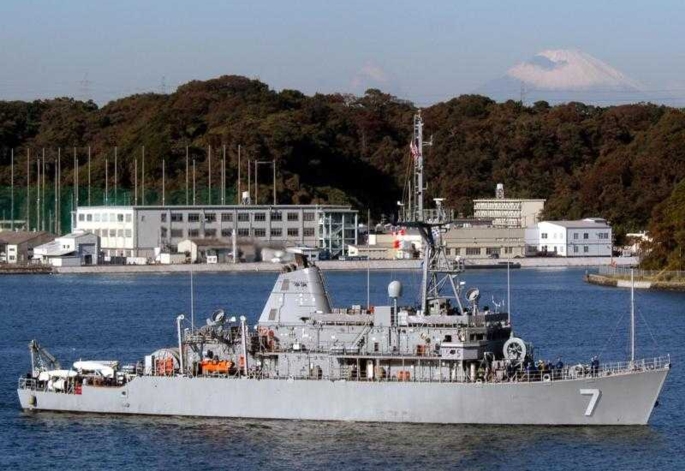
USS Patriot (MCM-7): An Avenger-Class Mine Countermeasures Ship
USS Patriot (MCM-7) is an Avenger-class mine countermeasures ship of the United States Navy, commissioned in December 1991. Built with a wooden hull sheathed in fiberglass, she combines minimal magnetic and acoustic signatures with advanced mine-hunting capabilities. Forward-deployed to Sasebo, Japan, Patriot enhances maritime security in the Western Pacific through precision detection, neutralization, and sweeping of naval mines.
Design and Construction
Hull and Signature Reduction
Patriot’s hull is constructed of low-magnetic–signature wood laminates coated in fiberglass, a design inherited from her Avenger-class sisters. This composite structure reduces her vulnerability to magnetic influence mines and limits acoustic noise, enabling covert mine countermeasures operations.
Key Milestones
- Keel Laid: 31 March 1987 at Marinette Marine, Wisconsin
- Launched: 15 May 1990
- Commissioned: 13 December 1991 in Charleston, South Carolina
General Characteristics
| Characteristic | Specification |
|---|---|
| Class & Type | Avenger-class mine countermeasures ship |
| Displacement | 1,367 long tons (1,389 metric tons) |
| Length Overall | 224 ft (68 m) |
| Beam | 39 ft (12 m) |
| Draft | 13 ft (4.0 m) |
| Propulsion | 4 × Isotta-Fraschini diesel engines; 2 controllable-pitch propellers; 2 rudders; 2 light-load electric motors |
| Maximum Speed | 14 knots (26 km/h) |
| Complement | 6 officers, 75 enlisted |
| Homeport | Sasebo, Japan |
All dimensions and performance figures are optimized for maneuverability and stealth in mine-laden waters.
Propulsion System
Diesel-Electric Configuration
Patriot uses a diesel-electric arrangement:
- Four medium-speed Isotta-Fraschini diesel generator sets
- Two controllable-pitch propellers driven by electric motors for low-noise transit
- Two rudders for tight turning and station-keeping
This setup provides redundancy, fuel efficiency, and precise speed control during mine-hunting tasks.
Armament and Mine Warfare Systems
Defensive Armament
While her primary mission is mine countermeasures, Patriot carries light arms for self-defense:
- 2 × M2 .50-caliber machine guns
- 2 × M60 7.62 mm machine guns
- 2 × Mk 19 40 mm automatic grenade launchers
Mine-Hunting and Neutralization Suite
Patriot’s specialized mine warfare equipment includes:
- AN/SQQ-32 high-frequency mine-hunting sonar
- AN/SLQ-48(V) remote mine-neutralization system
- AN/SQL-37(V)3 magnetic/acoustic influence sweep gear
- Oropesa Type 0 mechanical sweep
- MDG 1701 Marconi magnetometer
- Ship-board degaussing system to minimize magnetic signature
These integrated tools ensure precise detection, classification, and destruction of diverse mine types.
Sensors and Navigation
Patriot’s sensor and navigation suite enables safe operations in contested littoral zones:
- AN/SSN-2 Precise Integrated Navigation System (PINS) for real-time positioning
- AN/SPS-55 surface search radar for obstacle and vessel tracking
- AN/WSN-2 gyro compass for stable heading reference
Secure communications are maintained via UHF/VHF radios and satellite links to coordinate with fleet and allied forces.
Operational History
Forward Deployment
After initial service on the U.S. East Coast, Patriot was homeported at Ingleside, Texas, until 1994. That year she shifted to Sasebo, Japan, becoming one of four forward-deployed MCM platforms in the U.S. Seventh Fleet Amphibious Ready Group. Permanent overseas crew rotations began in 1996, cementing her role in Pacific maritime security.
Joint Exercises and Missions
Patriot routinely conducts:
- Annual mine warfare exercises (MINEX/EODEX) with the Japanese Maritime Self-Defense Force
- Combined operations with the Republic of Korea Navy during Exercise Foal Eagle
- Port visits and interoperability drills across Okinawa, Fukuoka, Pusan, Inchon, and Kagoshima
These activities sharpen allied readiness for a range of undersea threats.
Awards and Recognitions
Patriot’s crew has earned:
- Battle “E” Award (2006)
- Marjorie Sterrett Battleship Fund Award (2010)
Such honors reflect sustained excellence in mine-countermeasure operations and shipboard proficiency.
Crew Life and Training
Watchstanding and Roles
Patriot’s compact crew balances mission demands through:
- Rotational 6-hour watches for navigation, engineering, and sensor operations
- Dedicated mine warfare teams for sonar analysis and ROV deployments
- Maintenance divisions ensuring readiness of generators, propulsion, and sweep gear
Specialized Training
Sailors undergo rigorous qualification pipelines:
- Enlisted Mine Warfare Specialist (MW) training
- ROV pilot certification for the AN/SLQ-48(V) system
- Damage control, firefighting, and emergency response drills
This continuous training sustains peak performance during high-risk mine countermeasures missions.
Future Enhancements
To maintain tactical edge into the 2030s, proposed upgrades include:
- Integration of unmanned surface and sub-surface vehicles for remote mine reconnaissance
- Advanced processing algorithms for sonar data to improve automatic target recognition
- Hull-mounted acoustic decoys to protect against influence mines
These improvements will further reduce risk to ship and crew while expanding operational reach.
Strategic Significance
USS Patriot (MCM-7) embodies the Navy’s commitment to freedom of navigation in contested waters. Her unique combination of low-signature hull, precision sensors, and flexible mine warfare systems ensures that vital sea lanes remain open, allowing regional and global forces to maneuver safely—even in heavily mined environments.