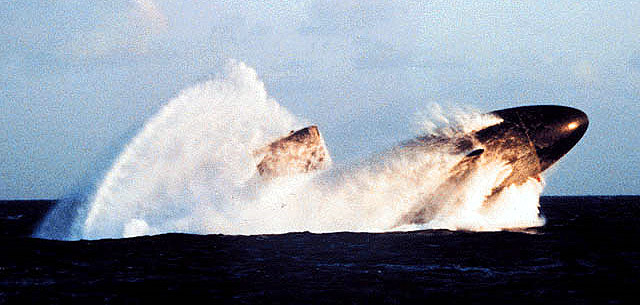
USS Springfield (SSN-761)
USS Springfield (SSN-761) is a Los Angeles–class nuclear-powered fast attack submarine commissioned in February 1993. Designed for stealth, endurance, and multi-mission flexibility, she operates in both open-ocean and littoral environments. Springfield’s missions include anti-submarine warfare, intelligence gathering, strike operations, and special-operations support. Her combination of proven hull form and modernized combat systems ensures relevance across shifting strategic demands.
Development and Construction
Origins of the Springfield
The Los Angeles class emerged in the late 1970s to replace aging Skipjack and Sturgeon boats. SSN-761 was authorized under fiscal year 1987 funding, part of a program emphasizing deeper diving depths, quieter machinery, and increased weapon load. Design refinements included improved hull hydrodynamics and expanded sensor arrays to meet emerging undersea threats.
Keel Laying and Commissioning
Keel laying took place at Electric Boat’s Groton shipyard in January 1991. Modular construction allowed parallel outfitting of forward, midships, and aft hull sections. After launch in December 1992, Springfield completed builder’s trials before entering service on February 6, 1993, ready to integrate into the Atlantic submarine force.
Design Features
Hull and Structural Design
Springfield’s teardrop hull uses high-yield HY-80 steel, optimized for minimal flow noise and hydrodynamic drag. Seven watertight compartments, each with independent life-support and damage-control fittings, enhance survivability. Shock-mounted equipment racks and resilient piping joints protect onboard systems from underwater shock pulses.
Acoustic Quieting Measures
Advanced anechoic tiles on the outer hull absorb active sonar pings and reduce acoustic signature. Machinery spaces employ raft-mounted diesel generators and electric drive motors with vibration-damping mounts. Skewed propeller blades and a specially canted stern plane further minimize cavitation noise at patrol speeds.
Propulsion and Powerplant
The S6G pressurized-water reactor provides unlimited endurance, driving steam turbines and twin pump-jet propulsors for ultra-quiet thrust. Reactor refueling is not required for the vessel’s initial 30-year service, cutting lifecycle maintenance costs. A permanent-magnet auxiliary motor supplies silent running capability during covert operations.
Sensor and Combat Systems
Sonar and Underwater Sensors
Springfield’s bow houses a wide-aperture spherical sonar array for passive detection of contacts up to 100 nautical miles away. Flank arrays along the sail and hull enable high-resolution bearing data in littoral zones. A towed array array optimized for deep water complements the hull arrays, granting full-spectrum acoustic awareness.
Fire Control and Navigation Systems
The AN/BYG-1 combat control system integrates sonar data, periscope inputs, and external targeting feeds to generate torpedo and missile firing solutions in under a second. Navigation combines ring-laser gyros, Doppler velocity logs, and GPS updates at periscope depth. An optronic mast houses low-observable, multi-sensor sighting for surface surveillance and electronic support measures.
Armament
Torpedo and Missile Systems
USS Springfield carries four 533 mm bow tubes and up to 25 Mk 48 Advanced Capability heavyweight torpedoes for anti-submarine and anti-surface warfare. Twelve vertical launch tubes forward of the sail accommodate BGM-109 Tomahawk cruise missiles, enabling precision strike against land targets from stealth depth.
Special Operations Support
A dedicated lock-out trunk and reconfigurable rear torpedo room allow deployment of up to 16 special-operations swimmers or unmanned undersea vehicles. Tailored communications suites provide secure data links with deployed teams and surface support vessels without exposing the submarine.
Crew and Habitability
Complement and Accommodations
Springfield’s crew consists of 15 officers and 117 enlisted submariners. Staterooms feature two-person berths with storage lockers, while enlisted berthing uses sound-isolated rack systems to reduce fatigue. Noise-dampening bulkheads and controlled lighting support round-the-clock operations.
Life Support and Endurance
An electrochemical oxygen generator and advanced carbon-dioxide scrubbers maintain air quality for up to 90-day patrols. Freshwater flash distillers and waste-heat recovery systems supply potable water and hot water for crew comforts. Provisions storage supports extended missions without frequent port visits.
Operational History
Since commissioning, USS Springfield has conducted Atlantic deterrent patrols, Arctic under-ice exercises, and joint operations with NATO allies. She has tracked advanced Soviet and foreign submarines, provided real-time intelligence from contested waterways, and launched Tomahawk strikes in live-fire drills. Regular overhauls at Newport News Shipbuilding integrate the latest upgrades to sensors and combat software.
Modernization and Upgrades
Under a tailored modernization program, Springfield has received:
- AN/BQQ-10(V)5 sonar processor with enhanced signal-processing algorithms
- Link-16 data-link integration for network-centric operations
- Photonic mast replacement offering high-definition day/night imaging
- Hull-mounted acoustic treatment updates to further reduce noise signature
These upgrades ensure SSN-761 remains interoperable within carrier strike groups and joint task forces.
Technical Specifications
| Specification | Value |
|---|---|
| Displacement (surfaced/submerged) | 6,927 t / 7,800 t |
| Length | 360 ft (109.7 m) |
| Beam | 33 ft (10.1 m) |
| Draft | 32 ft (9.8 m) |
| Test Depth | >800 ft (244 m) |
| Propulsion | 1 × S6G reactor; steam turbines; dual pump-jet |
| Speed | 25+ knots submerged |
| Endurance | 90 days; unlimited range |
| Crew Complement | 15 officers; 117 enlisted |
| Torpedo Tubes | 4 × 533 mm |
| Torpedoes | Up to 25 × Mk 48 ADCAP |
| Cruise Missiles | 12 × Tomahawk VLS |
| Sonar Suite | Bow spherical; flank arrays; towed array |
| Combat System | AN/BYG-1; optronic mast; inertial navigation |
| Special Operations Support | Lock-out trunk; UUV deployment capability |
Conclusion and Future Outlook
USS Springfield remains a cornerstone of undersea dominance, coupling proven hull design with incremental advancements in stealth, sensors, and strike power. As unmanned systems and AI-assisted decision aids mature, SSN-761’s open-architecture combat suite will enable rapid fielding of new payloads and tactics. Her enduring nuclear endurance and multi-mission flexibility will sustain strategic deterrence and covert operations well into the mid-21st century.
