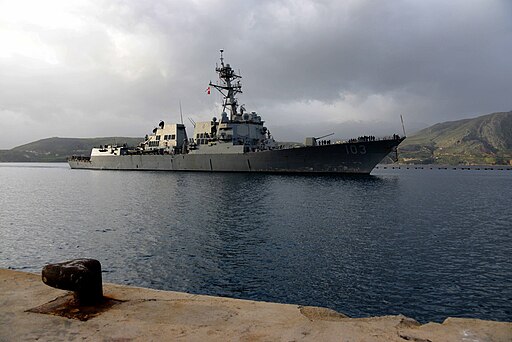
USS Truxtun (DDG-103)
USS Truxtun is the third Arleigh Burke-class Flight IIA guided-missile destroyer named for Commodore Thomas Truxtun. Commissioned in April 2009, DDG-103 combines Aegis air-defense prowess with multi-mission flexibility in anti-air, anti-surface, anti-submarine, and strike warfare. Homeported in Norfolk, Virginia, she supports carrier strike groups, ballistic-missile defense patrols, and multinational task forces around the globe.
Design and Construction
Hull Architecture
– Modular construction enabled major sections to be outfitted with piping, wiring, and machinery before final assembly. – Hull plating uses high-strength steels welded into a longitudinal framing system, optimizing torsional stiffness and damage resilience. – Angled surfaces on the superstructure reduce radar cross-section and support stealthy operations.
Survivability Features
– Kevlar-lined splinter protection surrounds engine and magazine spaces. – Automated fire-main network links sensors, pumps, and remote-operated valves to accelerate firefighting and flooding control. – Redundant electrical switchboards ensure vital systems remain powered even if one bus is compromised.
Dimensions and Displacement
| Characteristic | Specification |
|---|---|
| Full-load displacement | 9,200 long tons |
| Length overall | 510 ft (155.4 m) |
| Beam overall | 59 ft (18.0 m) |
| Draft | 31 ft (9.4 m) |
| Range | 4,400 nmi at 20 knots |
| Speed | In excess of 30 knots |
The slender hull and flared bow deliver superb seakeeping for sustained high-speed transits and precision maneuvering during concurrent flight operations and undersea warfare missions.
Propulsion and Performance
Gas Turbine Plant
– Four General Electric LM2500-GE gas turbines produce a combined 100,000 shaft horsepower. – Two controllable-pitch propeller shafts translate power into over 30-knot top speed. – CODOG (combined diesel or gas) architecture streamlines maintenance and reduces fuel burn at cruising speeds.
Endurance and Logistics
– Fuel capacity supports more than 4,400 nautical miles at 20 knots without refueling. – Onboard freshwater generation and food storage enable deployments lasting up to 60 days between replenishments. – Automated machinery control systems reduce watchstanding demands and optimize engineering plant efficiency.
Combat Systems and Armament
Vertical Launch System
– Two Mk 41 VLS arrays (32-cell forward, 64-cell aft) total 96 missile cells. – Supports a mixed loadout of Standard Missiles (SM-2, SM-6), Evolved Sea Sparrow Missiles, Tomahawk cruise missiles, RUM-139 ASROC anti-submarine rockets, and SM-3 interceptors for ballistic-missile defense.
Gun and Close-In Defense
– One 5-inch/62-caliber Mk 45 Mod 4 lightweight naval gun provides shore bombardment and surface-target engagement. – Two 25 mm Mk 38 machine-gun systems and four .50-caliber mounts defend against small-craft threats. – One Phalanx Block 1B CIWS and two Rolling Airframe Missile launchers deliver layered point defense against inbound missiles and aircraft.
Undersea Warfare
– Four 12.75-inch Mk 32 triple torpedo tube launchers fire Mk 46, Mk 50, and Mk 54 lightweight torpedoes. – AN/SQQ-89(V) integrated ASW suite fuses hull-mounted sonar, towed array data, and helicopter acoustics for real-time undersea tracking and prosecution.
Sensors and Electronic Warfare
Radar and Fire Control
– AN/SPY-1D(V) multi-function phased-array radar underpins the Aegis Combat System, enabling simultaneous air and surface tracking. – AN/SPS-67(V) surface-search radar and AN/SPS-64(V)9 navigation radar extend situational awareness in littoral waters.
Electronic Support and Countermeasures
– AN/SLQ-32(V)6 passive/active electronic-warfare suite detects, classifies, and jams hostile emitters. – Mk 36 Mod 12 and Mk 59 decoy launchers dispense chaff and infrared flares. – AN/SLQ-25 Nixie torpedo countermeasure tows acoustic decoys that lure inbound torpedoes.
Aviation Facilities
Flight Deck and Hangar
– Aft flight deck supports simultaneous takeoff and recovery of two MH-60R Seahawk helicopters. – Enclosed hangar provides maintenance space, parts storage, and refueling stations. – Aircraft support includes a hydraulic landing-deck elevator and integrated aviation fuel system.
LAMPS III Integration
– Shipboard SH-60R sensors and communications mesh into the Cooperative Engagement Capability network. – Enables extended-range air-subsurface targeting and cooperative engagements with other Aegis-equipped platforms.
Crew and Habitability
Ship’s Company
– Total complement of approximately 380 officers and enlisted personnel. – Modular berthing compartments with enhanced personal storage and climate control. – Automated damage-control systems reduce manual overhead and speed emergency response.
Comfort and Fitness
– Full-service galley and mess decks deliver three fresh-meal cycles daily. – Fitness center with cardio and weight equipment sustains crew readiness. – Multimedia lounge and library support morale during extended at-sea periods.
Operational History
Maiden Deployments
– First deployment in 2010 to the Fifth Fleet area, conducting maritime security and escort operations. – Participated in live-fire exercises, fleet gunnery drills, and joint anti-piracy patrols off East Africa.
Ballistic-Missile Defense
– Integrated into BMD task groups, launching SM-3 interceptors during at-sea test events. – Provided regional air-defense umbrella for carrier strike groups in European and Pacific theaters.
Multinational Exercises
– Regular participant in RIMPAC, Baltic Operations, and UNITAS, enhancing interoperability with allied navies. – Conducted cooperative ASW drills with submarine and helicopter assets from partner nations.
Modernization and Future Upgrades
Mid-Life Refits
– Installation of digital machinery controls to improve power management and diagnostics. – Upgraded Cooperative Engagement Capability software for enhanced networked targeting. – Hull-mounted sonar array enhancements for improved littoral acoustic performance.
Next-Generation Systems
– Structural provisioning for future directed-energy weapon mounts and railgun experiments. – Expanded data-link capability to control unmanned aerial and surface vehicles. – Incremental installation of solid-state radar modules to reduce maintenance demands.
Conclusion
USS Truxtun (DDG-103) exemplifies the enduring flexibility of the Arleigh Burke-class destroyer. Her integrated Aegis sensors, versatile armament, and advanced engineering plant ensure relevance across the full spectrum of naval warfare. As she evolves through continuous modernization, Truxtun will remain at the forefront of deterrence, defense, and power projection for decades to come.
