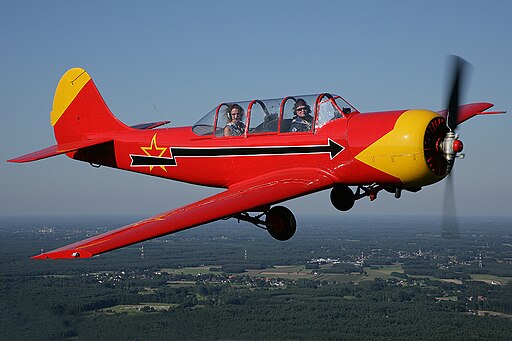
Yakovlev Yak-52
Yakovlev Yak-52 – A Rugged and Reliable Soviet Trainer Aircraft
The Yakovlev Yak-52 is a Soviet-designed, two-seat aerobatic trainer aircraft that has gained worldwide recognition for its durability, maneuverability, and affordability. Originally developed in the 1970s, the Yak-52 remains a popular aircraft among flying schools, aerobatic teams, and private aviation enthusiasts. Its robust airframe, powerful radial engine, and excellent handling characteristics make it a standout choice for aerobatic training and recreational flying.
History and Development of the Yakovlev Yak-52
The Yakovlev Yak-52 was developed as a successor to the Yak-50, a single-seat aerobatic aircraft. The Yak-52 was designed specifically for the DOSAAF (the Soviet paramilitary aviation training organization) to train military pilots before they transitioned to jet aircraft. The aircraft was introduced in 1976 and manufactured primarily by the Aerostar company in Romania under a licensing agreement with the Soviet Union.
The Yak-52 was based on the Yak-50 but incorporated a two-seat tandem cockpit, retractable landing gear with pneumatic operation, and additional structural reinforcements. Despite the Soviet Union’s collapse, the Yak-52 continued production into the 1990s and remains in use across the globe.
Technical Specifications of the Yakovlev Yak-52
The Yak-52 is known for its rugged construction, powerful engine, and aerobatic capabilities. Below are its key technical parameters.
General Specifications
- Aircraft Type: Two-seat tandem aerobatic trainer
- Manufacturer: Yakovlev Design Bureau (Russia) / Aerostar (Romania)
- First Flight: 1976
- Crew: 2 (Student and Instructor)
- Role: Pilot training, aerobatics, recreational flying
The Yak-52’s tandem seating configuration allows instructors to train students in real-world conditions, making it an ideal choice for military and civilian pilot training.
Airframe and Structure
- Fuselage Material: All-metal, stressed-skin construction
- Wingspan: 9.3 meters (30.5 feet)
- Length: 7.7 meters (25.3 feet)
- Height: 2.7 meters (8.9 feet)
- Wing Area: 15 square meters (161 square feet)
- Empty Weight: 1,025 kg (2,260 lbs)
- Maximum Takeoff Weight (MTOW): 1,305 kg (2,877 lbs)
- Landing Gear: Retractable, pneumatically actuated
The Yak-52’s pneumatic system is unique, as it powers the landing gear retraction, wheel brakes, and engine start mechanism. This reduces electrical system complexity and enhances reliability in harsh environments.
Engine and Propulsion
- Engine Model: Vedeneyev M-14P
- Engine Type: 9-cylinder, air-cooled, supercharged radial engine
- Displacement: 10.2 liters (623 cubic inches)
- Maximum Power Output: 360 horsepower (268 kW)
- Propeller: Two-blade, variable-pitch, metal propeller
The M-14P radial engine is one of the defining features of the Yak-52. With high torque output and a distinct throaty sound, it provides instant throttle response—a crucial feature for aerobatic maneuvers. The supercharger enhances performance at higher altitudes.
Performance and Flight Characteristics
- Maximum Speed: 420 km/h (261 mph, 227 knots)
- Cruise Speed: 270 km/h (168 mph, 146 knots)
- Stall Speed: 100 km/h (62 mph, 54 knots)
- Rate of Climb: 7.5 m/s (1,480 feet per minute)
- Service Ceiling: 4,000 meters (13,123 feet)
- Range: 550 km (342 miles, 297 nautical miles)
- G Limits: +7G / -5G
The +7G / -5G tolerance makes the Yak-52 an excellent choice for advanced aerobatic training. The aircraft can perform loops, barrel rolls, hammerheads, and inverted flight with ease.
Fuel System and Economy
- Fuel Type: 100LL Avgas
- Fuel Capacity: 100 liters (26.4 gallons) in standard tanks
- Optional Fuel Tanks: Additional wing tanks can increase total fuel capacity
- Fuel Consumption: 50 liters per hour (13.2 gallons per hour) at cruise speed
Although fuel consumption is relatively high, the range is sufficient for training flights and aerobatic practice sessions.
Avionics and Cockpit Features
- Cockpit Configuration: Tandem seating with dual controls
- Flight Instruments:
- Altimeter
- Airspeed Indicator
- Attitude Indicator (Artificial Horizon)
- Vertical Speed Indicator (VSI)
- Gyroscopic Turn Coordinator
- Engine Monitoring Gauges
- Magnetic Compass
- Communication: VHF Radio
- Navigation Equipment: Basic VOR / ADF, optional GPS upgrade
The Yak-52’s cockpit is designed for simplicity, ensuring ruggedness and ease of maintenance. The instruments are analog, with a few aircraft upgraded to modern glass cockpit avionics.
Landing Gear and Pneumatic System
- Landing Gear Type: Tailwheel retractable tricycle
- Brake System: Pneumatic (air pressure-actuated drum brakes)
- Gear Retraction System: Pneumatic
The Yak-52’s pneumatic system is reliable and easy to maintain, but it requires pilots to monitor air pressure levels carefully. The air pressure tank must be recharged after several cycles of gear deployment.
Advantages and Disadvantages of the Yakovlev Yak-52
Advantages
✅ Tough and Durable Design – Built to withstand extreme aerobatic loads.
✅ High-Performance Radial Engine – Delivers excellent torque and power.
✅ Excellent Aerobatic Capability – Can handle up to +7G and -5G maneuvers.
✅ Simple and Rugged Cockpit – Easy to maintain and operate.
✅ Pneumatic Systems Reduce Electrical Complexity – Ideal for remote airfields and rough conditions.
Disadvantages
❌ High Fuel Consumption – The M-14P radial engine consumes more fuel than modern inline engines.
❌ Limited Range – Not ideal for long-distance flights.
❌ Pneumatic Brake System Requires Careful Management – Air pressure needs to be maintained and recharged periodically.
❌ Noise and Vibration – The radial engine produces significant vibration and noise, requiring proper pilot protection.
Why is the Yakovlev Yak-52 Still Popular Today?
Despite being over four decades old, the Yak-52 remains a favorite among aerobatic pilots and military flight academies worldwide. Its affordability, reliability, and aerobatic performance make it an ideal aircraft for aerobatic enthusiasts and flight training schools.
Many Yak-52s have been modified with upgraded avionics, lightweight materials, and improved fuel systems to keep them competitive with modern aerobatic aircraft. Collectors and warbird enthusiasts also appreciate the Yak-52 for its classic design and Soviet-era engineering.
Conclusion – A Legendary Aerobatic Trainer
The Yak-52 is an iconic aircraft that continues to make an impact in the aviation world. Whether used for pilot training, aerobatics, or personal enjoyment, the Yak-52 offers rugged reliability, impressive flight performance, and a unique flying experience. For those seeking an affordable and durable aerobatic aircraft, the Yak-52 remains one of the best choices available today.
