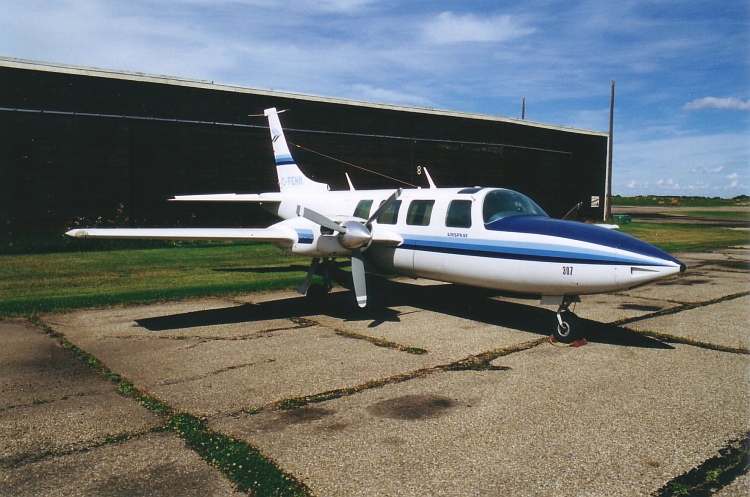
Piper Aerostar
Piper Aerostar: A High-Performance Twin-Engine Aircraft
The Piper Aerostar is one of the fastest piston-powered twin-engine aircraft ever built. Originally designed by Ted Smith in the late 1960s, the Aerostar was created to be a high-speed, high-performance aircraft with unmatched efficiency and handling in its class. The aircraft went through several ownership changes, eventually being acquired by Piper Aircraft in the late 1970s, leading to the name Piper Aerostar.
This article explores the history, design, technical specifications, and performance of the Piper Aerostar, a true icon in general aviation.
History and Development
Origins of the Aerostar
The Aerostar 600 series was initially developed by Ted Smith Aircraft Company, a firm founded by aviation engineer Ted R. Smith, who had previously designed the Aero Commander. Smith’s goal was to build the fastest, most efficient piston twin aircraft ever created.
The first model, the Aerostar 600, flew in 1967, and subsequent models introduced more powerful engines and turbocharging for even better performance.
Piper’s Involvement
In 1978, the design was acquired by Piper Aircraft, which continued production and marketing under the Piper Aerostar brand. However, Piper eventually discontinued production in 1984, making the Piper Aerostar a sought-after aircraft on the used market today.
Design and Construction
Fuselage and Materials
The Piper Aerostar features a low-wing, all-metal monocoque design, ensuring a strong and lightweight structure.
- Material: Aluminum alloy with stressed skin construction.
- Aerodynamic Shape: A sleek fuselage and long nose for reduced drag and increased speed.
- Pressurization: Some models feature a pressurized cabin, making high-altitude flight more comfortable.
Wing and Landing Gear
The Aerostar’s wings are positioned low on the fuselage, enhancing aerodynamic efficiency.
- Wing Structure: Cantilever wings with fuel tanks integrated into the design.
- Landing Gear: Retractable tricycle landing gear with hydraulically operated extension and retraction.
Cockpit and Interior
The Piper Aerostar offers a comfortable cabin for 4 to 6 passengers, depending on configuration.
Cockpit Features
- Dual control system for pilot and co-pilot.
- Ergonomic instrument panel with standard and optional avionics.
- Spacious interior with comfortable leather seats.
Avionics Options
- Basic models come with traditional analog gauges.
- Modern upgrades include Garmin G500/G600 glass cockpit displays, GPS, and autopilot systems.
Technical Specifications of the Piper Aerostar
The Piper Aerostar series includes various models with different engine and performance specifications. Below is a breakdown of the Aerostar 601P (Pressurized Model), one of the most popular variants.
General Specifications
- Crew: 1 (pilot)
- Passengers: Up to 5
- Length: 10.51 m (34 ft 6 in)
- Wingspan: 11.0 m (36 ft 1 in)
- Height: 3.35 m (11 ft 0 in)
- Empty Weight: 1,543 kg (3,400 lbs)
- Maximum Takeoff Weight (MTOW): 2,722 kg (6,000 lbs)
Engine and Propulsion
The Aerostar is powered by twin piston engines, providing exceptional speed and climb performance.
- Engine Model: Lycoming IO-540 (non-turbocharged) or TIO-540-U2A (turbocharged)
- Power Output: 290–350 HP per engine, depending on the model
- Propeller: Constant-speed, three-blade Hartzell propellers
Performance Capabilities
The Piper Aerostar is known for being one of the fastest piston twins ever built.
- Maximum Cruise Speed:
- Aerostar 601P: 414 km/h (223 knots, 257 mph)
- Aerostar 700P: 447 km/h (241 knots, 278 mph)
- Stall Speed: 119 km/h (64 knots, 74 mph)
- Range: 1,930 km (1,200 miles, 1,050 nautical miles)
- Service Ceiling: 7,620–7,925 m (25,000–26,000 feet)
- Rate of Climb: 1,800–2,500 feet per minute
Fuel Capacity and Consumption
- Fuel Capacity: 204 gallons (772 liters)
- Fuel Consumption: 30–40 gallons per hour (depending on model and power setting)
Variants of the Piper Aerostar
Aerostar 600
- Base model with 290 HP Lycoming IO-540 engines.
- Non-pressurized.
- Cruise speed of 190 knots (350 km/h).
Aerostar 601 & 601P
- 601: Turbocharged TIO-540-U2A engines (290 HP each).
- 601P: Pressurized cabin for high-altitude flight.
Aerostar 700P
- Most powerful version with 350 HP Lycoming TIO-540 engines.
- Higher cruise speed of 241 knots (447 km/h).
- Best high-altitude performance and range.
Aerostar Super 700
- Aftermarket upgrade featuring more powerful engines and advanced avionics.
Safety Features
The Piper Aerostar is equipped with multiple safety features:
- Pressurization System (on P models) for high-altitude comfort.
- De-icing Boots: Available on some models for all-weather operation.
- Redundant Hydraulic Systems for landing gear and flight controls.
- Autopilot and Advanced Avionics to improve pilot situational awareness.
Why Choose the Piper Aerostar?
The Piper Aerostar remains a highly sought-after aircraft due to its unique combination of speed, range, and efficiency. Here’s why pilots love it:
- Fastest Piston Twin – With a top speed exceeding 240 knots (445 km/h), the Aerostar outperforms many turboprop aircraft.
- Efficient Performance – The aircraft delivers excellent fuel efficiency for a high-speed twin.
- Pressurization Option – The 601P and 700P models offer a comfortable cabin at high altitudes.
- Excellent Handling – Pilots appreciate the responsive flight controls and agility.
- Customization – Owners can upgrade the aircraft with modern avionics, interior refurbishments, and engine improvements.
Conclusion
The Piper Aerostar is a legendary aircraft that continues to impress pilots with its speed, efficiency, and handling. Despite its production ending in the 1980s, it remains a popular choice among aviation enthusiasts, especially those looking for a high-performance piston twin with pressurization and exceptional cruise speeds.
For those in the market for a fast and capable private aircraft, the Piper Aerostar remains an unbeatable option in the world of general aviation.
