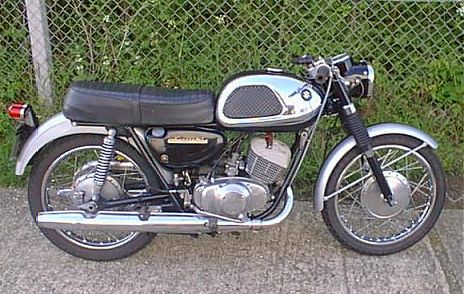
Suzuki T20
The Suzuki T20 represents a significant step forward in Suzuki’s early efforts to combine performance, reliability, and affordability in a two-stroke motorcycle. Launched during an era of rapid innovation in Japanese motorcycle engineering, the T20 built on lessons learned from earlier models and helped pave the way for Suzuki’s later successes. Today, the T20 is remembered as an agile, sporty machine that delivered spirited performance and practicality to everyday riders and enthusiasts alike.
Overview and Historical Background
Introduced in the mid-1960s, the Suzuki T20 was developed as a natural evolution of Suzuki’s preceding models. While its predecessor—the T10—had already demonstrated Suzuki’s prowess in creating a twin-cylinder two-stroke engine, the T20 was engineered to offer improved performance, refined handling, and modern styling that appealed to an increasingly competitive international market. During a time when European and American riders were beginning to embrace the performance and character of Japanese motorcycles, the T20 emerged as a capable and affordable option in the 250cc class.
The T20’s design philosophy centered on creating a lightweight, robust, and dynamic bike. Suzuki engineers focused on achieving a harmonious balance between agility and power. This approach not only gave the T20 a sporty character but also ensured that it could handle the rigors of everyday commuting. As such, the T20 quickly earned a reputation both on the streets and on the race track, influencing Suzuki’s future designs.
Engine and Powertrain
At the heart of the Suzuki T20 is an air-cooled, two-stroke, parallel twin engine that marks one of the early examples of Suzuki’s commitment to performance-oriented engineering. Key engine parameters include:
• Displacement: Approximately 246 cc
• Configuration: Parallel twin-cylinder, two-stroke
• Bore x Stroke: Around 52 mm x 58 mm (a configuration similar to its predecessor, ensuring good low- and mid-range torque)
• Compression Ratio: Approximately 7.5:1
• Fuel Delivery: Equipped with twin Mikuni carburetors for precise fueling and brisk throttle response
• Ignition: Coil ignition system with conventional CDI for reliable spark delivery
• Lubrication: Premix lubrication—requiring the manual mixing of oil with gasoline to ensure adequate engine protection
This refined engine was tuned to produce roughly 24 horsepower at peak performance, with a torque output in the vicinity of 25 Nm. The power delivery is characteristically sharp and responsive—a hallmark of two-stroke engines—and it rewards skilled riding with a lively surge of acceleration. The engine revs high, encouraging riders to shift gears frequently to remain in the optimal power band, which enhances the engaging riding experience.
A standard 4-speed constant mesh gearbox paired with a wet multiplate clutch transmitted the engine’s power efficiently to the rear wheel via a final chain drive. This setup was well-regarded for its simplicity and durability, qualities essential to a motorcycle designed for both spirited riding and daily commuting.
Chassis, Suspension, and Braking
The overall dynamic performance of the Suzuki T20 is strongly influenced by its chassis and suspension components. The T20 is built on a conventional steel tubular cradle frame designed for strength and ease of repair. This type of frame offered a comfortable balance between rigidity and compliance, ensuring that the bike maintained stability over uneven surfaces while still being sufficiently agile for spirited cornering.
Suspension details include:
• Front Suspension: Telescopic forks that provide adequate damping and travel, absorbing road imperfections and ensuring responsive steering.
• Rear Suspension: A swingarm equipped with dual shock absorbers that deliver smooth handling characteristics during both acceleration and braking.
• Wheel Sizes: The bike typically rides on 17-inch wheels, with a front tire roughly sized at 3.00-17 and a rear tire near 3.25-17, offering a blend of grip and nimbleness.
Braking on the T20 is managed by drum brakes, as was common at the time. An 180 mm drum at the front and a 160 mm drum at the rear provided sufficient stopping power for the motorcycle’s performance capabilities. Although drum brakes lack the immediate feel of modern disc brakes, they were well-calibrated for the modest speeds and weight of the T20.
Performance, Dimensions, and Ride Quality
Weighing in at a dry weight of roughly 142 kg (a competitive figure for its class during the 1960s), the Suzuki T20 is exceptionally lightweight. This contributes to its overall agility and responsiveness, especially when navigating city traffic or carving through twisty country roads.
Additional technical parameters include:
• Wheelbase: Approximately 1,340 mm, which helps provide a stable yet responsive ride.
• Fuel Tank Capacity: Around 14 liters, ensuring reasonable range for both daily commuting and weekend rides.
• Top Speed: Capable of achieving speeds in the region of 130 km/h (81 mph), which was quite competitive for a motorcycle of its size and class during that era.
• Acceleration: The engine’s lively two-stroke character and low overall weight allow for brisk acceleration, especially out of corners, making the T20 a delight in urban settings as well as on shorter race circuits.
The Suzuki T20 is celebrated for delivering an engaging ride experience. Its lightweight construction and well-tuned suspension result in a machine that is both forgiving for novice riders and challenging enough for enthusiasts. Its distinct two-stroke exhaust note and the necessity for manual oil-fuel mixing create a nostalgic connection for those who appreciate the raw, mechanical character of vintage motorcycles.
Styling and Features
The aesthetic of the T20 reflects the design trends of the mid-1960s—clean lines, a minimalist dashboard, and a design that exudes both purpose and style. The fuel tank is smoothly contoured with subtle chrome accents that hint at the era’s blend of functionality and emerging style consciousness. Twin exhaust pipes exit in a balanced manner on either side of the bike, reinforcing its twin-cylinder heritage while also contributing to a memorable sound signature.
Instrument clusters on the T20 are straightforward, typically featuring an analog speedometer, an odometer, and basic warning lights. The overall look is simple yet timeless, and it has become a valued characteristic among classic motorcycle collectors.
Legacy and Impact
The Suzuki T20 played a crucial role in cementing Suzuki’s reputation as a manufacturer of high-quality, performance-oriented two-stroke motorcycles. By building on the foundation laid by earlier models and incorporating improvements in engine tuning, chassis design, and overall aesthetics, the T20 not only succeeded commercially but also became a symbol of Suzuki’s technical innovation during a formative period in motorcycle history.
Although advancements in four-stroke technology and changing emissions regulations eventually led to the decline of the two-stroke era, the Suzuki T20 remains a cherished classic. Enthusiasts and collectors celebrate the T20 for its lively performance, distinctive styling, and the raw, engaging riding experience it provides.
Conclusion
The Suzuki T20 is more than just a vintage motorcycle—it’s a milestone in Suzuki’s evolution toward building sports bikes that combine performance, style, and practicality. With its air-cooled, twin-cylinder two-stroke engine, robust steel chassis, responsive suspension, and timeless design, the T20 embodies the spirit of its era. It is a machine that offers an authentic, no-frills riding experience, rewarding riders with a direct connection to the mechanics and soul of motorcycling.
For anyone interested in the history of performance motorcycles or in experiencing the visceral thrill of a genuine two-stroke engine, the Suzuki T20 stands as an enduring icon that paved the way for future generations of sporting motorcycles.
