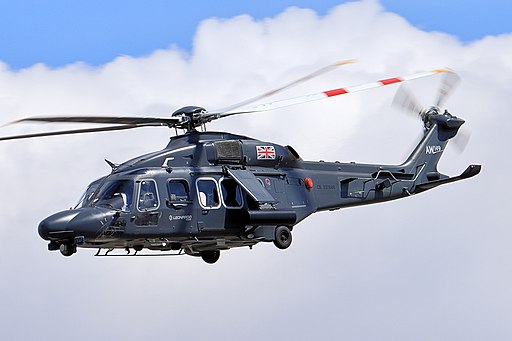
AgustaWestland AW149
AgustaWestland AW149: A Detailed Overview
The AgustaWestland AW149 is a highly capable, multi-role, medium-lift helicopter developed by Leonardo Helicopters (formerly AgustaWestland), a division of Leonardo S.p.A. The AW149 was designed to meet the increasing demand for versatile and reliable rotorcraft capable of performing a wide variety of roles, from military applications to civil operations. With its modern design, advanced avionics, and powerful performance capabilities, the AW149 has become an appealing choice for military forces, search and rescue teams, and other commercial operators around the world.
Introduced as a replacement for aging helicopter fleets, the AW149 combines the best of AgustaWestland’s engineering and experience in designing robust rotorcraft. It has evolved to serve as a multi-purpose helicopter capable of performing military transport, tactical support, search and rescue (SAR), emergency medical services (EMS), and utility operations. This article provides a comprehensive exploration of the AW149, highlighting its technical specifications, design features, and operational uses.
Introduction to the AgustaWestland AW149
The AW149 was originally developed to fill the gap between light utility helicopters and larger, more powerful heavy-lift helicopters. Its design focuses on offering enhanced capabilities, flexibility, and performance, ensuring that it can carry out a wide range of missions in both demanding military and civilian environments. With its medium-lift capabilities, the AW149 is capable of carrying personnel, cargo, and specialized equipment, even in harsh weather and terrain conditions.
The AW149 was designed to meet the operational requirements of modern militaries while also having the capability to adapt to a wide range of civil applications. It was developed with a strong focus on both performance and cost-effectiveness, with an emphasis on low operational costs, ease of maintenance, and mission adaptability.
Technical Specifications of the AgustaWestland AW149
The AW149 is engineered with performance, reliability, and versatility in mind. Below are the key technical specifications and parameters that define the capabilities of this multi-role helicopter.
1. Dimensions and Weight
- Length (with rotor blades turning): 15.40 meters (50.5 feet)
- Fuselage Length: 13.03 meters (42.7 feet)
- Height (main rotor to ground): 4.90 meters (16.1 feet)
- Main Rotor Diameter: 14.60 meters (47.9 feet)
- Tail Rotor Diameter: 3.75 meters (12.3 feet)
- Wheelbase: 4.20 meters (13.8 feet)
The AW149 is a large and spacious helicopter, offering ample space for both passengers and cargo. Its dimensions make it ideal for medium-lift roles and ensure that the helicopter can access a variety of operating environments. The large main rotor diameter ensures the aircraft can lift substantial loads while maintaining efficient flight characteristics.
2. Engine and Powerplant
The AW149 is powered by two GE Aviation CT7-8E turboshaft engines, which provide the helicopter with the necessary power to carry out its demanding missions. The engines are specifically designed to offer both high performance and low fuel consumption, while also providing excellent reliability.
- Engine Type: 2 × GE Aviation CT7-8E turboshaft engines
- Power Output: 1,800 shaft horsepower (shp) per engine
- Total Power (dual engines): 3,600 shp
- Transmission System: Dual-redundant transmission system for enhanced reliability and safety
The CT7-8E engines are known for their efficiency and reliability. These engines ensure that the AW149 has sufficient power to operate in challenging environments, such as hot and high altitudes, while also providing the fuel efficiency necessary for long-duration flights.
3. Performance Parameters
The AW149 offers impressive performance characteristics, making it suitable for various mission types. Whether performing troop transport, cargo missions, or search and rescue operations, the AW149 is designed for high performance, agility, and endurance. Key performance parameters include:
- Maximum Speed: 300 km/h (186 mph)
- Cruise Speed: 265 km/h (164 mph)
- Service Ceiling: 6,100 meters (20,000 feet)
- Range: 800 kilometers (500 miles)
- Maximum Takeoff Weight (MTOW): 8,600 kg (18,960 lbs)
- Hover Ceiling (in ground effect): 4,500 meters (14,764 feet)
- Rate of Climb: 10 meters per second (2,000 feet per minute)
The AW149’s maximum speed of 300 km/h allows it to travel quickly across long distances, while its cruise speed of 265 km/h ensures efficient travel during missions. Its impressive service ceiling of 6,100 meters (20,000 feet) enables it to operate in mountainous areas or at high altitudes, a feature that is particularly useful for rescue operations or military deployments in challenging terrains.
With a range of 800 kilometers, the AW149 is capable of operating over long distances without the need for frequent refueling, making it a highly capable platform for both military operations and civil applications. The hover ceiling of 4,500 meters allows the AW149 to perform rescue operations or provide support in high-altitude environments, ensuring that it can operate in some of the most difficult conditions.
4. Rotor System
The rotor system of the AW149 is designed for optimal performance, offering both stability and agility in a wide range of operating conditions. The main rotor and tail rotor designs have been specifically selected to reduce vibrations and ensure smooth operation.
- Main Rotor Type: Five-blade, fully articulated design
- Tail Rotor Type: Four-blade, semi-rigid design
- Main Rotor Diameter: 14.60 meters (47.9 feet)
- Tail Rotor Diameter: 3.75 meters (12.3 feet)
The five-blade main rotor provides enhanced lift capabilities, smooth handling, and greater maneuverability in tight spaces. It is designed to minimize vibration and maximize operational efficiency. The four-blade tail rotor design helps improve yaw control, ensuring the AW149 remains highly maneuverable in both hover and forward flight.
Design Features of the AgustaWestland AW149
The AW149 was developed with a wide range of design features that enhance its operational versatility, comfort, and safety. These features enable the helicopter to perform in a variety of environments and mission types, making it a flexible choice for both military and civil operators.
1. Airframe and Fuselage
The airframe of the AW149 is built for durability and efficiency. The fuselage is made of advanced materials, including composite materials, which reduce the overall weight of the helicopter while increasing its strength and resistance to wear. This contributes to the helicopter’s overall performance and longevity.
- Construction: Lightweight yet robust composite materials are used throughout the airframe, offering improved durability and lower maintenance costs.
- Cabin Configuration: The AW149’s cabin is highly adaptable, with space for up to 15 troops, or it can be reconfigured to carry cargo, medical patients, or specialized equipment. The large rear ramp allows for rapid deployment of personnel and equipment.
The versatile design of the cabin makes the AW149 suitable for various roles, including troop transport, cargo transport, and medical evacuation. It is also capable of carrying large external loads, which is an important feature for utility operations.
2. Avionics and Instrumentation
The AW149 is equipped with an advanced avionics suite, ensuring that pilots have access to the information needed to operate the helicopter safely and efficiently in all conditions. The avionics suite includes:
- Flight Management System (FMS): The FMS allows for automated navigation, fuel management, and route planning, reducing pilot workload and increasing mission efficiency.
- GPS Navigation System: Provides real-time positional data for enhanced accuracy, particularly in remote or challenging operating environments.
- Weather Radar and Ground Proximity Warning System (GPWS): Improves situational awareness during flight, alerting pilots to adverse weather conditions or potential hazards on the ground.
- Digital Cockpit: The AW149’s cockpit features a glass panel with digital displays that provide pilots with real-time information on the helicopter’s performance, navigation, and environmental conditions.
These avionics systems contribute to the AW149’s versatility, enabling it to operate in a variety of environments with minimal risk of navigational errors or pilot miscommunication.
3. Safety Features
Safety is a key consideration in the design of the AW149, and the helicopter is equipped with numerous safety features to protect both crew and passengers during flight. Some of the key safety features include:
- Crashworthy Fuel System: Designed to minimize the risk of fuel leakage in the event of a crash, reducing the chances of fire.
- Energy-absorbing Seats: The helicopter’s seats are designed to absorb impact forces, reducing the risk of injury in the event of a hard landing or accident.
- Helicopter Terrain Awareness and Warning System (HTAWS): Provides alerts to the pilot about nearby terrain, helping avoid collisions and improve situational awareness in mountainous or unfamiliar areas.
These safety features make the AW149 an ideal choice for both military and civil operations, ensuring that the helicopter can operate in challenging environments with a high level of safety for the crew and passengers.
Applications of the AgustaWestland AW149
The AW149 is a multi-role helicopter that excels in a wide variety of mission types, particularly those that require medium-lift capacity and versatility. Below are some of the key applications of the AW149:
1. Military Operations
The AW149 was initially designed with military applications in mind. It is well-suited for troop transport, cargo lift, tactical support, and search and rescue missions. With its powerful engines, large cargo capacity, and high-speed performance, the AW149 can perform a wide range of roles in both combat and non-combat situations.
- Troop Transport: The spacious cabin can accommodate up to 15 fully equipped troops, and the rear ramp allows for rapid boarding and disembarking.
- Combat Support: The AW149 can be equipped with weapons and surveillance equipment to support combat operations.
- Search and Rescue: The helicopter’s range, agility, and advanced avionics make it well-suited for rescue operations in hostile or remote environments.
2. Search and Rescue (SAR)
The AW149’s versatility and performance make it a popular choice for search and rescue missions. Its ability to operate in challenging weather conditions, combined with its large cargo and cabin space, allows it to carry personnel and medical equipment for life-saving missions.
3. Emergency Medical Services (EMS)
In EMS roles, the AW149 is often used to evacuate patients from remote or difficult-to-reach locations. The large cabin can accommodate medical equipment and multiple patients, and its high-speed capabilities enable rapid response times.
4. Utility Operations
The AW149 is frequently employed for utility missions, such as transporting heavy cargo, performing offshore oil rig support, and executing powerline inspections. Its robust lifting capabilities and versatility make it ideal for carrying out these demanding tasks.
5. Civil Applications
In addition to military uses, the AW149 is capable of performing various civil roles, including firefighting, aerial surveying, and executive transport. The flexibility and reliability of the AW149 make it a valuable tool for commercial operators worldwide.
Conclusion
The AgustaWestland AW149 is a powerful, versatile, and cost-effective helicopter that has proven itself in both military and civilian applications. With its excellent performance, spacious cabin, and advanced avionics, it is well-suited for a wide range of missions, from troop transport to search and rescue. The AW149’s combination of speed, payload capacity, and advanced safety features makes it a top choice for operators looking for a reliable medium-lift helicopter capable of handling the demands of modern operations. Whether used for military, emergency, or civil missions, the AW149 is a proven asset in the skies.
.jpg)