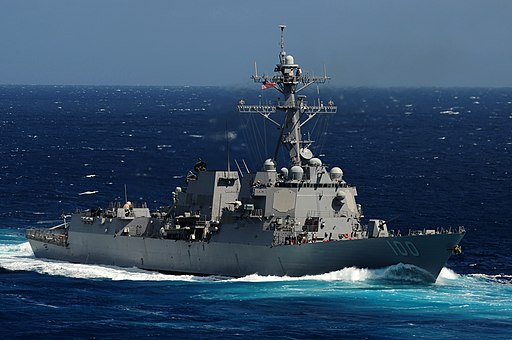
USS Kidd (DDG-100)
USS Kidd (DDG-100) is an Arleigh Burke‑class (Flight IIA) guided missile destroyer celebrated for its advanced combat systems, versatile weaponry, and robust design. Commissioned in 2007 and homeported in Everett, Washington, she represents the cutting edge of surface warfare technology. Named for Rear Admiral Isaac C. Kidd—who lost his life during the attack on Pearl Harbor—USS Kidd carries not only a storied historical legacy but also a critical mission: to provide air defense, anti-submarine warfare, and surface strike capabilities within a carrier strike group. This ship embodies the U.S. Navy’s commitment to maintaining maritime superiority in increasingly complex threat environments.
History and Development
Naming and Historical Significance
USS Kidd honors Rear Admiral Isaac C. Kidd, one of the first American flag officers to make the ultimate sacrifice during World War II aboard USS Arizona. The legacy of his bravery and leadership is embodied in this modern warship. The tradition of carrying historical names with strong heritage continues to define the identity of Navy vessels and serves as an enduring inspiration for the crew on board.
Construction and Commissioning
The ship was officially ordered on March 6, 1998, with construction initiated at Ingalls Shipbuilding in Pascagoula, Mississippi. Her keel was laid down on April 29, 2004, and she was launched on January 22, 2005. After rigorous trials and outfitting, USS Kidd was commissioned into active service on June 9, 2007. From the outset, key design decisions and integration of the Aegis Combat System ensured that Kidd would provide exceptional performance in multi-threat environments—even overcoming challenges such as repairs necessitated by severe weather events during the final outfitting phase.
Design and Construction Overview
Hull Design and Structural Integrity
USS Kidd features a sleek, hydrodynamically optimized hull that not only minimizes radar cross-section and acoustic signature but also ensures operational stability during high-speed transits. Built with advanced steel alloys and composite materials, her design offers an optimal balance between structural strength and weight reduction. This efficiency permits greater space for internal systems while preserving the agility required during complex maneuvering.
Integration of the Aegis Combat System
One of Kidd’s defining features is her full integration of the Aegis Combat System. Coupled with the powerful AN/SPY-1 radar suite, this system provides a 360-degree surveillance capability vital for detecting, tracking, and engaging aerial and surface threats at long range. The high degree of automation and the sophisticated battle management software allow the vessel to react rapidly in dynamic combat scenarios, ensuring continuously updated situational awareness.
Technical Specifications
An understanding of USS Kidd’s technical performance requires a look at the vast array of systems integrated into her design. Below is a summary table of her principal technical parameters:
| Parameter | Value |
|---|---|
| Class/Type | Arleigh Burke‑class (Flight IIA) Guided Missile Destroyer |
| Displacement | ~9,200 tons (Full load) |
| Length | 509 ft 6 in (155.3 m) |
| Beam | 66 ft (20 m) |
| Draft | 31 ft (9.4 m) |
| Propulsion | 4 × General Electric LM2500-30 gas turbines, 2 shafts; ~100,000 shp (75 MW) |
| Maximum Speed | In excess of 31 knots |
| Complement | Approximately 380 officers and enlisted personnel |
| Armament | 1 × 5-inch Mk 45 Mod 4 gun;<br>Vertical Launch System (VLS) with 96 missile cells;<br>Phalanx CIWS;<br>Secondary gun and torpedo systems |
| Aircraft | Capable of supporting 2 × MH-60R Seahawk helicopters for anti-submarine, surveillance, and search and rescue missions |
Propulsion and Performance
Advanced Gas Turbine System
Under the hood, USS Kidd is powered by four General Electric LM2500-30 gas turbines that drive two shafts, generating around 100,000 shaft horsepower. This powerful propulsion system offers the destroyer exceptional acceleration and the ability to exceed speeds of 31 knots. The use of proven gas turbine technology not only enhances reliability over long-duration deployments but also contributes to the ship’s relatively low acoustic signature—a critical factor for operations in contested maritime zones.
Endurance and Operational Range
The robust propulsion paired with efficient fuel management ensures that USS Kidd can sustain operations over extended distances. While exact range figures depend on the mission profile, she is engineered to operate seamlessly as an integral part of a carrier strike group, traversing vast maritime theaters without the need for frequent refueling. This endurance is vital to maintaining a continuous secure presence in strategically important regions around the world.
Armament and Missile Systems
Vertical Launch System (VLS)
At the heart of USS Kidd’s offensive capabilities is her sophisticated Vertical Launch System. Comprised of two arrays (one with 32 cells and another with 64 cells for a total of 96), the VLS accommodates a versatile mix of missiles—including:
- RIM-66 Standard Missiles for medium-to-long-range air defense
- RIM-174 Standard ERAM for extended range engagements
- RIM-161 Standard Missile 3 (SM-3) anti-ballistic missile
- RIM-162 ESSM (Evolved SeaSparrow Missile) in quad-packed configurations
- BGM-109 Tomahawk Cruise Missiles for land-attack missions
This mix empowers USS Kidd to operate effectively across multiple domains, engaging threats both from the air and on land.
Naval Gun and Close-In Weapon Systems
Complementing her missile capabilities, USS Kidd features a 5-inch/62 Mk 45 Mod 4 gun—an essential tool for both naval surface engagements and shore bombardment operations. The destroyer is also equipped with a 20-mm Phalanx Close-In Weapon System (CIWS), which provides rapid automated responses to incoming anti-ship missiles and other close-range threats. Additional secondary gun mounts, such as the 25-mm Mk 38 machine gun systems and .50-caliber guns, provide further layers to the ship’s close-range defense suite.
Torpedo and Anti-Submarine Warfare Systems
For anti-submarine warfare—key in defending against stealthy undersea threats—USS Kidd is outfitted with torpedo armament. Two Mk 32 triple-torpedo tubes, capable of launching Mk-46, Mk-50, or Mk-54 lightweight torpedoes, round out her multi-threat offensive systems.
Aircraft Capability
Enhancing her operational flexibility, USS Kidd can support embarked aviation assets. The ship is configured to support two MH-60R Seahawk helicopters, which are used for reconnaissance, anti-submarine warfare, and search and rescue missions. These helicopters extend the ship’s sensory and engagement envelope, enabling it to counter threats beyond the immediate horizon.
Sensor, Communication, and Electronic Warfare Systems
Aegis Combat System and AN/SPY-1 Radar
At the core of USS Kidd’s situational awareness and targeting prowess lies the Aegis Combat System. Paired with the AN/SPY-1 radar, this integrated system delivers an omnidirectional real-time view of the battlespace. It is capable of tracking hundreds of targets simultaneously, ensuring that the ship remains well-informed about evolving threats in the air, on the surface, and even at sea.
Navigation, Communications, and Data Integration
State-of-the-art inertial navigation systems ensure precise positioning even in GPS-denied environments. This is paired with secure, network-centric communications that allow seamless integration into a larger battle group. In an era where information dominance is as crucial as physical firepower, USS Kidd’s electronic warfare and data fusion capabilities provide it with significant advantages on the modern battlefield.
Electronic Countermeasures
Modern naval engagements demand proactive defensive measures. USS Kidd is equipped with advanced electronic countermeasure suites designed to detect, jam, and misdirect incoming missile threats and enemy targeting systems. By doing so, she increases her survivability when confronted with sophisticated anti-ship missile systems.
Operational Capabilities and Mission Flexibility
Multi-Domain Operational Roles
USS Kidd’s design reflects the U.S. Navy’s commitment to multi-mission versatility. Her capabilities span:
- Air Defense: Protecting high-value assets in a carrier strike group with her advanced missile systems and Aegis radar.
- Anti-Submarine Warfare: Employing torpedoes and helicopter support to counter undersea threats.
- Surface Warfare: Utilizing the 5-inch gun and additional secondary systems for engagements against surface vessels.
- Land Attack: Launching precision Tomahawk cruise missiles to strike strategic ground targets.
This flexibility makes her indispensable during both peacetime operations—such as maritime security and humanitarian assistance—and high-intensity conflicts.
Strategic Significance and Legacy
Carrying the name of a revered naval hero, USS Kidd not only contributes to the fleet’s tactical sophistication but also serves as a symbol of enduring patriotism and valor. The traditions, innovative design, and evolving systems onboard echo decades of naval excellence and the continuous innovation required to face 21st-century maritime challenges.
Modernization and Future Upgrades
Continuous Technological Enhancements
To stay ahead of emerging threats, USS Kidd is subject to periodic modernization programs. These updates focus on:
- Combat System Enhancements: Integrating next-generation missile interceptors, sensors, and power management systems.
- Stealth Upgrades: Applying advanced coatings and redesign measures to further reduce the vessel’s radar and acoustic signatures.
- Cyber and Data Systems: Upgrading secure communication modules and data fusion capabilities to maintain interoperability with network-centric warfare systems.
Future Operational Prospects
As warfare continues to evolve in the face of new technologies, the ongoing upgrades to vessels like USS Kidd ensure that the U.S. Navy remains at the forefront of naval superiority. Future modifications could incorporate enhanced autonomous systems or improvements in missile technology, all while preserving the robust, battle-tested architecture of the Arleigh Burke-class destroyers.
Conclusion
USS Kidd (DDG-100) stands as a testament to modern naval engineering—a platform where advanced propulsion, integrated combat systems, and versatile weaponry converge to form a formidable multi-mission warship. With a distinguished namesake and a robust operational record, Kidd exemplifies the U.S. Navy’s strategic capabilities in air defense, anti-submarine warfare, and surface engagements. Her design and technical specifications not only highlight the evolution of the Arleigh Burke‑class destroyers but also underscore the critical role she plays in maritime security and power projection.
_is_underway_in_the_Pacific_Ocean.jpg)