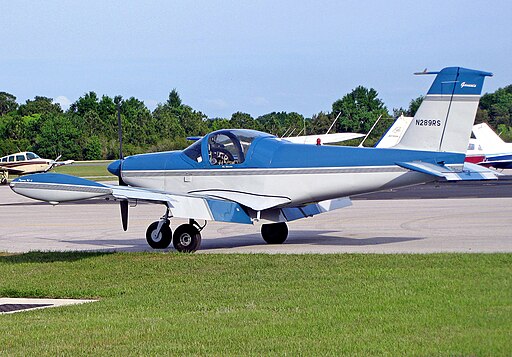
Pazmany PL-1
The Pazmany PL-1 is a testament to visionary aerospace engineering developed by Ladislao Pazmany. Designed as a primary trainer, the PL-1 was conceived to offer an ideal platform for novice pilots while maintaining a strong emphasis on safety, performance, and ease of maintenance. Its thoughtful design and economical construction have made it a celebrated model in the world of light aircraft, influencing subsequent generations of trainer aircraft.
Development and Design Philosophy
Historical Background
The genesis of the Pazmany PL-1 lies in a period when many training aircraft were evolving to meet stricter safety and performance standards. Ladislao Pazmany, whose extensive experience in aircraft design had already yielded several innovative models, envisioned a trainer that balanced agility with a forgiving flight characteristic. His goal was to create an aircraft that was not only economical to operate but that also provided clear, uncomplicated feedback to the pilot—a key component in building solid foundational flying skills.
Design Principles and Goals
The design of the PL-1 was guided by several core principles:
- Lightweight Construction: The use of modern alloys and composite materials reduced weight while preserving structural integrity, ensuring nimble handling and fuel efficiency.
- Enhanced Aerodynamics: A well-proportioned wing and fuselage configuration provided stable flight characteristics, crucial for low-speed training and safe stall behavior.
- Simplicity in Maintenance: By minimizing mechanical complexity and using readily accessible components, the PL-1 was designed for economical upkeep—a significant cost-saving for training institutions.
- Pilot-Centric Cockpit: An uncluttered, ergonomically laid-out cockpit ensured that essential flight information was clearly visible, reducing pilot workload and fostering confidence during early flight training.
These design goals were realized through meticulous engineering, resulting in an aircraft that met the dual demands of performance and practicality.
Technical Specifications
A clear understanding of the Pazmany PL-1’s technical parameters reveals the attention to detail with which it was engineered. The following sections detail its airframe, powerplant, and performance characteristics.
Airframe Dimensions and Structure
The PL-1’s compact dimensions and robust structure are central to its performance as a trainer.
| Parameter | Specification | Comments |
|---|---|---|
| Crew | 1 (Single-seat) | Optimized for solo pilot training |
| Length | ~6.7 m (22 ft) | Compact design conducive to agile maneuverability |
| Wingspan | ~8.2 m (27 ft) | Designed to balance lift with responsiveness |
| Height | ~2.4 m (7.9 ft) | Low profile reduces drag and enhances performance |
| Wing Area | ~10 m² (108 ft²) | Provides consistent lift at lower speeds |
| Empty Weight | ~450 kg (992 lbs) | Lightweight construction enhances overall efficiency |
| Maximum Takeoff Weight | ~750 kg (1,653 lbs) | Sufficient margin for fuel and payload without compromising performance |
This carefully balanced configuration makes the PL-1 an ideal training aircraft that is both responsive and forgiving.
Engine and Propulsion
At the heart of the PL-1’s performance is its reliable powerplant, chosen specifically for training operations.
| Parameter | Specification | Comments |
|---|---|---|
| Engine Type | 4-cylinder air-cooled engine (e.g., Lycoming O-320 or similar) | Proven reliability and ease of maintenance in light aircraft designs |
| Horsepower | ~160 hp | Adequate power for training operations and light aerobatic maneuvers |
| Fuel Consumption | ~10 L/h | Economical for extended training missions across multiple sorties |
This engine pairing ensures that the airplane has a balance of power and efficiency, making it accessible to flight schools without compromising on performance.
Performance and Handling Characteristics
Performance figures for the Pazmany PL-1 are specifically aligned with the needs of a training environment, emphasizing safety and control:
| Parameter | Value | Comments |
|---|---|---|
| Maximum Speed | ~220 km/h (137 mph) | Sufficient for a broad range of training scenarios |
| Cruise Speed | ~200 km/h (124 mph) | Optimized for fuel economy and stability during routine training flights |
| Stall Speed | ~90 km/h (56 mph) | Low stall speed enhances safety during takeoff and landing |
| Rate of Climb | ~4 m/s | Provides adequate performance for training protocols |
| Service Ceiling | ~3,500 m | Capable of supporting higher altitude training exercises |
These performance metrics illustrate the PL-1’s capability as a stable, forgiving trainer that can expose students to a realistic yet safe flight environment.
Avionics and Instrumentation
The cockpit of the Pazmany PL-1 is purposefully designed to facilitate the learning process while ensuring all critical flight information is readily available:
- Primary Flight Instruments: Includes an altimeter, airspeed indicator, attitude indicator, and vertical speed indicator.
- Engine Gauges: Provide essential monitoring of fuel levels, oil pressure, and temperature—vital for both safety and learning aircraft management.
- Communication Equipment: A basic radio set allows for interaction between the student and instructor (or ground control), ensuring clear communication during training flights.
- Navigation Aids: Simple navigation systems, such as VOR receivers and compasses, are included to help students learn basic flight navigation techniques.
The focus on simplicity in the avionics suite minimizes distractions, allowing pilots to focus on mastering the core aspects of flight.
Operational Role and Applications
Flight Training Capabilities
Designed primarily as a trainer, the Pazmany PL-1 fulfills a critical role in pilot education:
- User-Friendly Handling: Its predictable flight characteristics make it an ideal platform for developing fundamental piloting skills.
- Safety-Oriented Design: With low stall speeds and forgiving performance parameters, the PL-1 minimizes the risks associated with early flight training.
- Cost-Effective Operation: The aircraft’s simple construction and reliable engine allow for economical maintenance and operation, making it a popular choice for flight schools and training clubs.
Versatility in Operational Scenarios
While its primary function is training, the PL-1’s design affords it versatility in several other aviation roles:
- Aerobatic Utility: Its agile performance and responsive controls have made it a candidate for light aerobatic routines and demonstration flights.
- Experimental Platform: Due to its uncomplicated airframe and systems, some operators use the PL-1 as a testbed for small upgrades or modifications, contributing further to the evolution of light aircraft design.
- Recreational Flying: Its economical operation also positions it well for enthusiasts looking for efficient, fun flights outside a formal training environment.
This versatility reinforces the PL-1’s reputation as more than just a trainer—it is a platform that adapts well to various facets of general aviation.
Legacy and Influence
Contributions to Trainer Aircraft Development
The Pazmany PL-1 has left an indelible mark on the field of training aircraft:
- Innovative Expectations: By emphasizing low-cost construction without sacrificing performance, the PL-1 set a benchmark for subsequent trainer aircraft designs.
- Educational Impact: Its predictable handling and safety features have aided countless students in transitioning from the classroom to the cockpit in a controlled, supportive environment.
- Foundational Design Philosophy: The principles behind its design—simplicity, economic viability, and pilot-oriented ergonomics—continue to influence modern training aircraft.
Impact on Light Aircraft Architecture
The PL-1’s design approach has resonated beyond pilot training programs:
- Adoption of Modern Materials: Emphasizing light weight and durability, its construction techniques have become a reference point in the design of efficient light aircraft.
- Balanced Aerodynamic Performance: Fine-tuning the trade-offs between agility, safety, and performance has inspired many designers to focus on well-rounded aircraft characteristics.
- Inspiration for Innovation: The successes and lessons of the PL-1 have encouraged experimental developments among smaller manufacturers and homebuilders alike.
Conclusion
The Pazmany PL-1 is a striking example of how thoughtful design and engineering can converge to produce an effective and reliable trainer aircraft. Its lightweight structure, dependable powerplant, and straightforward avionics have made it an enduring favorite among flight schools and aviation enthusiasts. More than just a stepping stone for new pilots, the PL-1 has influenced design practices, championing the idea that efficiency, safety, and simplicity can coexist in one well-crafted aircraft.
As aviation technology continues to evolve, the enduring legacy of the Pazmany PL-1 remains a powerful reminder of the innovation that lies at the heart of every successful trainer aircraft. Its role in fostering a new generation of pilots underscores the importance of accessible, cost-effective, and rigorously engineered flying machines—principles that will continue to shape the future of flight.
