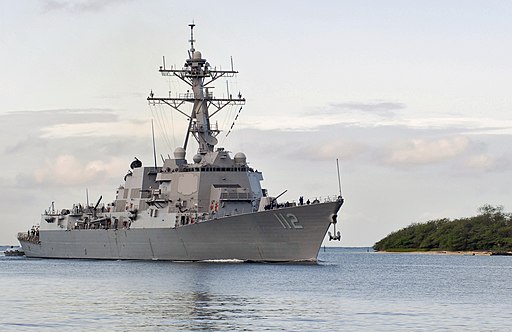
USS Michael Murphy (DDG-112)
USS Michael Murphy (DDG-112) is an Arleigh Burke‑class (Flight IIA) Aegis guided missile destroyer that epitomizes advanced naval warfare technology and the spirit of valor. Named in honor of Medal of Honor recipient Lieutenant Michael P. Murphy—a Navy SEAL who made the ultimate sacrifice during Operation Red Wings in Afghanistan—the ship carries with it a legacy of courage, selflessness, and duty. Commissioned in 2012, Michael Murphy represents the culmination of decades of shipbuilding expertise, marrying time‑honored design with modern engineering innovations to deliver a robust multi‑mission platform.
Namesake and Inspirational Legacy
Lieutenant Michael P. Murphy’s heroism in the face of overwhelming adversity serves as an enduring inspiration for the sailors who serve aboard her. His willingness to expose himself to enemy fire in order to communicate his unit’s location under dire circumstances is forever enshrined in the identity of the ship. This vessel not only extends the lineage of legendary naval performance but also instills a deep sense of pride, duty, and sacrifice in the U.S. Navy.
Design and Construction
Hull Design and Aerodynamics
USS Michael Murphy features the classic yet refined hull form of the Arleigh Burke‑class destroyers. Designed primarily for multi‑domain operations, her lines are optimized for low radar cross‑section and high maneuverability. The streamlined superstructure minimizes topweight and contributes to improved stability, ensuring that the vessel can operate efficiently in both open ocean and littoral environments.
Construction and Integration
Constructed by Bath Iron Works, the ship’s building process combined modular construction techniques with advanced digital design methodologies. This allowed multiple sections of the hull and systems to be built concurrently and integrated seamlessly. The result is a ship with exceptional structural integrity, reduced maintenance footprint, and enhanced operational readiness—all of which are critical for modern naval missions.
Technical Specifications
The technical parameters of USS Michael Murphy are a testament to contemporary naval engineering. Every component—from its propulsion system to its sensor suite—has been integrated to provide a balanced mix of speed, firepower, and durability.
Dimensions and Displacement
- Length: Approximately 510 feet (160 meters)
- Beam: Approximately 66 feet (20 meters)
- Draft: Roughly 33 feet (10 meters)
- Full Load Displacement: About 9,200 tons
These dimensions offer the ship an ideal balance of seakeeping, stability, and room for advanced combat systems, ensuring that Michael Murphy can serve effectively across a wide spectrum of operational scenarios.
Propulsion and Performance
- Propulsion System: 4 × General Electric LM2500‑30 gas turbines
- Drive Configuration: 2 shafts delivering a combined output of approximately 100,000 shaft horsepower (75 MW)
- Maximum Speed: In excess of 35 knots
- Operational Range: Capable of over 4,400 nautical miles at a cruising speed of approximately 20 knots
The powerful propulsion setup enables rapid maneuvering, high-speed transit, and prolonged operations, ensuring that Michael Murphy can quickly respond to emerging threats while maintaining its heavy operational tempo.
Crew and Habitability
- Complement: Approximately 323 sailors (including around 23 officers and 300 enlisted personnel)
Despite its advanced systems, the ship’s design emphasizes efficiency and comfort for its crew. Modern living quarters, well‑designed workspaces, and integrated command centers are intended to reduce fatigue during extended deployments, allowing sailors to perform at their best under demanding conditions.
Armament and Defensive Systems
USS Michael Murphy is equipped with an integrated suite of weapons systems tailored for multi‑threat engagement and layered defense across air, surface, and subsurface domains.
Primary Gun Systems and Close‑In Defense
- Main Gun: 1 × 5‑inch (127 mm) Mk 45 Mod 4 lightweight gun
- Close‑In Weapon Systems (CIWS):
- 1 × Phalanx CIWS (20 mm)
- Multiple 25 mm Mk 38 machine gun systems and .50‑caliber machine guns
The 5‑inch gun provides both surface engagement and shore bombardment capabilities, while the CIWS and supplementary machine guns offer instantaneous reaction against incoming missiles and asymmetric threats.
Vertical Launching System and Missile Weaponry
- Vertical Launch System (VLS):
- Combination of 32‑cell and 64‑cell modules providing a total of 96 cells
The VLS is one of the most critical features of Michael Murphy, offering tremendous flexibility via its ability to launch a variety of missiles, including:
- Surface‑to‑Air Missiles: RIM‑66M, RIM‑156, and the advanced RIM‑174A Standard Extended Range Active Missile (ERAM)
- Anti‑Ballistic and Air Defense Missiles: RIM‑161
- Short‑Range Defense: Quad‑packed RIM‑162 ESSM
- Precision Strike: BGM‑109 Tomahawk cruise missiles for land‑attack missions
- Anti‑Submarine Warfare: RUM‑139 Vertical Launch ASROC
This extensive array enables the ship to satisfy multiple roles simultaneously, from establishing an anti‑air shield to launching deep‑strike attacks against land targets.
Torpedo Systems
- Torpedo Launch Capability: 2 × Mark 32 triple torpedo tubes
- Armament: Capable of deploying lightweight torpedoes such as the Mark 46, Mark 50, or Mark 54
These torpedo systems add a critical layer to the ship’s anti‑submarine warfare capabilities, allowing Michael Murphy to engage and neutralize underwater threats effectively.
Sensor, Radar, and Combat Systems
Aegis Combat System
At the core of USS Michael Murphy’s operational effectiveness is the integrated Aegis Combat System. This sophisticated command and control system coordinates inputs from a vast sensor network—including radar, sonar, and electronic warfare suites—to create a comprehensive battlespace picture. The system enables rapid target identification, tracking, engagement, and real‑time situational updates across the theater of operations.
Radar and Electronic Surveillance
- Primary Radar: AN/SPY‑1D multi‑function phased‑array radar
- Secondary Sensors: A network of additional radars and electronic support measures ensures early threat detection and tracking
The AN/SPY‑1D radar is capable of simultaneously tracking multiple targets at long ranges, which is paramount for the ship’s layered defense strategy and precision missile engagements.
Data Integration and Command Systems
The ship’s combat management system integrates sensor data with weapons control systems, fostering a level of digital synergy that enhances decision‑making during complex multi‑domain operations. Secure communication networks and redundancy protocols ensure that Michael Murphy remains fully connected with fleet command and allied units, even under electronic warfare conditions.
Operational Capabilities and Strategic Role
Multi‑Mission Adaptability
USS Michael Murphy is a quintessential multi‑mission destroyer. Whether escorting carrier strike groups, executing ballistic missile defense, or engaging in independent power projection through Tomahawk strikes, the ship’s design supports a wide-ranging mission profile. Its combination of speed, firepower, and advanced sensors makes it highly adaptable in an era dominated by rapidly shifting operational challenges.
Littoral and Open Ocean Performance
The balanced design of Michael Murphy allows for proficient operations in both high‑intensity open ocean scenarios and complex littoral environments. Enhanced maneuverability combined with advanced weapons and sensor systems enables the ship to navigate and engage targets in congested coastal areas, where threats may emerge from multiple directions.
Integrated Networked Warfare
In today’s battlefield, networked warfare is key. The destroyer’s ability to share real‑time data with other naval elements and joint forces makes it a pivotal node in a larger integrated battle network. This connectivity enhances overall situational awareness, improves the coordination of multi‑platform operations, and allows for rapid collective responses to threats across various domains.
Future Prospects and Upgrades
Evolution of Capabilities
Even as a state‑of‑the‑art platform, USS Michael Murphy is designed with growth in mind. Continuous modernization efforts ensure that the ship remains at the forefront of naval technology. Future upgrades are expected to include:
- Next‑Generation Radar Systems: Enhanced sensor capabilities that provide higher resolution tracking and increased reaction times
- Advanced Electronic Warfare Suites: Upgraded systems to counter emerging cyber and signal threats
- Integration with Unmanned Systems: Expanding the operational reach by controlling and interfacing with unmanned aerial and underwater vehicles
Sustaining Operational Superiority
By adopting modular upgrades and leveraging the flexibility inherent in its design, Michael Murphy is built to evolve with technological advances and new operational doctrines. This ensures that its combat systems remain relevant in an era where the pace of innovation continuously raises the bar for maritime warfare.
Conclusion
USS Michael Murphy (DDG-112) stands as a powerful symbol of both historical valor and modern naval ingenuity. From its precise dimensions and high‑output propulsion to an extensive and versatile armament suite and an integrated Aegis Combat System, every aspect of the ship is engineered for dominance in multi‑domain operations. As the last Flight IIA variant of the Arleigh Burke‑class, Michael Murphy represents the pinnacle of design evolution, prepared to face current threats and adapt to future challenges.
_returns_to_Joint_Base_Pearl_Harbor-Hickam,_Hawaii,_March_29,_2013_130329-N-KT462-027.jpg)