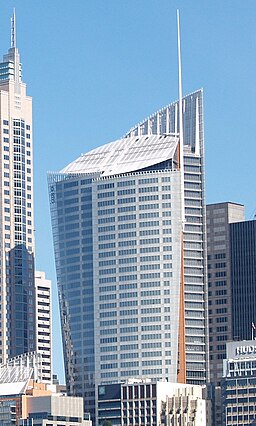
Aurora Place
Architectural and Technical Features of Aurora Place, Sydney
Aurora Place is a remarkable high-rise building located in Sydney’s central business district, standing as a symbol of modern architectural sophistication. Designed by renowned architect Renzo Piano, it merges form and function through its unique curved glass façade and cutting-edge engineering solutions. This article explores the structural, sustainability, and technological parameters that define Aurora Place.
Structural and Architectural Elements
Building Dimensions and Design
- Height: Approximately 218 meters, ranking among Sydney’s notable skyscrapers.
- Floors: 41 levels comprising premium office spaces, residential apartments, and retail establishments.
- Architectural Style: Distinguished by a curved glass envelope with terracotta paneling for an innovative visual appeal.
- Structural System: Reinforced concrete core with steel framework to enhance stability and resilience.
Foundation and Load Distribution
- Deep pile foundation reaching stable bedrock to support the building’s weight and seismic activity.
- Lateral stability system incorporating shear walls and braced steel elements for wind resistance.
- Optimized structural framework reducing material usage while maintaining load-bearing efficiency.
Sustainability and Green Features
Energy Efficiency
- High-performance glazing optimizing daylight utilization while mitigating heat gain.
- Smart lighting systems equipped with occupancy sensors for energy conservation.
- Passive solar design reducing reliance on artificial heating and cooling mechanisms.
Water Conservation
- Rainwater collection system supporting irrigation and cooling tower operations.
- Greywater recycling lowering fresh water consumption for non-potable applications.
- Efficient plumbing fixtures ensuring minimal wastage while maintaining functionality.
Indoor Environmental Quality
- Advanced ventilation systems promoting superior indoor air circulation.
- Low-VOC materials improving indoor air quality by limiting toxic emissions.
- Biophilic design integrating greenery and natural elements for enhanced occupant well-being.
Technological Integration
Smart Building Systems
- IoT-driven management systems streamlining operations for energy optimization.
- Automated climate control adjusting settings dynamically based on occupancy and external conditions.
- Touchless access technology improving security while enhancing convenience.
Connectivity and Digital Infrastructure
- High-speed broadband networks ensuring seamless digital connectivity for businesses.
- Smart elevators utilizing AI-driven scheduling for efficient transit.
- Integrated security solutions incorporating biometric access and advanced monitoring systems.
Conclusion
Aurora Place stands as a beacon of innovation in Sydney’s skyline, merging architectural beauty with sustainable and technological advancements. By integrating cutting-edge construction methodologies and smart solutions, the building reflects the future of urban development. Its elegant yet functional design continues to set a high standard for commercial and residential buildings in Australia.
