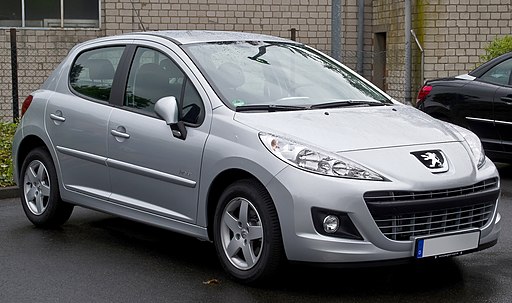
Peugeot 207 faults
Common Peugeot 207 Malfunctions
1. Electrical System Faults
- Central-locking failures and erratic door-lock behavior
- Dashboard display glitches (false warning lights, inaccurate gauges)
- Faulty sensors and switches (e.g. door-ajar, light sensors)
- Wiring harness issues: seat-heater loom overheating; windscreen-wiper loom faults leading to park/operation failures
2. Cooling System Problems
- Radiator leaks and cracked cores
- Thermostat sticking or failing to open, causing overheating
- Water-pump failures and coolant-pipe leaks
3. Engine & Drive-Belt Anomalies
- Timing-belt complications (wear, tensioner failure → noisy, potential engine damage)
- Timing-chain/tensioner weak point on some 1.4/1.6 HDi diesels
- Auxiliary-drivebelt squeal or grinding under load
- Catalytic-converter degradation triggering engine-warning light
4. Fuel System & Turbocharger
- Fuel-pump and injector faults → poor performance, hesitation or stalling
- Turbocharger wear or failure (oil-starvation damage, power loss, excessive smoke) on turbo models
5. Transmission & Clutch Issues
- Premature clutch-disc wear or complete failure
- Gearbox shifting difficulties, crunchy-engagement or false-neutral symptoms
- Vibrating or loose gearlever assemblies
6. Suspension & Steering Noises
- Grinding or rubbing noises from rear-wheel arches (worn bushes or brake-hose contact)
- Front-end creaks/squeaks from shock absorbers or suspension bushes
- Power-steering fluid leaks → heavy or unresponsive steering feel
7. Oil Leaks
- Engine-block and cam-cover gasket failures
- Rear-main seal and oil-filter housing leaks leading to low-oil warnings
8. Major Safety Recalls
- Heated-seat wiring harness overheating risk
- Windscreen-wiper-motor loom faults
- Front-seatbelt anchorage bolts prone to loosening
- Short battery-earth cable risking total electrical loss
- Air-conditioning duct clips coming loose and trapping pedals
- Rear-brake-hose chafing on suspension springs
- Undersized main engine-fuse box increasing fire risk
Peugeot 207 as a used car
The Peugeot 207 remains one of the most compelling superminis on the used-car market. Launched in 2006 as the successor to the wildly popular 206, it blends French flair, practicality and frugal running costs. Today, with production having ended in 2014, the 207 is firmly in “affordable used” territory—making it an attractive choice for first-time buyers, city commuters and budget-conscious drivers alike. In this article, we delve into its technical parameters, highlight the various trim levels, unpack common faults and arm you with practical buying tips.
Why Choose a Used Peugeot 207
Stylish Yet Practical
From its upswept bonnet to the tapering C-pillar, the 207 wears Peugeot’s design language with confidence. Despite its compact footprint, the generous 2 538 mm wheelbase yields one of the best rear-legroom figures in its class, while a flexible boot space of 270–1 010 litres (seats folded) swallows groceries, weekend luggage or DIY supplies with ease.
Affordable Running Costs
Diesel and petrol engines in the 207 are renowned for modest consumption. The 1.4 HDi diesel can return as little as 3.9 L/100 km on a mixed cycle, while the 1.4 VTi petrol rarely exceeds 6 L/100 km in city driving. Insurance groups and road tax rates are low, and spare parts remain plentiful and inexpensive.
Wide Variety of Engines & Trims
Whether you need a cheap, basic run-around or a well-equipped hot hatch alternative, the 207’s range spans from the entry-level Access with steel wheels and manual windows, through mid-spec Active and Allure, up to sporty GT or GTi variants sporting 175 PS. This diversity means you can match budget to features precisely.
Key Technical Specifications
| Specification | 1.4 VTi (95 PS) | 1.6 VTi (120 PS) | 1.4 HDi (68 PS) | 1.6 HDi (90 PS) | 1.6 e-HDi (92 PS) |
|---|---|---|---|---|---|
| Engine type | Petrol, I-4 | Petrol, I-4 | Diesel, I-4 | Diesel, I-4 | Diesel, I-4 |
| Displacement | 1 397 cm³ | 1 598 cm³ | 1 397 cm³ | 1 560 cm³ | 1 560 cm³ |
| Max. power | 70 kW @ 5 600 rpm | 88 kW @ 6 000 rpm | 50 kW @ 4 000 rpm | 66 kW @ 4 000 rpm | 68 kW @ 4 000 rpm |
| Max. torque | 130 Nm @ 3 000 rpm | 160 Nm @ 4 250 rpm | 160 Nm @ 1 750 rpm | 215 Nm @ 1 400 rpm | 230 Nm @ 1 900 rpm |
| Transmission | 5-spd MT | 5-spd MT / 4-spd AT | 5-spd MT | 5-spd MT / 4-spd AT | 5-spd MT / ETG5 |
| 0–100 km/h | 11.9 s | 10.2 s | 16.3 s | 13.9 s | 13.6 s |
| Top speed | 180 km/h | 200 km/h | 165 km/h | 180 km/h | 180 km/h |
| Combined consumption | 5.9 L/100 km | 6.6 L/100 km | 4.2 L/100 km | 4.3 L/100 km | 3.9 L/100 km |
| CO₂ emissions | 139 g/km | 156 g/km | 109 g/km | 113 g/km | 104 g/km |
| Fuel tank capacity | 50 L | 50 L | 50 L | 50 L | 50 L |
Dimensions and Weight
- Length: 4 015 mm
- Width (w/o mirrors): 1 751 mm
- Height: 1 476 mm
- Wheelbase: 2 538 mm
- Kerb weight: 1 075–1 205 kg (varies by engine & trim)
Boot and Cabin Volume
- Boot: 270 L (rear seats up)
- Boot: 1 010 L (rear seats flat)
- Rear legroom: approx. 850 mm
Trim Levels and Equipment
Access & Urban
Basic, but robust. Features include:
- Manual windows & mirrors
- Steel wheels with hubcaps
- Radio/CD with AUX input
- Central locking (depending on market)
Active & Allure
The sweet spot for many:
- Electric front windows & mirrors
- Air-conditioning (manual on Active, AUTO on Allure)
- Bluetooth hands-free kit
- Alloy wheels (15″–16″)
- Cloth or mixed-fabric upholstery
Premium & GT
Top-end luxuries and sport tweaks:
- Leather steering wheel and upholstery options
- Bi-xenon headlights and LED daytime running lights
- Park assist rear sensors or camera
- Sport suspension and 17″ alloys (GT)
Common Issues and Maintenance Tips
Engine & Powertrain
- HDi timing belt should be replaced at 120 000 km or every five years—failure risks piston–valve collision.
- Early 1.6 VTi camshaft-lobes exhibited accelerated wear; look for noisy valvetrain at cold start.
- ETG5 automated manual transmissions on e-HDi models can jerk when cold; software updates or ECU remaps often cure this.
Electrical & Electronics
- Central-lock actuator failure is widespread in higher-mileage cars.
- Window switches and stalk-control units may develop intermittent faults—replacement assemblies are inexpensive.
- Glow plugs on HDi engines can misreport, leading to hard cold starts or MIL illumination.
Chassis & Suspension
- Rear suspension trailing-arm bushes wear after ~100 000 km, causing clunks over bumps.
- Front drop-link and anti-roll-bar bushes degrade, producing rattles—inspect for play.
- Steering rack boots can split and allow ingress of dirt; examine and replace if necessary.
Cooling & HVAC
- Thermostat housings and plastic coolant elbows become brittle; leaks are common.
- Radiator fan resistor can fail, leading to AC blower loss on certain trims.
Buying Guide
What to Inspect on Arrival
- Service book for timing-belt and major fluid changes.
- Evidence of recent brake‐fluid, coolant and gearbox‐oil renewals.
- OBD2 scan for historic and pending fault codes (no dealer visit required).
Choosing the Right Engine
- 1.4 VTi (95 PS) is lively in town but lacks midrange punch at cruising speeds.
- 1.6 VTi (120 PS) balances refinement and performance, ideal for mixed use.
- 1.6 e-HDi offers lowest fuel bill but adds ETG5 complexity—best for motorway miles.
- Avoid underpowered 1.4 HDi if you frequently drive uphill or carry heavy loads.
Price Expectations (Central Europe, mid-2025)
- Entry-level Access 1.4 VTi: €3 000–€4 500 (80 000–120 000 km)
- Active/Allure 1.6 HDi: €4 500–€6 000 (70 000–110 000 km)
- Premium/GT 1.6 VTi or GTi: €5 500–€8 000 (60 000–100 000 km)
Conclusion
The Peugeot 207 proves that smart engineering and clear priorities—style, economy and practicality—still win hearts on the used-car scene. By choosing the right engine, checking common wear items and selecting a clean service history, you’ll secure a supermini that remains a joy to own, easy to run and forever distinctive on the road.
_%E2%80%93_Frontansicht,_5._Mai_2012,_Ratingen_(cropped).jpg)