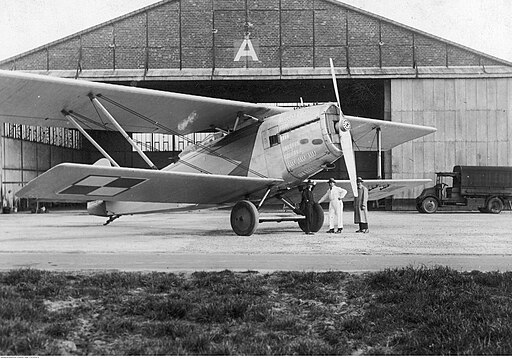
Amiot 120
The Amiot 120 emerged in the early 1920s as one of France’s most ambitious medium bomber prototypes. Built to meet a new generation of strategic reconnaissance and bombing requirements, it combined rugged construction with advanced aerodynamic features. Although it never entered large-scale production, the Amiot 120 paved the way for subsequent designs through its innovative structure and powerplant integration.
Design and Development
Concept and Requirements
In response to the French military’s 1921 specification for a fast, high-altitude bomber, Avions Amiot set out to create an aircraft capable of carrying a substantial bomb load over 1,000 kilometers. Key goals included:
- Cruising speeds above 200 km/h
- Service ceiling exceeding 7,000 meters
- Modular bomb racks for flexible ordinance configurations
Airframe and Materials
The Amiot 120’s structure married wood and metal to balance weight and durability. The primary load-bearing members—wing spars and fuselage longerons—were crafted from laminated spruce, while the forward fuselage and engine mounts employed welded steel tubing. Fabric coverings treated with doped linen enhanced smoothness and moisture resistance.
Wing Configuration
The biplane wings featured unequal spans and slight stagger to improve pilot visibility. Both upper and lower wings incorporated:
- Two solid spruce spars with plywood webbing
- Streamlined steel fittings at strut junctures
- Balanced ailerons on upper surfaces for precise roll control
Struts and bracing wires maintained wing alignment and transferred aerodynamic loads to the fuselage.
Powerplant and Propulsion
Engine Model
Powering the Amiot 120 was a single Lorraine-Dietrich 12Eb W-12 engine, chosen for its blend of reliability and output. Key characteristics included:
- Rated power: 450 kW (600 HP) at 1,900 RPM
- Liquid cooling via a twin-circuit radiator housed under the nose
- Dry weight: 500 kilograms
Propeller and Fuel System
A two-blade fixed-pitch wooden propeller translated engine torque into thrust. The fuel system comprised two 500-liter gravity-feed tanks located in the upper wing center section, offering:
- Total fuel capacity: 1,000 liters
- Endurance: approximately 5 hours at cruising power settings
Performance Characteristics
Flight Envelope
Designed to excel at medium-range missions, the Amiot 120 achieved:
- Maximum speed: 210 km/h at sea level
- Cruising speed: 185 km/h at 4,000 meters
- Service ceiling: 7,500 meters
Climb performance targeted 5,000 meters in under 18 minutes, granting tactical flexibility against early-generation anti-aircraft defenses.
Range and Endurance
Long-distance capability was a hallmark of the Amiot 120:
- Ferry range: 1,200 kilometers without bombs
- Combat radius: 600 kilometers with 800 kilograms of ordinance
- Loiter time: Two hours over target area
Armament and Payload
Offensive Load
The Amiot 120 carried its bombing load in an internal bomb bay beneath the lower wing root. Payload options included:
- Four 250-kilogram general-purpose bombs
- Twelve 50-kilogram fragmentation bombs
- Customizable racks for aerial mines or propaganda leaflets
Defensive Armament
To defend against fighter attacks, the crew managed three 7.7mm Lewis machine guns:
- One dorsal mount on a Scarff ring for the observer
- One ventral mount accessible through a trapdoor in the floor
- One fixed forward-firing gun synchronized through the propeller
Ammunition stores totaled 3,000 rounds, split evenly between mounting positions.
Crew Accommodations
Cockpit Layout
The two-man crew occupied tandem open cockpits:
- Pilot station forward with full engine and flight instrumentation
- Observer station aft equipped with compass, bomb-release levers, and camera mounts
A pneumatic intercom system facilitated communication under full throttle.
Ergonomics and Protection
Seats incorporated shock-absorbing spring mounts to reduce pilot fatigue. Transparent celluloid windshields shielded heads while preserving lateral visibility. Provision for armored panels beneath the pilot’s seat guarded against ground-fire fragments.
Avionics and Navigation
Instrument Suite
Basic flight instruments allowed precise navigation at altitude:
- Altimeter calibrated to 8,000 meters
- Airspeed indicator with 0–250 km/h range
- Inclinometer and turn-and-bank indicator
Long-Range Navigation
Optional equipment included:
- Drift sight mounted on the port wing struts
- Radio direction finder in the observer’s cockpit
- Celestial navigation sextant storage in a waterproof tube
Structural Reinforcement and Fatigue Life
Stress Analysis
Stress testing on prototypes identified high-load regions around wing root fittings and landing gear attachments. Reinforcements included:
- Steel gussets at fuselage longeron intersections
- Double-shear brackets on undercarriage struts
Service Life Projections
Engineers projected a fatigue life of 1,500 flight hours for primary structural members, with:
- Mandatory 100-hour inspection cycles
- Non-destructive testing of critical welds
Operational Trials and Modifications
Flight Testing
Initial flight trials uncovered engine cooling hotspots. Solutions involved enlarging radiator core area and adding cowl flaps for adjustable airflow control. Subsequent tests confirmed stable handling and improved engine temperatures.
Proposed Variants
Plans for stretched-fuselage and twin-engine derivatives were drafted but never finalized. One concept replaced the W-12 with twin 300 HP inline engines, aiming for increased payload at the expense of added complexity.
Technical Specifications
| Parameter | Specification |
|---|---|
| Crew | 2 (pilot and observer) |
| Length | 13.20 meters |
| Wingspan Upper/Lower | 18.00 m / 16.50 m |
| Height | 4.45 meters |
| Wing area | 72.8 square meters |
| Empty weight | 3,100 kilograms |
| Maximum takeoff weight | 5,200 kilograms |
| Powerplant | 1 × Lorraine-Dietrich 12Eb W-12 engine |
| Maximum speed | 210 km/h |
| Cruising speed | 185 km/h |
| Range | 1,200 kilometers (ferry) |
| Service ceiling | 7,500 meters |
| Rate of climb | 4.6 m/s at sea level |
| Endurance | 5 hours |
| Offensive armament | Up to 1,000 kg of bombs |
| Defensive armament | 3 × 7.7 mm Lewis machine guns |
Legacy and Influence
Although only a handful of prototypes flew, the Amiot 120 influenced French bomber design throughout the 1920s. Its blended construction techniques and focus on high-altitude performance informed later models that ultimately equipped frontline squadrons in the decade that followed.
.jpg)