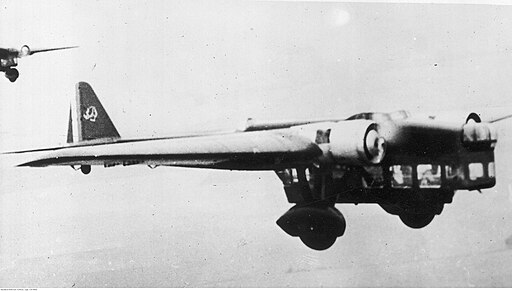
Amiot 143
The Amiot 143 stands out as one of the most distinctive French bombers of the late 1930s, combining an unconventional slab-sided fuselage with rugged undercarriage and versatile payload capacity. Designed to fulfill the French Air Ministry’s requirement for a fast, long-range medium bomber, it entered service just months before the outbreak of World War II. Although its performance lagged behind more modern contemporaries, the Amiot 143 demonstrated exceptional reliability and structural toughness throughout its operational career.
Design and Structure
Fuselage and Wing
The fuselage of the Amiot 143 features a deep, rectangular cross section that maximizes internal volume for bomb bays and crew stations. Constructed predominantly of welded steel tubing with light alloy and plywood fairings, it emphasizes ease of production and maintenance. Its rectangular planform wings use a two-spar wooden structure, covered with fabric and plywood panels, providing a balance of strength and weight savings.
Landing Gear
The fixed landing gear of the Amiot 143 incorporates spatted wheels that reduce drag while offering simple, robust construction. Shock absorption is handled by oleo-pneumatic struts housed within faired gear legs. A steerable tailwheel aids ground maneuvering, and all wheel hubs are equipped with quick-change brakes for rapid turn-around in forward bases.
Powerplant and Propulsion
Engines
Most production variants of the Amiot 143 employ two Gnome-Rhône 14K radial engines, each delivering 870 horsepower at takeoff. These engines mount to the wing’s leading edge in streamlined nacelles, complete with cowl flaps for cooling regulation. Metal cowling panels secure to hinged frames, allowing rapid access for in-flight inspections and maintenance.
Fuel System
The Amiot 143 uses self-sealing wing tanks totalling 2,500 liters in capacity, supplemented by auxiliary fuselage cells holding 500 liters. Fuel transfer pumps maintain gravity feed to the engines, while cross-feed lines allow any tank to service either engine. A fuel gauge array in the cockpit provides real-time readings for each tank bank.
Performance and Flight Characteristics
Speed and Range
With a maximum speed of 430 kilometers per hour at 3,400 meters, the Amiot 143 could outrun many early fighters when fully loaded. Its cruising speed of 330 kilometers per hour conserves fuel and extends patrol endurance beyond 1,200 kilometers on internal tanks alone. Ferry operations using external drop tanks can push its range past 1,700 kilometers.
Service Ceiling and Climb Rate
Capable of reaching 8,000 meters in just over 20 minutes, the Amiot 143 achieves a service ceiling of 9,500 meters under optimal conditions. Its climb performance is aided by the twin 14K engines and a clean aerodynamics package, despite the large frontal area of the slab-sided fuselage. Stability in turbulence is a noted strength, ensuring crew comfort and bombing accuracy at high altitude.
Armament
Offensive Armament
The internal bomb bay spans two parallel bays under the central fuselage, accommodating up to 1,500 kilograms of ordnance. Standard loadouts include:
- Four 250-kilogram general-purpose bombs
- Six 100-kilogram fragmentation bombs
- Provision for chemical or smoke munitions
Bomb release is managed through mechanical racks controlled by the observer from his station.
Defensive Armament
Defense relies on a network of manually operated gun positions. The original configuration includes:
- A dorsal turret mounting a single 7.5-millimeter MAC 1934 machine gun
- A ventral hatch position fitted with a 7.5-millimeter MAC 1934
- Twin beam mounts on each side of the fuselage, each with a 7.5-millimeter MAC gun
Ammunition stowage totals 4,000 rounds distributed evenly among the stations.
Crew and Ergonomics
Cockpit Layout
The pilot’s cockpit occupies the forward nose section, featuring large side windows for improved visibility during low-level approaches. Flight controls consist of a conventional control column and rudder pedals linked to cables and pulleys. A panel of analog gauges provides engine performance, airspeed, altitude, and fuel status at a glance.
Observer Station
Immediately aft of the pilot, the observer station houses bomb-sighting equipment and navigation charts. It includes a Norden-type bombsight mounted on an adjustable pedestal to align the aircraft’s trajectory with the target. A direct intercom system connects the observer to each gunner position via sound-powered telephones.
Avionics and Navigation
Instrument Suite
Standard avionics comprise:
- Airspeed indicator calibrated to 600 kilometers per hour
- Altimeter with fine adjustment across 0–12,000 meters
- Artificial horizon and directional gyro
- Turn-and-bank indicator
Backup instruments include a magnetic compass and a drift meter for cross-wind calculations.
Communication Equipment
The Amiot 143 carries a single HF radio set capable of voice and Morse code transmission. Dual antenna masts on the fuselage support long-range communication. A second VHF set is optional for liaison with fighter escorts and ground control during daylight operations.
Operational History
Pre-war Deployment
Initial production deliveries began in mid-1936, and by late 1937 the Amiot 143 equipped six bomber wings along France’s northern borders. Early exercises validated its strategic reconnaissance role, with crews praising its stable bombing platform and comfortable altitude performance.
Combat Service
When war erupted in September 1939, the Amiot 143 conducted night bombing raids against advancing enemy columns. Despite limitations in defensive armament and speed, it completed over 200 sorties before phased replacement by more modern models in mid-1940. A handful of airframes continued service in colonial theatres until 1942.
Technical Specifications
| Parameter | Specification |
|---|---|
| Crew | 4 (pilot, observer, two gunners) |
| Length | 17.80 meters |
| Wingspan | 26.00 meters |
| Height | 5.10 meters |
| Wing area | 98.0 square meters |
| Empty weight | 9,200 kilograms |
| Maximum takeoff weight | 14,500 kilograms |
| Powerplant | 2 × Gnome-Rhône 14K radial engines |
| Takeoff power | 2 × 870 HP at takeoff |
| Maximum speed | 430 km/h at 3,400 meters |
| Cruising speed | 330 km/h |
| Range | 1,200 km |
| Service ceiling | 9,500 meters |
| Rate of climb | 400 m/min at sea level |
| Armament (offensive) | 1,500 kg bombs |
| Armament (defensive) | 5 × 7.5 mm machine guns |
Conclusion
The Amiot 143 embodies the transitional period of bomber design in the late 1930s, where evolving doctrine and technological constraints produced unique solutions. Its slab-fuselage layout and robust undercarriage reflect a priority on payload and reliability over sleek aerodynamics. While quickly outpaced by faster, better-armed bombers, its service record underscores the importance of structural resilience and simplicity in aircraft design.
