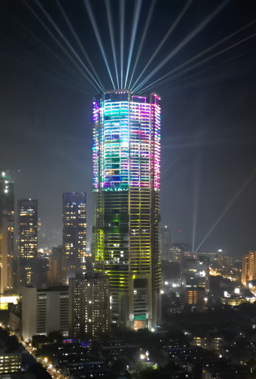
Palais Royale
Palais Royale, located in Worli, Mumbai, is a pioneering example of vertical luxury and sustainable engineering in India. Designed to be the country’s first super-tall residential tower, Palais Royale has garnered attention not only for its height but also for its commitment to green building standards and advanced structural systems. Despite facing legal and regulatory hurdles, the tower remains a symbol of architectural ambition and technical innovation in Mumbai’s evolving skyline.
Urban Context and Architectural Vision
Strategic Location
Palais Royale is situated in Worli, one of Mumbai’s most prominent commercial and residential districts. The site offers panoramic views of the Arabian Sea and is strategically positioned near key infrastructure such as the Bandra-Worli Sea Link, major arterial roads, and business hubs.
Design Philosophy
The tower was conceptualized by Talati & Panthaky Associated (TPA) and developed by Shree Ram Urban Infrastructure Ltd. The design emphasizes verticality, minimalism, and environmental responsibility. Its slender profile and glass-clad facade reflect a modernist aesthetic while integrating passive design strategies to reduce energy consumption.
Structural and Technical Specifications
Building Dimensions
- Total Height: Approximately 320 meters (roof height)
- Floors: 88 above ground, 3 basement levels
- Gross Floor Area: Over 100,000 m²
- Residential Units: ~120 luxury apartments, including duplexes and penthouses
Structural System
- Core Construction: Reinforced concrete core with shear walls for lateral stability
- Floor Slabs: Post-tensioned concrete slabs with high-strength rebar
- Column Grid: Variable spacing to accommodate large open-plan residences
- Wind Load Resistance: Designed to withstand cyclonic wind pressures up to 2.5 kN/m², typical for Mumbai’s coastal exposure
Foundation and Substructure
- Foundation Type: Deep pile foundation with bored piles extending up to 60 meters into basaltic rock
- Basement Use: Parking, mechanical rooms, water treatment systems, and service access
- Waterproofing: Multi-layer membrane system with active drainage and sump pumps
Facade and Envelope Engineering
Exterior Cladding
- Material: High-performance glass curtain wall with aluminum framing
- Thermal Insulation: Integrated low-E coatings and thermal breaks
- Acoustic Performance: Laminated glazing with STC ratings up to 45 dB
Performance Metrics
- U-Value (Glazing): Approx. 1.1 W/m²K
- Solar Heat Gain Coefficient (SHGC): Optimized to reduce cooling loads
- Daylight Penetration: Over 70% of occupied spaces receive natural light
Mechanical, Electrical, and Plumbing (MEP) Systems
HVAC and Climate Control
- Cooling System: Central chilled water plant with variable air volume (VAV) systems
- Ventilation: Mechanical ventilation with energy recovery ventilators (ERVs)
- Humidity Control: Dehumidification systems integrated into HVAC for monsoon season
Electrical Infrastructure
- Power Supply: Dual-feed high-voltage grid connection with diesel backup generators
- Lighting: LED fixtures with occupancy sensors and daylight-responsive dimming
- Smart Controls: Building Management System (BMS) for centralized monitoring and automation
Plumbing and Water Management
- Water Supply: Pressure-regulated system with filtration and UV treatment
- Sanitary Systems: Vacuum drainage and dual plumbing for greywater reuse
- Rainwater Harvesting: Collection tanks and filtration systems for landscape irrigation
Sustainability and Green Building Features
Certifications
- LEED Rating: Targeted LEED Platinum certification
- IGBC Compliance: Designed to meet Indian Green Building Council standards
Environmental Systems
- Energy Efficiency: Estimated 30–35% reduction in energy consumption compared to conventional buildings
- Renewables: Solar panels for common area lighting and hot water preheating
- Waste Management: On-site composting, recycling stations, and waste segregation protocols
Eco-Friendly Materials
- Low-VOC Finishes: Paints, adhesives, and sealants selected for indoor air quality
- Recycled Content: Use of fly ash in concrete and recycled steel in structural components
- Sustainable Wood: FSC-certified timber used in interior finishes
Vertical Transportation and Accessibility
Elevator Systems
- Total Elevators: 12 high-speed elevators, including dedicated service and fireman lifts
- Speed: Up to 6.0 m/s, with intelligent dispatching and zoning
- Accessibility: Elevators equipped with tactile controls, voice guidance, and emergency intercoms
Fire Safety and Egress
- Sprinkler Coverage: Full coverage in all residential and service areas
- Smoke Control: Pressurized stairwells and mechanical smoke extraction systems
- Evacuation Routes: Dual staircases with fire-rated enclosures and refuge floors every 20 levels
Amenities and Interior Design
Residential Features
- Apartment Sizes: Ranging from 400 m² to over 1,000 m²
- Interior Finishes: Italian marble, custom cabinetry, and smart home systems
- Acoustic Insulation: Double-wall construction and floating floors for sound isolation
Public and Recreational Spaces
- Sky Lounge: Located on upper floors with panoramic views of the Arabian Sea
- Fitness Center: State-of-the-art gym, yoga studio, and wellness spa
- Swimming Pools: Indoor and outdoor pools with temperature control
- Auditorium and Banquet Hall: Designed for private events and cultural gatherings
Connectivity and Infrastructure
Transport Access
- Road Connectivity: Direct access to Dr. Annie Besant Road and proximity to the Bandra-Worli Sea Link
- Parking: Multi-level underground garage with over 500 spaces, including EV charging stations
- Public Transit: Close to upcoming metro stations and bus routes
Digital Infrastructure
- Telecommunications: Fiber-optic backbone with high-speed internet and IPTV
- Smart Building Features: IoT sensors for predictive maintenance, energy analytics, and resident customization
Conclusion
Palais Royale Mumbai represents a bold leap forward in India’s high-rise residential architecture. With its towering height, advanced engineering, and commitment to sustainability, it sets a new benchmark for luxury living in urban India. Despite its complex development journey, the tower stands as a testament to what is possible when design, technology, and environmental stewardship converge.
