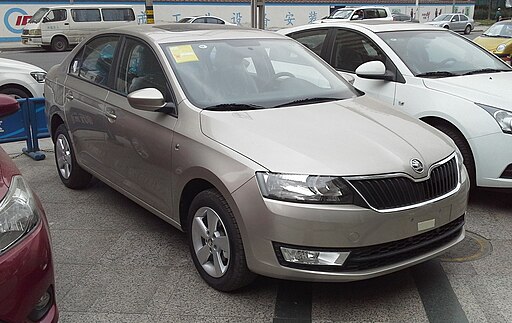
Škoda Rapid faults
Engine-Related Faults
Excessive Oil Consumption on 1.2 TSI
Owners frequently report oil consumption rates exceeding 1 L per 1 000 km once the odometer passes 80 000 km. This stems from piston-ring wear and marginal crankcase ventilation design. Symptoms include low oil-level warnings between services, bluish exhaust smoke under acceleration, and elevated oil pressure in the VW Audi group diagnostic tool. Affected engines often require either a piston-ring replacement or an engine “refresh” kit that addresses improved seals and updated pistons. Repair costs range from €600 for a ring-only job (labour-intensive) to over €1 500 if full engine strip-down is needed.
Timing Chain Tensioner Failure
On early 1.2 TSI units, the timing-chain tensioner can lose hydraulic pressure, causing chain rattle on cold starts or at idle. Left unchecked, a stretched chain risks jumping teeth and leading to piston-valve contact. Indicators include a metallic rattling from the front of the engine before coolant warms up to operating temperature. Solutions involve fitting the uprated tensioner and guide rails introduced in mid-2014 production; cost typically sits around €400–€600 including parts and labour.
Coil Pack and Ignition Misfires
High-mileage petrol Rapids with 1.2 MPI or 1.4 MPI engines may show misfire codes (P0300 series) due to failing ignition coils or aged spark plugs. Rough idle, intermittent jerking under load, and the engine-management light illuminate. A routine spark-plug and coil-pack swap resolves most cases, costing roughly €150 for parts plus one hour of labour. Failing to address these faults can damage the catalytic converter and increase running costs.
Diesel Particulate Filter (DPF) Clogging on 1.6 TDI
Short-trip urban driving prevents full DPF regeneration cycles, leading to soot buildup. Symptoms include persistent regeneration requests, sluggish throttle response, and warning messages in the instrument cluster. Left untreated, forced-regeneration risks overheat and potential turbocharger damage. Preventive measures involve periodic motorway runs above 80 km/h for 20 minutes or installing a “heat-soak” exhaust module. Cleaning a blocked DPF professionally costs €300–€500, whereas replacement runs €1 000–€1 400.
EGR Valve Carbon Buildup
EGR (exhaust-gas recirculation) valves on TDI engines develop carbon deposits around 100 000 km, hampering airflow and causing rough running or limp-home mode. Owners notice poor low-rpm response, frequent warning lights, and inconsistent idle. Cleaning the EGR valve and intake manifold typically resolves the issue for around €200 in parts and labour. If left unchecked, increased soot can damage injectors, pushing costs over €600.
Transmission and Drivetrain
DSG Mechatronic and Clutch Pack Wear
The 7-speed DSG gearbox demands fluid and filter changes every 60 000 km. Missed services lead to mechatronic-unit fatigue, erratic shifting, and, eventually, clutch pack slipping or complete mechatronic failure. Early warning signs include jerky creep, hesitation when pulling away, and occasional “C” (gearbox) warnings. A fluid/filter service costs €200–€300; a full mechatronic overhaul or replacement can exceed €1 200.
Manual Gearbox Synchro Ring Wear
Lower-gear synchros—especially 2nd and 3rd—on 5- and 6-speed manuals wear prematurely if drivers ride the clutch or downshift aggressively. Drivers experience crunching noises when selecting gears and difficulty finding neutral. A gearbox strip-down to replace worn synchros runs roughly €500–€700, depending on workshop hourly rates.
Suspension and Steering
Rear Torsion-Beam Bushing Deterioration
Over time, the rubber bushings in the rear torsion beam harden or crack, transmitting more vibration and road harshness into the cabin. Clunks over potholes, loose handling at speed, and uneven tyre wear are typical. Replacing all four bushings costs around €250–€350 in parts and labour.
Steering Rack Play and Fluid Leaks
Electric-assist steering racks develop play in the pinion rack and reveal leaking seals after 100 000 km. Symptoms include wandering steering, unusual steering-column vibrations, and faint knocking noises when turning lock-to-lock. Rack replacement or rebuild ranges from €400 for a remanufactured unit to €700 for a new rack.
Electrical and Electronics
Central Locking and Key-Fob Failures
Owners report key-fobs losing sync with the car due to worn buttons or internal battery corrosion. Issues manifest as unresponsive locks, doors not unlocking, or the alarm failing to arm/disarm. Reprogramming or key-fob replacement costs €120–€200 per unit; recycled fobs can be sourced for €60 but still require dealer programming fees.
Infotainment System Freezes and USB Port Malfunctions
Small memory leaks in the Swing and Amundsen head-units lead to occasional system hangs, requiring a key-pull reboot. USB and AUX ports may lose connectivity due to worn sockets. A software reflash can cure freezing for free at a Škoda dealer, while USB-port replacement costs about €50 plus fitting.
Dashboard Cluster Pixel Failures
LCD clusters on higher-trim Rapids can develop dead pixels or backlight inconsistencies, particularly after battery disconnections or voltage dips. A cluster rebuild or replacement ranges from €200 for an independent electronics specialist to €450 via the official parts channel.
Body and Interior
Water Ingress in Headlights
Early Rapid models had imperfect headlamp seals, allowing moisture condensation or water pooling inside the lens. This accelerates reflector corrosion and can reduce light output. Resealing the lamp housing costs €80–€120 per unit, while complete lamp replacements approach €250 each.
Corrosion Around Tailgate Hinges and Wheel Arches
Rust often appears between the tailgate metal panels and at wheel-arch seams, especially on pre-2015 cars without the thicker anti-corrosion primer. Addressing surface rust and repainting costs €150–€300 per arch or hinge area; untreated corrosion can spread into structural inner panels.
Sunroof Drainage Blockages (if equipped)
Spaceback models with panoramic sunroof options sometimes suffer clogged drainage tubes, leading to water trickling into footwells. Blocked drainpipes can be cleared for €50 in labour; complete tube replacements run around €100–€150 plus hourly rates.
Škoda Rapid as a used car
Škoda Rapid occupies an interesting niche between supermini and compact sedan, blending practical dimensions with Volkswagen Group engineering. Launched in 2012 on the PQ25 platform shared with the Fabia and VW Polo, the Rapid aimed to offer drivers a roomy cabin, generous trunk space, and cost-effective ownership. As a used-car candidate, the Rapid appeals to families and commuters seeking a reliable, well-equipped vehicle that undercuts pricier compact rivals. This article dives into the technical parameters of the Rapid, explores its strengths and weaknesses, and provides detailed guidance for buyers in the second-hand market.
Generations and Facelifts
The Rapid went through two main lifecycles before its 2021 discontinuation.
First Generation (NH; 2012–2017)
- Body styles: Four-door notchback sedan and five-door spaceback estate
- Design highlights: Tight panel gaps, upright tailgate for maximum cargo access
- Mid-cycle refresh (2015): New LED daytime running lights, revised bumper, updated infotainment
Second Generation (Type CW; 2017–2021)
- Platform upgrade: Shared underpinnings with the updated PQ25, improved torsional rigidity
- Design evolution: Sharper lines, full LED rear cluster, slimmer front grille
- Technology boost: Optional mirror-link smartphone integration and digital cockpit on higher trims
Understanding these iterations helps match a buyer’s budget and desired equipment level with the Rapid’s technological advancements.
Technical Specifications
Engine Line-up
Across markets, the Rapid offered a balanced mix of naturally aspirated and turbocharged engines:
| Engine Code | Displacement | Power (hp) | Torque (Nm) | Fuel |
|---|---|---|---|---|
| 1.2 MPI | 1198 cc | 75 | 110 | Petrol |
| 1.4 MPI | 1390 cc | 85 | 132 | Petrol |
| 1.2 TSI | 1197 cc | 90, 110 | 160 | Turbo-Petrol |
| 1.4 TSI | 1395 cc | 125 | 200 | Turbo-Petrol |
| 1.6 TDI | 1598 cc | 90, 105 | 230–250 | Diesel |
The 1.2 TSI and 1.4 TSI engines deliver the most satisfying blend of punch and economy. Diesel fans gravitate toward the 1.6 TDI for its torque-rich midrange and sub-4.0 L/100 km fuel consumption.
Performance Figures
Performance depends heavily on engine choice and transmission pairing:
- 1.2 MPI (75 hp): 0–100 km/h in about 14.5 s, top speed ~168 km/h
- 1.2 TSI (90 hp): 0–100 km/h in 11.9 s, top speed ~185 km/h
- 1.4 TSI (125 hp): 0–100 km/h in 9.5 s, top speed ~201 km/h
- 1.6 TDI (90 hp): 0–100 km/h in 12.6 s, top speed ~186 km/h
Turbocharged units significantly sharpen acceleration while maintaining admirable fuel economy, making them ideal for motorway driving.
Dimensions and Capacities
The Rapid’s footprint balances maneuverability with interior volume:
| Parameter | Sedan | Spaceback (Estate) |
|---|---|---|
| Length | 4 483 mm | 4 576 mm |
| Width (ex. mirrors) | 1 706 mm | 1 706 mm |
| Height | 1 461 mm | 1 513 mm |
| Wheelbase | 2 602 mm | 2 602 mm |
| Cargo volume | 550 L | 415–1 505 L |
| Curb weight | 1 125–1 260 kg | 1 200–1 330 kg |
A 550-litre trunk in the sedan rivals many small SUVs, while the estate’s folding-seat configuration lifts capacity beyond 1 500 litres.
Fuel Economy and Emissions
Real-world consumption varies with engine and driving style:
- 1.2 MPI: 6.2–6.8 L/100 km, CO₂ ~145–155 g/km
- 1.2 TSI: 5.0–5.8 L/100 km, CO₂ ~117–133 g/km
- 1.4 TSI: 5.2–6.0 L/100 km, CO₂ ~119–136 g/km
- 1.6 TDI: 3.8–4.5 L/100 km, CO₂ ~99–115 g/km
Diesel variants offer the lowest emissions and best economy, but city-focused drivers may find petrol turbo models easier to maintain over the long term.
Transmission Options
Škoda paired these engines with both manual and automatic gearboxes:
- 5-speed manual: Standard on MPI petrols and entry-level diesels
- 6-speed manual: Standard on TSI models and higher-output diesels
- 7-speed DSG: Optional on 1.2 TSI and 1.6 TDI, providing lightning-quick shifts but requiring regular DSG fluid and filter changes
When evaluating a used Rapid, confirm documented DSG service every 60 000 km or 4 years to avoid mechatronic wear and shift-quality issues.
Chassis, Ride and Handling
Suspension Layout
- Front: MacPherson struts with coil springs
- Rear: Torsion-beam axle tuned for a balanced compromise between ride comfort and agility
Higher-trim cars may feature firmer dampers and thicker anti-roll bars, enhancing cornering stability at the expense of low-speed compliance.
Steering Feedback
Electric power steering delivers a light feel in tight parking spaces and satisfactory road grip feedback on open roads. Mid-corner adjustments are precise, though drivers who crave direct, weighted steering may find feedback muted compared to sportier hatchbacks.
Braking Performance
Disc brakes up front and drums at the rear are standard on base models. Mid-range and above trims gain rear discs, delivering shorter stopping distances and less fade under repeated heavy braking.
Interior Layout and Equipment
Standard Equipment
Even entry-level Rapid models come well equipped:
- Dual front airbags, front-side and curtain airbags
- ABS, ESC, MSR (engine-drag torque control)
- Isofix anchor points for child seats
- Manual air-conditioning and height-adjustable driver’s seat
Optional and High-Trim Features
Higher grades introduce a suite of comfort and technology upgrades:
- Touchscreen infotainment with Bluetooth, USB and optional MirrorLink
- Automatic climate control, rear air vents in Spaceback
- Leather-wrapped steering wheel, Alcantara or leather upholstery
- Adaptive cruise control and parking sensors
- Ambient interior lighting and heated front seats
Inspect used examples for worn cloth inserts and fading on light-colored plastics, especially around door pulls and armrests.
Safety Ratings and Features
Euro NCAP Results
- 2012 Sedan: 5 stars for adult occupant protection, 4 stars for pedestrian safety
- 2015 Spaceback: 5 stars with optional AEB (autonomous emergency braking)
Active Safety Systems
Later Rapid models offer advanced driver-aids such as:
- Front assist with city emergency braking
- Blind-spot detection
- Lane-keep assist
- Automatic high-beam control
Ensure any advertised safety features function correctly by testing under safe, controlled conditions.
Maintenance and Reliability
Common Maintenance Schedules
A well-maintained Rapid extends service life and preserves performance:
- Oil and filter: every 15 000 km or 1 year
- Spark plugs (TSI): every 60 000 km
- Timing chain (TSI 1.2): maintenance-free but monitor for chain stretch after high mileage
- DSG fluid and filter: every 60 000 km or 4 years
- Brake fluid: every 2 years
- Pollen filter: every 30 000 km or yearly
Review service records meticulously, looking for any deviations from these intervals.
Typical Repair Costs
- Brake pad and disc replacement: €120–€200 per axle
- Clutch kit swap (manual): €500–€800, depending on labour rates
- DSG mechatronic unit replacement: €1 200–€1 800 if unserviced
- Turbocharger replacement (TSI/ TDI): €800–€1 200 including labour
Timely routine maintenance minimizes the likelihood of major failures and expensive repairs.
Used Car Buying Guide
Advantages and Drawbacks
- Advantages
- Spacious cabin and class-leading trunk volume
- Economical engine options with low running costs
- Strong safety ratings and optional cutting-edge assistance systems
- Robust build quality derived from Volkswagen Group platforms
- Drawbacks
- Basic MPI engines feel lethargic at highway speeds
- DSG’s servicing demands can be overlooked by private sellers
- Estate (Spaceback) rear suspension transmits more road harshness
- Some interior plastics prone to scratching and surface wear
Pricing and Depreciation
Used-car values vary with age, mileage, and trim level:
| Age | Typical Price (EUR) |
|---|---|
| 2–4 years | 12 000–16 000 |
| 5–7 years | 7 500–12 000 |
| 8–10 years | 4 000–7 500 |
| 10+ years | 2 500–4 000 |
Diesel models often carry a price premium if mileage remains below 120 000 km, whereas DSG-equipped cars may trade at a small discount if service history is incomplete.
Pre-Purchase Inspection Checklist
- Verify full service book with stamps for oil, DSG and major intervals.
- Test-drive across urban, suburban and highway conditions to check engine response, gearbox shifts and suspension comfort.
- Inspect for oil leaks at the turbocharger and around camshaft-cover seals on TSI engines.
- Scan for DPF regeneration events on diesel models by observing exhaust temperature cycles and smoke behavior under load.
- Examine bodywork for corrosion around wheel arches, door sills and tailgate hinges, especially on early first-generation cars.
- Confirm operation of electric windows, central locking, infotainment and all advanced driver-assistance features.
A professional inspection by a Škoda-specialist workshop can uncover hidden faults and negotiate needed repairs before purchase.
Conclusion
As a used purchase, the Škoda Rapid offers a compelling blend of space, comfort and technology at a competitive price point. Buyers who align engine choice and trim level to their driving needs—and adhere to the manufacturer’s maintenance schedules—will discover a thoroughly capable and reliable companion for daily commuting or family duties. By following the detailed specifications, inspection tips and ownership insights laid out here, prospective owners can confidently select a Rapid that delivers long-term value and driving satisfaction.
