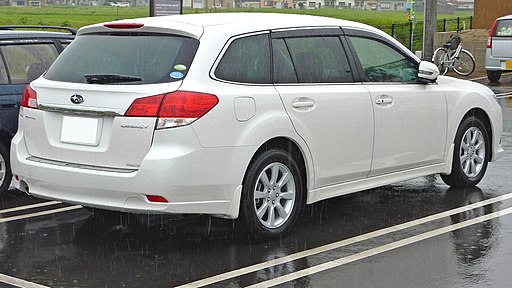
Subaru Legacy faults
Below is a categorized overview of the most frequently reported issues on Subaru Legacy models, along with how each fault typically appears and the usual remedy or workaround.
Transmission & Drivetrain
CVT Shudder and Overheating
Many Legacy models fitted with the Lineartronic CVT exhibit a noticeable shudder or judder at low speeds under light throttle. This is usually caused by glazing on the belt‐and‐pulley surfaces or contamination of the CVT fluid. Drivers report hesitation during take-off and occasional “transmission fault” warnings. A full fluid and filter change using Subaru’s approved CVT fluid often restores smooth operation. In more severe cases, a valve-body rebuild or replacement of the belt‐and‐pulley assembly is required.
Manual Gearbox Lubrication Issues
Owners of manual-transmission Legacies (particularly sixth-generation 6-speed units) sometimes experience crunching gear changes or gear slip under load. The root cause is inadequate lubrication in the shift forks or synchro assemblies. Symptoms include grinding while shifting and a vague shift-lever feel. Replacing the gear oil with the correct viscosity grade and, if necessary, overhauling worn synchros resolves the problem.
Engine & Oil System
Rear Cam Baffle Oil Leak
On naturally aspirated flat-four engines, the plastic oil baffle behind the timing cover can crack over time, sending oil toward the firewall and into the cabin heater box. Drivers notice oil spots under the engine and a burning-oil odor inside. Replacing the plastic baffle with Subaru’s updated metal-reinforced version cures the leak permanently.
Valve Cover Gasket Seepage
High-mileage Legacy engines frequently develop oil seepage around the cylinder-head cover gasket. The leak may drip onto exhaust components, producing blue-tinted smoke under hard acceleration. Renewing the valve-cover gasket and cleaning the mating surfaces eliminates the seepage.
Head Gasket Failures
Early-generation boxers (pre-2011) sometimes suffer head-gasket failure leading to coolant loss, white exhaust smoke and intermittent overheating. Engine warning lights or reservoir-level dips are telltale signs. Subaru extended many warranties on affected years; a full head-gasket replacement and machine work on the head deck is the definitive fix.
Turbocharger Oil Consumption (XT Models)
Legacy GT and spec-B variants with the EJ25 turbo engine can burn excessive oil—up to 1 L per 1 000 km—due to worn piston rings or turbo-seal deterioration. Drivers report low-oil warnings between services and bluish smoke under boost. Frequent oil-level checks, shorter service intervals with high-quality synthetic oil and, in severe cases, a turbo rebuild or top-end refresh address the consumption.
Cooling & Heating
Radiator Plastic Tank Cracks
Plastic-end-tank radiators on mid-2010s models may develop hairline cracks, leading to slow coolant leaks and overheating. Coolant stains under the front of the car after parking overnight are a common indicator. Installing an updated plastic radiator or upgrading to an aluminum core unit stops repeat leaks.
Thermostat Housing and Hose Leaks
Aging plastic thermostat housings and radiator hoses can fracture, causing abrupt coolant loss and rapid temperature rises. Drivers experience sudden temperature gauge jumps and may see steam under the hood. Replacing the housing or hoses with Subaru’s reinforced components restores coolant integrity.
Cabin Heater Core Corrosion
Corrosion at heater-core joints allows coolant to seep into the passenger-side footwell, leaving damp carpets and a sweet smell. Removing and replacing the heater core and flushing the HVAC system cures flooding and restores cabin heat performance.
Electrical & Electronics
Parasitic Battery Drain
Some late-model Legacies exhibit excessive standby current draw, discharging the battery if left unused for several days. Typically caused by a CAN-bus module failing to enter sleep mode or aftermarket alarm installations, owners wake to a flat battery. Diagnosing with an ammeter, updating the body-control-module software or isolating the faulty circuit stops the drain.
Airbag (SRS) Warning Lamp Faults
Persistent SRS-light illumination can stem from defective seat-belt buckle sensors or passenger-weight modules in the front seats. The airbag warning light remains on, disabling status confirmation. A diagnostic scan locates the bad sensor; replacing the faulty buckle or module restores full airbag readiness.
Infotainment Freezes and Sensor Failures
Earlier Legacy head-units (Subaru Starlink) occasionally lock up or reboot, and parking-sensor or rain-sensor modules can go offline. Symptoms include unresponsive touchscreen menus, loss of Bluetooth or wipers stuck off. A soft reset (power-cycle) clears temporary glitches; dealers can apply firmware updates or swap out failing modules under warranty.
Suspension & Chassis
Rear Suspension Clunks
Worn trailing-arm bushings or anti-roll-bar links in early-generation Legacies produce audible knocks over bumps at low speeds. Owners hear a metallic “clunk” from the rear when rolling over speed-bumps. Lubricating links or fitting revised nylon bushings and new sway-bar end links under warranty restores chassis quietness.
Brake Line Corrosion
In regions with heavy winter salting, steel brake lines can corrode and weep fluid, reducing braking performance. A soft spongy pedal and visible rust on under-carriage lines warn of impending failure. Replacing affected brake lines with corrosion-resistant tubing and inspecting caliper slides ensures safe stopping.
Fuel & Emissions
Fuel Pump Failures
Mileage-worn fuel pumps may begin to fail, causing hesitation, stalling or hard starts. A drop in fuel-rail pressure under load or intermittent no-start conditions are red flags. Fitting the updated OEM pump assembly under recall cures the issue.
Oxygen Sensor (O₂) Circuit Errors
Bank-1 or bank-2 upstream O₂ sensors degrade over time, triggering P0133 or P1131 fault codes and rough idling. Fuel trims go out of spec, impacting economy and emissions. Replacing the faulty sensor with a genuine Subaru part clears the codes and restores correct air–fuel ratios.
Body & Interior
Sunroof Drain Blockages and Water Ingress
Debris-clogged sunroof drains lead to water spilling into the headliner and A-pillar cavities. Owners notice wet carpets in the footwells after heavy rain. Clearing or replacing clogged drain tubes prevents further leaks.
Windshield Stress Cracks
Some Legacy windshields develop star-shaped cracks without impact due to laminated‐glass tension. Cracks can rapidly spread in temperature swings. Subaru’s glass warranty or specific recall programs cover free replacement if damage isn’t collision-related.
Power Window Regulator Failure
Electric window lifters occasionally jam or operate slowly as the regulator gear teeth wear. Symptoms include one-side windows stalling or rattling when moving. Swapping the worn regulator assembly under Subaru’s warranty or installing an aftermarket kit restores smooth window travel.
Subaru Legacy as a used car
The Subaru Legacy has long been prized for its blend of all-wheel-drive traction, flat-four engine smoothness, and family-friendly cabin. Over successive generations, it has earned a reputation for durability, especially in climates prone to rain, snow, or ice. As a used purchase, the Legacy offers strong value retention, combining solid engineering with a broad dealer network for parts and service. Buyers can choose from naturally aspirated models for economy or turbocharged variants for brisk performance, all underpinned by symmetrical AWD stability. The Legacy’s ride comfort, safety ratings, and generous interior space make it an enduring choice in the midsize segment.
Generational Breakdown
Fourth Generation (2003–2009)
The fourth-generation Legacy marked Subaru’s first mass-market use of continuously variable transmission (CVT), known as Lineartronic, alongside 2.5-liter flat-four engines producing 165–173 horsepower. Chassis rigidity improved by 30 percent over its predecessor, boosting handling precision and crashworthiness. Key trim levels included the base 2.5i, sport-tuned 2.5i “Spec.B,” and the turbocharged GT model, outputting 250 hp in North American spec. Interior upgrades featured optional leather, dual-zone climate control, and a premium Harman Kardon audio system. Fuel economy ranged from 19 mpg city/27 mpg highway in CVT models to 21/28 mpg for manual-transmission variants.
Fifth Generation (2010–2014)
The fifth generation ushered in a refined chassis with high-strength steel components and more aerodynamic body styling. Engine choices expanded to include a 3.6-liter flat-six with 256 hp on 3.6R trims, while the turbocharged 2.5-liter remained in GT and spec.B, delivering up to 265 hp. Lineartronic CVT software was retuned for smoother acceleration and reduced “rubber-band” feel, raising highway economy to 23–33 mpg depending on engine and final drive ratio. Safety features like lane-departure warning and blind-spot monitoring debuted mid-cycle. Cargo volume measured 32 cubic feet with seats up, growing to 60 cubic feet with the rear seats folded.
Sixth Generation (2015–2019)
The sixth-generation Legacy adopted Subaru’s Global Platform for improved torsional stiffness and crash energy management. Standard engine was a new direct-injection 2.5-liter flat-four making 175 hp; the optional turbocharged 2.4-liter flat-four in GT and Limited XT variants produced 260 hp. The range featured updated Lineartronic CVT with manual shift mode and a choice of 6-speed manual in base models. Advanced driver aids like adaptive cruise control, forward-collision mitigation, and lane-keep assist became standard across most trims. EPA fuel-economy ratings ran from 26 mpg city/36 highway for base models to 23/32 mpg for turbocharged versions.
Engine and Performance Specifications
Naturally Aspirated Flat-Four Engines
- Displacement: 2.5 liters
- Power: 165–175 horsepower
- Torque: 163–174 lb-ft
- Fuel Delivery: Electronic port fuel injection (up to fifth gen), direct injection (sixth gen)
- Economy: 19–26 mpg city, 27–36 mpg highway
Naturally aspirated engines are celebrated for linear power delivery, low maintenance cost, and longevity beyond 200,000 miles when serviced regularly.
Turbocharged Variants
- Displacement: 2.5 liters (fourth/fifth gens), 2.4 liters (sixth gen)
- Power: 250–265 hp (fourth/fifth gen), 260 hp (sixth gen)
- Torque: 243–258 lb-ft
- Boost Control: Electronic wastegate and intercooler cooling circuits
- Economy: 20–23 mpg city, 28–33 mpg highway
Turbo versions demand more frequent oil changes and attention to cooling-system integrity but reward with robust midrange thrust and towing capacity up to 1,500 pounds.
Transmission Options
Lineartronic CVT
Lineartronic CVT is standard on most automatic-equipped Legacies. Gear ratios vary continuously between 14.9:1 and 1.4:1, optimizing engine load and fuel efficiency. Manual shift mode and simulated “gears” provide driver engagement. Fluid changes every 30,000 miles with approved CVT oil are crucial to prevent belt glaze and overheating.
Manual Gearbox
A 5- or 6-speed manual transmission appears in base and sport models across several generations. Gearboxes feature close ratios for spirited driving and a cable-actuated shifter for direct feel. Clutch assemblies rated for 150,000 miles typically require replacement around 120,000–150,000 miles based on driving style.
Traditional Automatic
Fourth-generation models offered a 4- or 5-speed torque-converter automatic. While robust, these units yield lower economy than CVTs and lack manual shift functionality. Recommended fluid service intervals are 50,000 miles with high-quality Dexron-III/Merc semi-synthetic ATF.
Chassis and Suspension
The Legacy’s suspension blends MacPherson struts up front with dual-link rear arms, balancing ride compliance and cornering stability. Steering uses an electric-assist rack, delivering precise feedback. Brake systems combine ventilated front discs with solid rear discs, optionally upgraded to 13-inch fronts on GT models. Ground clearance averages 5.1 inches on non-XT variants, rising to 5.8 inches on turbocharged trims with X-Mode software for mild off-road capability.
Interior Features and Trim Levels
Legacy interior packaging emphasizes headroom and legroom, providing 39.2 inches of rear knee room and 38.5 inches up front. Standard equipment across base models includes cloth upholstery, a 6.2-inch touchscreen audio, and Bluetooth connectivity. Higher trims add leather seats, an 8-inch center display, navigation, power front seats with lumbar support, heated rear seats, and panoramic sunroof. Cargo volume ranges from 32 to 60 cubic feet, while available roof rails expand utility for bikes or cargo boxes.
Common Faults and Maintenance Considerations
Regular maintenance is key to Legacy longevity. CVT fluid breakdown can cause shudder; interval changes prevent premature wear. Valve-cover gasket seepage and rear cam baffle leaks on naturally aspirated engines appear around 100,000 miles but are straightforward to repair. Turbo models benefit from frequent oil sampling and cooling-system checks to avoid oily smoke and head gasket stress. Brake-line corrosion in salted climates and sunroof drain clearings are preventative tasks to avoid costly rust or water intrusion.
Pricing and Value Retention
A well-maintained fourth-generation Legacy with 100,000–150,000 miles typically trades between $4,000 and $7,000. Fifth-generation examples in clean condition command $8,000–$12,000, depending on engine and trim. Sixth-generation models from 2016–2019 range from $15,000 to $22,000, with turbocharged Limited XT versions at the upper end. Legacy’s all-wheel-drive system and solid safety record help sustain residual values above many competitors in the midsize sedan class.
Tips for Buying a Used Subaru Legacy
- Obtain a pre-purchase inspection focused on CVT service history, oil leaks, and suspension bushings.
- Verify completion of all technical service bulletins and extended-warranty campaigns, especially on head gaskets and CVT modules.
- Review maintenance records for regular oil changes using synthetic 0W-20 or 5W-30 and timely brake-fluid flushes.
- Consider extended service plans if purchasing a sixth-generation model nearing 100,000 miles.
- Test-drive on varied road surfaces to assess steering alignment, drivetrain smoothness, and all-wheel-drive engagement.
Purchasing a Subaru Legacy as a used car rewards buyers with a balanced package of safety, versatility, and longevity. With proper care and informed selection, these sedans and wagons continue to deliver confidence behind the wheel for many miles to come.
