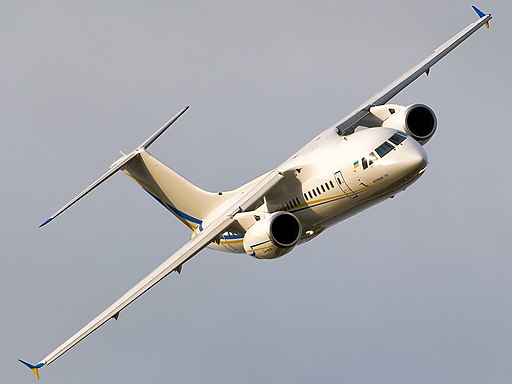
Antonov An-148
The Antonov An-148 is a twin-engine regional jet designed for short- to medium-haul routes. Developed in the early 2000s by the Ukrainian Antonov Design Bureau in collaboration with Russia’s Voronezh Aircraft Production Association, it fills a market niche between turboprops and larger jets. With seating for 68 to 85 passengers and a high-mounted wing for improved field performance, the An-148 combines rugged utility with modern avionics and aerodynamic efficiency.
Design and Development
Concept and Planning
The An-148 program began with a mandate to replace aging Soviet-era airliners on regional routes. Engineers aimed to create a versatile platform capable of operating from unprepared runways, handling extreme climates, and accommodating multiple mission profiles. Initial studies emphasized ease of maintenance, commonality of parts, and compliance with international certification standards.
Structural Design
The fuselage features a circular cross-section reinforced by longitudinal frames and stringers. High-strength aluminum alloys form the primary structure, while carbon-fiber composites are used for control surfaces and fairings to reduce weight. The high-mounted wing affords ground clearance for debris‐resistant operations and incorporates a single‐piece center section for simplified maintenance.
Aerodynamics and Flight Controls
Wing design employs a moderate sweep angle with double‐slotted flaps and leading‐edge slats to optimize lift at low speeds. Winglets minimize induced drag, enhancing fuel efficiency on cruise segments. The fly‐by‐wire flight control system integrates electronic actuators with manual backups, delivering precise handling and automatic envelope protection.
Propulsion and Environmental Systems
Each wing houses a turbofan engine mounted on a pylon, isolating the fuselage from vibration. An onboard auxiliary power unit supplies pneumatic and electrical power for environmental control, deicing, and engine starts. Cabin pressurization and air conditioning maintain comfortable conditions across a broad temperature range from –50 °C to +50 °C.
Variants and Configurations
An-148-100/200 Series
- 68–75 seats in a two‐class layout
- Standard avionics suite with dual flight management systems
- Optional quick‐change cabin for mixed passenger–cargo roles
An-148-300 Series
- Extended range variant with additional fuel tanks
- Increased seating up to 85 in single‐class configuration
- Reinforced landing gear for rough‐field operations
Specialized Versions
- Freighter conversion with cargo door and strengthened floor
- Corporate/VIP cabin with configurable luxury fittings
- Military transport variant featuring paratroop doors and mission consoles
Technical Specifications
Dimensions and Weights
| Parameter | Value |
|---|---|
| Wingspan | 29.00 m |
| Length | 29.13 m |
| Height | 8.30 m |
| Wing Area | 80.0 m² |
| Fuselage Diameter | 3.75 m |
| Maximum Takeoff Weight | 43,500 kg |
| Maximum Landing Weight | 42,000 kg |
| Operating Empty Weight | 21,900 kg |
| Maximum Payload | 9,600 kg |
Performance
| Parameter | Value |
|---|---|
| Maximum Cruise Speed | 830 km/h |
| Typical Cruise Speed | 780 km/h |
| Range (Maximum Payload) | 2,100 km |
| Ferry Range (Light Load) | 4,000 km |
| Service Ceiling | 12,200 m |
| Takeoff Distance (MTOW) | 1,650 m |
| Landing Distance | 1,400 m |
| Rate of Climb | 12 m/s |
| Fuel Capacity | 11,000 L |
Powerplant
- 2 × Lotarev D-436-148 turbofan engines
- Thrust: 7,500 kgf (73.5 kN) each
- Full‐authority digital engine control (FADEC)
- Integrated thrust reversers for short‐field performance
Avionics and Systems
- Glass cockpit with four large LCD displays
- Dual Flight Management Systems with RNP AR approaches
- Synthetic Vision System and Weather Radar
- Traffic Collision Avoidance System (TCAS II)
- Health and Usage Monitoring System (HUMS)
Operational History
Certification and Entry into Service
The An-148 first flew in December 2004 and secured Ukrainian certification in early 2009, followed by Russian and European validation. Entry into commercial service began the same year, primarily with regional carriers in CIS countries.
Civil Operators
- Infractions Airlines (Russia) on domestic feeder routes
- Motor Sich Airlines (Ukraine) serving remote airfields
- Iran Aseman Airlines (Iran) following local assembly at HESA
Military and Government Use
- Border guard and airborne surveillance for custom agencies
- Airborne command post conversions for government VIP transport
- Tactical airlift training platforms for airborne troops
Notable Routes and Deployments
- High‐altitude operations to Central Asian mountainous airports
- Arctic supply missions to remote outposts in northern Siberia
- Humanitarian relief shuttles in Central Africa field camps
Maintenance and Upgrades
Structural and Airframe
Scheduled inspections occur every 800 flight hours, focusing on wing-to-fuselage joints, landing gear struts, and composite surfaces. Introduced corrosion-resistant alloys and advanced sealants have extended overhaul intervals by 30 percent.
Engine Maintenance
D-436 engines undergo borescope checks at 1,200-hour intervals and full overhauls at 4,000 hours. Operators often adopt upgraded fan blade treatments to resist erosion in sandy environments.
Avionics Upgrades and Cabin Refurbishment
Recent retrofit programs include touchscreen flight displays, satellite broadband for onboard Wi‐Fi, and LED cabin lighting to lower power draw. Modular interior panels reduce weight and simplify reconfiguration between passenger and VIP layouts.
Conclusion
The Antonov An-148 blends STOL capability with modern jet performance, making it an adaptable choice for airlines and government agencies operating on short runways and in extreme climates. Its modular design, robust engines, and advanced avionics deliver reliable service on domestic and international routes, while ongoing upgrade programs keep its systems up to date.
Additional Insights
Comparative Analysis
In its class, the An-148 competes with regional jets like the Embraer E-170 and Sukhoi Superjet 100. While those peers boast larger global support networks, the An-148 offers superior rough-field performance and simpler maintenance in austere settings.
Future Prospects
Antonov has explored an enlarged derivative dubbed the An-158, targeting 98 seats and extended range. Interest remains in a freighter-focused variant to serve growing e-commerce logistics in remote regions.
Operational Tips
Airlines transitioning from turboprops often appreciate the An-148’s cockpit commonality and rugged systems. Flight crews cite its predictable handling on short approaches and its tolerance for unpaved strips as key advantages.
Further Reading
For deeper technical analyses, maintenance manuals, and pilot operating handbooks, regional aviation associations and manufacturer archives maintain detailed documentation. Those interested in comparative performance charts can consult performance data from certification authorities.
_RP29608.jpg)