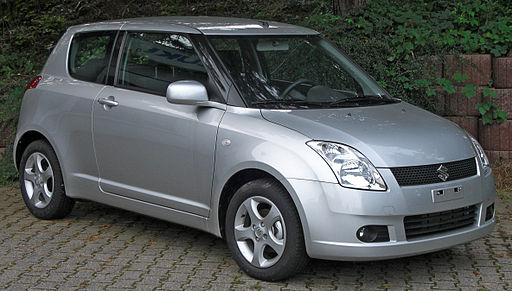
Suzuki Swift faults
Timing Chain Tensioner Rattle (K12 Engines)
Symptoms
- Noticeable rattling or tapping noise from the front of the engine on cold starts.
- Noise often subsides once engine oil pressure rises.
Root Cause
- Hydraulic tensioner wear reduces chain tension.
- Guide rails can also degrade, allowing excessive chain slack.
Consequences
- Skipping teeth on the camshaft sprocket, leading to loss of timing accuracy.
- In severe cases, bent valves or engine misfires.
Recommended Remedy
- Replace the tensioner, guide rails, and timing chain as a set around 120 000 km.
- Use high-quality 5W-30 engine oil to maintain proper tensioner operation.
Turbocharger Carbon Build-Up (Boosterjet Engines)
Symptoms
- Loss of low-end responsiveness and sporadic hesitation under acceleration.
- Slightly higher fuel consumption and rough idle over time.
Root Cause
- Direct-injection engines concentrate soot and oil vapors in intake ports.
- Swirl flaps and plenum chamber surfaces develop carbon deposits.
Consequences
- Restricted airflow reduces turbo efficiency and peak boost.
- Increased stress on turbocharger bearings.
Recommended Remedy
- Perform walnut-blasting or chemical intake cleaning every 60 000 km.
- Install an oil catch can to reduce crankcase vapor ingestion.
Dual Mass Flywheel Wear (Manual Transmissions)
Symptoms
- Vibration or judder felt through the clutch pedal, especially at take-off.
- Rattling noise from the bell housing when idling in neutral.
Root Cause
- Springs and damping elements inside the flywheel wear out under repeated clutch slips.
- High torque loads accelerate internal component fatigue.
Consequences
- Reduced smoothness during gear changes.
- Potential clutch disc damage if left unaddressed.
Recommended Remedy
- Replace the dual mass flywheel and clutch kit together.
- Consider a single-mass flywheel only if noise and harshness are acceptable.
CVT Shudder and Belt Slip (CVT Models)
Symptoms
- Shuddering at low speeds or during light acceleration.
- Whining noise under load or in “D” range.
Root Cause
- Worn CVT belt or pulleys and degraded transmission fluid.
- Heat cycles cause belt stretching and loss of friction.
Consequences
- Reduced drivability and potential belt failure.
- Overheating can damage pump and valve body.
Recommended Remedy
- Drain and replace CVT fluid every 40 000 km with manufacturer-approved oil.
- At high mileage, replace the belt and inspect pulleys for wear.
Rear Torsion Beam Bushing Wear
Symptoms
- Clunking noise from the rear when driving over bumps.
- Noticeable lateral play or vagueness in rear handling.
Root Cause
- Rubber bushings harden and crack under constant load and exposure to road salts.
- Torsion beam design transmits stresses directly to the mounting points.
Consequences
- Unpredictable rear-end behaviour at low speeds.
- Accelerated wear on shock absorbers and tires.
Recommended Remedy
- Replace rubber bushings with OEM pieces or upgrade to polyurethane.
- Realign rear suspension after bushing replacement.
Shock Absorber Leaks and Coil Spring Breakage
Symptoms
- Oil residue on strut bodies or piston shafts.
- Vehicle sits lower on one corner; harsh or bouncy ride quality.
- Occasional broken rear coil springs on high-mileage cars.
Root Cause
- Seals age and fail, allowing damping oil to escape.
- Corrosion and metal fatigue cause spring fractures.
Consequences
- Reduced ride comfort and compromised handling.
- Risk of coil embedment into tire or underbody components.
Recommended Remedy
- Replace leaking struts as axle-sets to maintain balanced damping.
- Inspect and replace any cracked or sagged coil springs.
Central Locking Actuator Failure
Symptoms
- Intermittent failure to lock or unlock doors via remote or switch.
- Grinding or clicking sounds from inside door panels.
Root Cause
- Small electric motors inside the actuators wear out or seize.
- Linkage rods misalign or break under stress.
Consequences
- Inability to secure the vehicle reliably.
- Drained battery if the actuator draws excessive current.
Recommended Remedy
- Remove door cards and replace the faulty actuator module.
- Realign and lubricate all linkage points before reassembly.
Electric Window Regulator Cable Fray
Symptoms
- Window moves slowly, sticks, or drops into door with no motor noise.
- Grinding noise from door when operating the window switch.
Root Cause
- Thin cables repeatedly scrape against guide edges.
- Plastic pulleys become brittle and crack.
Consequences
- Fully inoperative window and potential glass breakage.
- Motor burnout if stalled against jammed cable.
Recommended Remedy
- Replace the entire window regulator assembly.
- Upgrade to reinforced aftermarket regulators if available.
AC Blower Motor Resistor Failure
Symptoms
- Blower fan only works on one speed (usually high) or stops entirely.
- Burning plastic smell from dashboard area.
Root Cause
- Resistor solder joints crack under heat cycles.
- Connector contacts corrode, increasing resistance.
Consequences
- Loss of climate control flexibility.
- Potential fire risk if overheating persists.
Recommended Remedy
- Replace the resistor pack located under the glovebox.
- Clean and dielectric-grease the connector pins.
Rust in Wheel Arches and Rocker Panels
Symptoms
- Paint bubbling, flaking primer, or visible orange corrosion at arch lips.
- Rust holes appearing near door bottoms and along sills.
Root Cause
- Thin factory seams and inadequate underbody stone-chip protection.
- Salt exposure and trapped moisture accelerate metal decay.
Consequences
- Structural weakening at suspension mounting points.
- Costly bodywork if left untreated.
Recommended Remedy
- Cut out and weld in new metal sections; treat with epoxy primer.
- Apply wax-based underseal and regularly wash the underbody.
Fuel Injector O-Ring Leaks (K12 Engines)
Symptoms
- Strong petrol odor in engine bay.
- Small fuel drips visible around injector rail.
Root Cause
- O-rings harden and flatten over time, losing seal integrity.
- Heat cycles exacerbate material degradation.
Consequences
- Fire hazard from pooled fuel.
- Erratic idling and lean misfire codes.
Recommended Remedy
- Replace all injector seals, washers, and rail O-rings as a single service kit.
- Inspect fuel rail for cracks or stress fractures before reassembly.
Suzuki Swift as a used car
The Suzuki Swift has earned a reputation as a reliable, fun-to-drive compact hatchback. Its combination of sprightly handling, efficient engines, and surprisingly spacious interior makes it an appealing option on the used-car market. In this article, you will find a detailed look at the Swift’s generational evolution, technical specifications, maintenance considerations, and practical advice for purchasing a used example.
Generational Overview
First Generation (2000–2004)
The inaugural Swift replaced the Suzuki Cultus/Esteem with a sportier hatchback body. Powered by a 1.3 L M13A inline-4 producing 90 PS and a 1.5 L J20A engine in sport trims, it offered a choice of a 5-speed manual or 4-speed automatic. Suspension was MacPherson strut front and torsion beam rear, and safety equipment was basic, typically dual airbags and ABS on higher trims.
Second Generation (2004–2010)
This generation brought a sharper exterior and improved dynamics. Engines included the carry-over 1.3 L M13A and a refined 1.5 L M15A unit rated up to 100 PS. A five-speed automatic and manual gearboxes remained, while interior quality saw a notable upgrade. Safety advanced with available side airbags and electronic stability control on select models.
Third Generation (2010–2017)
Suzuki introduced a lighter chassis and more rounded styling. The 1.2 L K12B Dualjet engine arrived, delivering 94 PS with enhanced fuel economy. A mild hybrid SHVS system was optional in some markets, pairing start-stop technology with an integrated starter generator. Infotainment screens up to 7 inches and rear-view cameras became available, reflecting shifting buyer expectations.
Fourth Generation (2017–2023)
The current-outgoing Swift features bolder curves, a stiffer Heartect platform, and turbocharged performance in the Swift Sport model. Engine lineup consists of:
- 1.2 L K12M naturally aspirated petrol (83 PS)
- 1.0 L Boosterjet turbocharged petrol (111 PS)
- 1.4 L Boosterjet in Sport variant (140 PS)
Transmissions include a 5- or 6-speed manual, a 6-speed automatic, and a 5-speed AMT in some regions. Advanced safety systems such as autonomous emergency braking and lane-departure warning were introduced.
Why Choose a Used Suzuki Swift
- Proven reliability record with low incidence of major mechanical failures
- Compact footprint ideal for city driving and tight parking spaces
- Engaging handling thanks to light curb weight (around 900–1 000 kg)
- Wide availability of parts and strong enthusiast community
- Competitive depreciation keeps purchase prices low while retaining everyday usability
Technical Specifications
Engine and Performance
| Generation | Engine Code | Displacement | Power | Torque | Special Features |
|---|---|---|---|---|---|
| 1st (2000–2004) | M13A | 1.3 L I4 | 90 PS @ 6 000 rpm | 115 Nm @ 4 000 | Basic multi-point injection |
| 2nd (2004–2010) | M15A | 1.5 L I4 | 100 PS @ 6 000 rpm | 136 Nm @ 4 200 | Improved intake manifold |
| 3rd (2010–2017) | K12B | 1.2 L I4 | 94 PS @ 6 000 rpm | 118 Nm @ 4 400 | Dualjet, mild-hybrid option |
| 4th (2017–2023) | K12M | 1.2 L I4 | 83 PS @ 6 000 rpm | 113 Nm @ 4 200 | Start-stop system standard |
| 4th Sport | K14C | 1.4 L I4 | 140 PS @ 5 500 rpm | 230 Nm @ 2 500 | Turbocharger, sport-tuned |
Engines across generations prioritize fuel efficiency and low weight. Timing chains replace belts on all but the earliest models, reducing maintenance intervals.
Transmission Options
- 5-speed manual: precise throws, typically long-lasting clutch
- 4-speed automatic (1st–2nd gen): simple torque-converter design
- 5-speed AMT (3rd gen in select markets): economical twin-clutch simulation
- 6-speed automatic (4th gen): smoother shifts, sport mode available in Sport variant
All manuals offer hill-hold assistance on later models. Automatic gear ratios are tuned for low-end response and comfortable cruising.
Chassis, Suspension, and Dimensions
| Attribute | 1st & 2nd Gen | 3rd Gen | 4th Gen |
|---|---|---|---|
| Wheelbase | 2 385 mm | 2 430 mm | 2 450 mm |
| Overall Length | 3 690 mm | 3 840 mm | 3 840 mm |
| Width | 1 650 mm | 1 735 mm | 1 735 mm |
| Height | 1 505 mm | 1 495–1 510 mm | 1 495–1 510 mm |
| Ground Clearance | 140 mm | 120 mm | 120 mm |
| Curb Weight | 900–960 kg | 880–950 kg | 875–980 kg |
All models use MacPherson strut front suspension and torsion beam rear axle. The Heartect chassis in the 4th gen improves rigidity by 20 percent while cutting weight by up to 110 kg.
Fuel Efficiency
Fuel consumption in mixed driving cycles typically ranges from:
- 1st & 2nd gen 1.3 L – 6.5–7.5 L/100 km
- 3rd gen 1.2 L – 5.0–5.8 L/100 km (with mild-hybrid closer to 4.8 L/100 km)
- 4th gen 1.2 L – 5.2–5.9 L/100 km
- 4th gen Boosterjet – 5.5–6.5 L/100 km
Diesel variants existed in some markets but are rare on the global used-car scene.
Interior and Cargo Space
The Swift’s cabin balances compact exterior dimensions with usable space. Rear seats fold in a 60:40 split to expand cargo from 265 L to 579 L in the 3rd and 4th generations. Front-seat knee room measures approximately 1 040 mm, and luggage floor height remains low for easy loading.
Safety Features
Safety equipment improved markedly over generations. Common features include:
- Dual and side airbags front (2nd gen onward)
- ABS with electronic brakeforce distribution
- ESP (electronic stability program) from mid-2nd gen
- Autonomous emergency braking (4th gen)
- ISOFIX child-seat anchors on rear bench
Later models passed Euro NCAP with four-star or higher ratings.
Common Maintenance and Mileage Considerations
Routine service intervals typically occur every 10 000–15 000 km or 12 months. Key tasks include:
- Engine oil and filter change
- Brake-fluid flush every two years
- Coolant replacement every 60 000 km
- Inspection of suspension and steering components
- Timing chain tensioner check on pre-2010 engines
Well-maintained Swifts regularly achieve 200 000 km without major overhauls. Watch for aftermarket tuning on Boosterjet models, as aggressive mapping can stress the turbo.
Buying Guide for a Used Suzuki Swift
Inspection Checklist
- Engine bay for oil leaks around cam cover and lower crankcase
- Smooth clutch engagement and gear shifts, especially on early automatics
- Unusual vibrations or rattles from suspension over bumps
- Rust inspection on wheel arches, door sills, and subframe mounts
- Functionality of electronic features: infotainment, safety assists, climate control
Common Faults to Watch
- Clutch judder or slipping on high-mileage manuals
- Noisy rear torsion beam bushings after 100 000 km
- Failing door-lock actuators in cold climates
- Worn front lower-arm ball joints causing play in steering
- Cracked windscreen scuttle panels leading to water ingress
Price Range and Depreciation
Used-car values vary by market, trim, and mileage. Approximate price brackets (EUR) for a healthy example with 100 000 km:
- 1st & 2nd gen (2004–2010): 2 500–5 000
- 3rd gen (2010–2017): 5 000–9 000
- 4th gen (2017–2023): 9 000–15 000 Sport variants command a 10–20 percent premium over base models.
Ownership Costs and Reliability
Annual service costs range from €250 to €400, depending on labor rates and parts pricing. Insurance premiums remain modest in most regions thanks to the Swift’s low performance and strong safety credentials. Common wear items such as brake pads, discs, tires, and wiper blades follow standard replacement intervals.
Overall reliability scores place the Swift in the top third of its class, with particularly strong marks for engine durability and rust resistance on later models.
Conclusion
A used Suzuki Swift delivers an engaging drive, low running costs, and practical everyday usability. Whether you opt for a basic 1.2 L hatchback or the peppy 1.4 L Boosterjet Sport, careful inspection and adherence to service schedules will reward you with years of dependable motoring. With its blend of efficiency, agility, and surprisingly roomy interior, the Swift remains a standout choice in the competitive used-car landscape.
