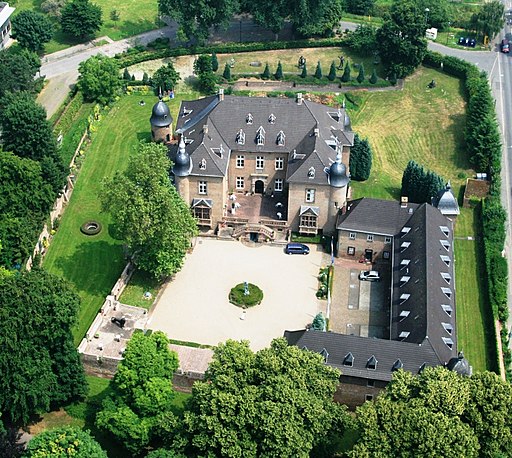
Schloss Nörvenich
Schloss Nörvenich stands as a graceful testament to Rhineland heritage, its whitewashed façades and tranquil moat reflecting centuries of noble life and regional change. Tucked between rolling fields and the edge of the Eifel foothills, this moated castle blends medieval foundations with Baroque elegance and modern cultural vitality. Visitors arrive to wander manicured gardens, explore historic interiors and discover how Schloss Nörvenich has evolved from a feudal stronghold into a vibrant community landmark.
Historical Evolution
Origins and Medieval Foundations
The earliest records of Nörvenich date back to the 12th century, when a fortified manor guarded the crossroads of local trade routes. Constructed on a natural rise beside a tributary of the Erft River, the initial fortification comprised a stone bergfried and timber curtain walls. Its strategic position allowed the local knightly family to levy tolls and protect merchants traveling between Cologne and Aachen.
Renaissance Transformation
In the 16th century, rising prosperity inspired the Welter von Nörvenich family to replace austere defensive towers with a more comfortable residential wing. They added ornate mullioned windows, steep gables and a portal carved with the family crest. Inside, painted wood ceilings and patterned floor tiles reflected Renaissance tastes, while a chapel wing acquired stained-glass panels depicting local saints.
Baroque Reimagining
By the late 17th century, the castle underwent its most dramatic makeover. A sweeping Baroque façade wrapped around the older core, complete with pilasters, stucco ornamentation and a hipped roof crowned by a clock tower. The surrounding moat was widened and bridged by a double-arched drawbridge, creating a grand approach reminiscent of palace architecture rather than a fortified outpost.
19th- and 20th-Century Renewal
Industrialization in nearby Düren brought renewed interest in regional landmarks. Schloss Nörvenich passed through several private hands before a local preservation society acquired it in the 1920s. They restored the Baroque plasterwork, reinforced foundation walls and replanted the formal gardens according to period plans. Post–World War II repairs focused on replacing roof timbers and stabilizing the original medieval keep.
Architectural Highlights
The Moated Perimeter
Encircling the castle, the broad water-filled trench mirrors its turrets and arcade walkways. Water lilies drift near stone revetments, while swans glide beneath the arched drawbridge. Wooden walkway planks span the moat, leading visitors to an iron-studded gate that opens onto a gravel forecourt lined with clipped hornbeam hedges.
The Great Hall and Decorative Interiors
Beyond the gatehouse, the Great Hall occupies the heart of the Baroque wing. Richly colored frescoes adorn the vaulted ceiling, illustrating mythological scenes and cherubic putti. Massive oak beams support the structure, while wrought-iron chandeliers hang above long banquet tables. Tapestries woven in Brussels depict hunting scenes once enjoyed by castle residents.
The Medieval Keep
Rising above the courtyard stands the original 12th-century tower, its walls more than two meters thick at the base. Narrow arrow slits and a spiral staircase cut into the stone reveal its defensive purpose. A small rooftop terrace offers sweeping views over the Erft valley and the silhouette of nearby wind turbines on distant ridges.
The Chapel and Family Crypt
A private chapel wing extends from the castle’s east side, its Baroque altar framed by marble columns. Hand-carved confessionals and an 18th-century pipe organ survive in pristine condition. Beneath the chapel floor, a dimly lit crypt houses ornately carved sarcophagi of the Welter and later Counts of Nörvenich, their heraldic shields still visible under flickering lantern light.
Garden and Parkland
Formal parterres radiate from a central fountain dotted with bronze dolphins. Boxwood edging defines geometric flower beds planted with roses, lavender and tulips. Beyond the Baroque garden, an English landscape park unfolds with meandering paths, specimen trees and a lily-covered pond. A small gazebo at the park’s edge invites quiet contemplation.
Cultural Life and Events
Annual Castle Festival
Every June, Schloss Nörvenich comes alive with a festival celebrating regional crafts and cuisine. Artisans demonstrate blacksmithing, pottery and glassblowing in open-air workshops. Local wineries pour Riesling and Dornfelder tastings beneath striped tents, while folk musicians perform on a temporary stage set against the moat’s stone embankments.
Concerts and Theater
Outdoor summer concerts fill the courtyard with chamber orchestras and vocal ensembles. In autumn, a mobile stage hosts Shakespearean plays and modern dramas, the castle walls serving as a dramatic backdrop. Candlelit tours by lantern light bring medieval legends to life, complete with costumed storytellers and sound effects echoing through the corridors.
Educational Workshops
Schloss Nörvenich partners with regional universities to offer workshops in historic preservation, Baroque plasterwork and archival research. Students learn conservation techniques on actual castle elements, from lime-mortar pointing to restorative painting. Photography and plein-air painting classes take advantage of the castle’s scenic vantage points and ornate interiors.
Surrounding Region and Excursions
The Village of Nörvenich
Just beyond the castle grounds, the village of Nörvenich preserves half-timbered houses and cobblestone lanes. A weekly farmers’ market brings local produce stalls selling cheese, honey and artisan bread. A bakery on the main square still uses century-old sourdough starters passed down through generations.
Naturpark Nordeifel
A short drive west leads into the rolling hills of the North Eifel Nature Park. Hiking and cycling trails weave through beech forests, past volcanic lakes and over basalt crags. Interpretive signage explains how ancient lava flows shaped the landscape and created the fertile soils that support the castle’s formal gardens.
Nearby Historical Sites
Within easy reach lie Roman villa ruins at Niersbach and the towering remains of Burg Satzvey. The Römervilla Echternach exhibits mosaic floors and hypocaust systems, while Burg Satzvey stages medieval reenactments and falconry shows. A longer day trip takes you to the Imperial city of Aachen, with its UNESCO-listed cathedral.
Practical Visitor Information
Getting There
Schloss Nörvenich is located about 25 kilometers southwest of Cologne. Regional trains stop at Nörvenich station, from which a ten-minute taxi or bicycle ride follows quiet country lanes. Ample free parking lies adjacent to the castle’s main entrance, with dedicated bicycle racks for eco-minded travelers.
Opening Hours and Admission
The castle welcomes visitors from April through October, daily from ten in the morning until six in the evening. General admission includes access to the Great Hall, chapel and gardens. Guided tours, lantern tours and festival events require separate tickets available online or at the gatehouse.
On-Site Amenities
A café housed in the renovated stables serves light lunches, homemade cakes and regional wines. Restrooms and a small gift shop selling locally crafted ceramics, lace and honey occupy the ground floor of the north wing. Picnic areas beneath ancient oaks offer shaded spots for visitors to relax.
Accessibility and Tips
While ground-floor areas and garden paths are wheelchair-accessible, upper floors involve narrow staircases and low doorways. Visitors should wear sturdy shoes when exploring gravel walkways and woodland trails. Early morning light best illuminates the façade for photography, and festival weekends can draw large crowds—advance booking is recommended.
Conclusion
Schloss Nörvenich weaves together medieval defense, Renaissance comfort and Baroque grandeur into a living tapestry of Rhineland culture. Its serene moat, ornate interiors and vibrant calendar of events invite every visitor to step through time. Whether you seek family adventures, historical insight or a peaceful stroll through manicured gardens, this moated jewel offers an unforgettable journey into Germany’s storied past.
