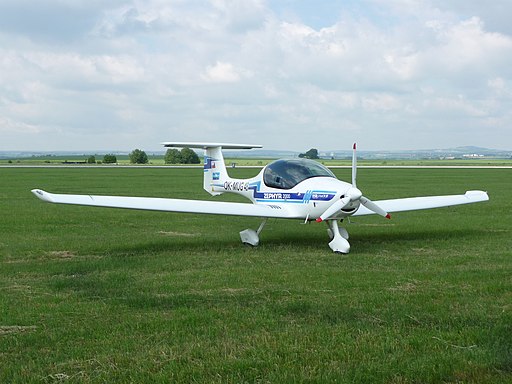
ATEC 122 Zephyr 2000
The ATEC 122 Zephyr 2000 is a Czech ultralight aircraft crafted for sport flying, pilot training, and light touring missions. It debuted in 1996 and remains in production as both a ready-to-fly model and a kit for amateur constructors. Its blend of composite fuselage, wooden-wing structure, and efficient aerodynamics delivers a responsive, low-cost flying experience suited to the Fédération Aéronautique Internationale microlight category.
Development and Evolution
Design Origins
Designed by Oldřich Olánský and produced by ATEC v.o.s. of Libice nad Cidlinou, the Zephyr 2000 evolved from earlier ultralight concepts in the mid-1990s. ATEC aimed to combine cutting-edge composite materials with proven wooden wing techniques to maximize strength-to-weight ratios and simplify homebuilt assembly while meeting strict microlight weight limits.
Transition to Faeta
Building on Zephyr’s success, ATEC developed the two-seat Zephyr into the ATEC 321 Faeta, which features advanced composite wings and a refined canopy. The Faeta retains the Zephyr’s user-friendly traits but achieves higher cruise speeds and lower empty weights, illustrating the design lineage from the original 122 model to modern light-sport standards.
Airframe and Structure
Fuselage Construction
The Zephyr 2000’s fuselage employs a composite shell reinforced with wooden bulkheads. Layers of fiberglass and carbon fiber create a smooth aerodynamic form with exceptional rigidity. A large bubble canopy provides panoramic visibility, and the cockpit shell integrates the antennae and mounting points for avionics in a faired tail cone to minimize drag.
Wing Design
A semi-tapered wing spans 9.60 m and covers 10.07 m². Composite spars and plywood ribs support a UA-2 laminar-flow airfoil, with doped fabric covering the wing to save weight. The wing incorporates plain flaps for short-field performance and mass-balanced ailerons for crisp roll control. A single spar attachment bolt allows wing removal for transport or storage within minutes.
Landing Gear
Fixed tricycle landing gear features faired main legs and a steerable nosewheel. Main gear legs use aluminum tubing with elastomeric shock absorption, while Kevlar-reinforced tires and disc brakes manage ground handling. The high-wing configuration combined with generous ground clearance makes operations from grass strips and unimproved fields straightforward.
Cockpit and Avionics
The side-by-side cockpit measures 1.10 m in width, accommodating two adults comfortably. Standard instrumentation includes airspeed, altimeter, VSI, engine tachometer, and oil pressure gauge. Optional upgrades range from glass-cockpit EFIS displays to GPS-integrated multifunction screens, ADS-B transponders, and intercom systems for flight training environments.
Powerplant and Performance
Engine Installation
ATEC equips the Zephyr 2000 with a 100 hp Rotax 912ULS four-stroke engine mounted on a composite firewall-forward structure. The engine’s light weight and fuel efficiency support cruise speeds of 215 km/h while burning approximately 15 L/h. A two-bladed wooden propeller or composite constant-speed propeller can be fitted depending on builder preference and performance goals.
Flight Characteristics
With a maximum speed of 265 km/h and a stall speed of 65 km/h, the Zephyr 2000 exhibits a broad performance envelope. It climbs at 6.5 m/s, achieves a service ceiling above 4 500 m, and offers a range of nearly 1 900 km when equipped with extended fuel tanks. Low wing loading of 46.9 kg/m² provides gentle stall behavior and precise handling in thermals for soaring-style flights.
Variants
Zephyr 2000 Base Model
The original Zephyr 2000 serves as a pure ultralight glider or motor-glider when dismantled for soaring. Its clean wing and lightweight fuselage yield glide ratios approaching 28:1, positioning it among the highest-performing microlights for unpowered flight.
Zephyr 2000M Self-Launch
A motorized variant, the Zephyr 2000M, integrates a foldable 15 kW electric motor on a retractable mast. This configuration enables self-launch in under 150 m and a battery-only range of 20 km while maintaining an empty weight below 300 kg due to compact battery modules.
Zephyr 2000T Trainer
Optimized for dual instruction, the Zephyr 2000T extends the cockpit to accommodate an instructor and student side by side. Dual controls, reinforced landing gear, and simplified avionics layouts support repeated training cycles and rapid turnarounds at flight schools.
Technical Parameters
| Parameter | Specification |
|---|---|
| Crew | 1 pilot; 1 passenger |
| Wing Span | 9.60 m (31 ft 6 in) |
| Wing Area | 10.07 m² (108.4 ft²) |
| Airfoil | UA-2 laminar-flow |
| Empty Weight | 275 kg (606 lb) |
| Maximum Takeoff Weight | 472.5 kg (1 042 lb) |
| Fuel Capacity | 60 L (16 US gal) |
| Powerplant | Rotax 912ULS four-cylinder, liquid/air-cooled, 75 kW |
| Maximum Speed (VNE) | 290 km/h (157 kt; 180 mph) |
| Cruise Speed | 215 km/h (116 kt; 134 mph) |
| Stall Speed (VS0) | 65 km/h (35 kt; 40 mph) |
| Rate of Climb | 6.5 m/s (1 280 ft/min) |
| Range | 1 900 km (1 025 nm; 1 180 mi) |
| Wing Loading | 46.92 kg/m² (9.61 lb/ft²) |
Operational Use and Community
Since its introduction, over 200 Zephyr 2000s have taken to the skies across Europe, North America, and Australia. Owner-builders praise its construction simplicity, robust materials, and pleasant handling. Annual gatherings in the Czech Republic and Germany showcase builder modifications, performance comparisons, and support workshops, reinforcing the Zephyr’s active global community.
Legacy and Future Outlook
The ATEC 122 Zephyr 2000 remains a benchmark in ultralight design, marrying composite innovation with traditional materials. Its modular variants—from pure sailplane to electric self-launch and trainer configurations—demonstrate enduring adaptability. Continued homebuilt interest and potential for hybrid-electric conversions suggest the Zephyr’s influence will persist in light aviation circles for years to come.
