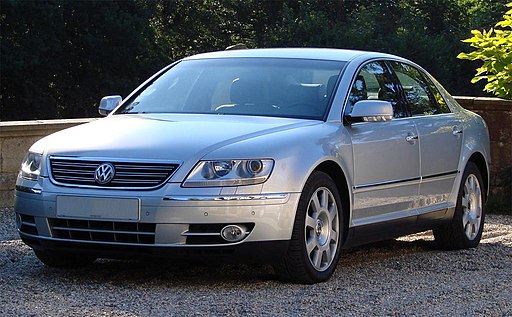
Volkswagen Phaeton faults
Engine and Fuel System
- Timing-chain tensioner wear on W12 engines Symptoms include a rattle at cold start and occasional misfire codes. The plastic guide and hydraulic tensioner can lose pressure, allowing chain slack. Replacement of the entire tensioner assembly and guide rails around 120 000 km prevents chain skip and catastrophic engine damage.
- Coolant hose and oil-cooler housing cracks on W12 and V8 The plastic coolant hoses and composite oil-cooler housings become brittle over time. Owners notice coolant loss, overheating warnings, or oil mixing in coolant. Inspect hoses annually and replace aging assemblies with reinforced OEM or aftermarket units to avoid engine overheating.
- High-pressure fuel-pump failures on 3.0 TDI and 4.2 FSI engines Symptoms include long cranking, reduced power, and P0191 or P0087 fault codes. Internal wear releases metal debris that damages injectors and rail-pressure sensors. Preemptive pump inspection at 100 000 km and fitting upgraded internals extends service life.
- Fuel-injector seal leaks on V6 TDI models Diesel smell in the engine bay or blue smoke on startup point to cracked injector O-rings. Prolonged leaks cause cylinder wash-down and low compression. Replace injector seals and clean mating surfaces around 150 000 km to restore proper sealing.
Transmission and Drivetrain
- 6-speed Tiptronic torque-converter shudder on W12 and V8 Drivers report vibration and harsh lock-up at low speeds. The clutch pack or converter lock-up valve can wear or stick, triggering limp-home mode. A transmission fluid and filter service every 80 000 km using VW G 055 025 fluid prevents premature wear; rebuild or replace the converter in persistent cases.
- 4MOTION Haldex coupling control‐unit faults All-wheel-drive Phaetons use a Haldex-type rear coupling that can suffer control-unit water ingress or electronic failure. Symptoms include rear-axle disengagement and ABS warning lights. Drying or replacing the coupling control unit and fitting dielectric grease on connectors restores AWD function.
- Rear differential and driveshaft-seal leaks Oil leaks from pinion seals on the rear differential or CV-joint seals on driveshafts lead to reduced lubricant levels and gear noise. Inspect and renew seals at 100 000 km to prevent bearing damage and costly differential rebuilds.
Electronics and Infotainment
- Air-suspension control-unit (ECU) failures The Dynamic Ride Control module can develop cracked solder joints or capacitor failures, causing “check suspension” warnings and defaulting to hard-ride mode. Reflowing solder and updating ECU firmware cures intermittent faults; full ECU replacement may be needed in severe cases.
- Climate-control actuator and blower-motor resistor faults Symptoms include inability to select temperature zones or blower only running at high speed. Plastic gears inside blend-door actuators strip under heat stress, and resistor elements overheat. Replace faulty actuators with updated metal-gear units and fit new resistor packs to restore full HVAC control.
- RNS-2 and RNS-MFD infotainment freeze and boot-loops Early navigation heads suffer from failed flash memory or worn hard-disk drives. Owners experience freezing screens and endless reboots. Updating to the latest VW firmware or swapping to an RNS-510/MFD-2 unit resolves functionality issues.
Suspension and Steering
- Adaptive-air-suspension compressor and air-spring leaks The compressor motor brushes wear out, leading to no-ride-height adjustment and loud operation. Air springs develop tiny pinhole leaks, causing the vehicle to sag after parking. Replace compressor units with reinforced aftermarket motors and fit OEM-spec air springs to maintain ride comfort.
- Front strut-top-mount corrosion and bearing noise The steel strut mounts at the front shock towers corrode in salted climates. Symptoms include creaks when steering and uneven tire wear. Inspect top mounts annually, apply corrosion inhibitor, and replace with updated mounts featuring integrated bearings.
- Steering-rack seal failures High-pressure rack seals can deteriorate, causing power-steering fluid leaks and intermittent loss of assist. Check beneath the rack for fluid droplets and renew seals or fit a remanufactured rack to restore smooth steering.
Brakes and Wheels
- Electronic-parking-brake (EPB) motor and actuator failure The EPB actuator motor can burn out or strip internal gears, preventing engagement or release. Owners see EPB warning lights and hear grinding noises. Replace with improved units featuring metal-gear trains and keep the mechanism clean to avoid recurrence.
- Brake-caliper piston corrosion Moisture ingress corrodes piston bores, causing calipers to stick and pads to drag. Symptoms include uneven pad wear, hot-hub feeling, and reduced fuel economy. Overhaul calipers every 100 000 km—hone bores, install new seals, and lubricate slide pins.
Body, Corrosion, and Interior
- Door-hinge wear and door sag Heavy front doors stress hinge pins and bushings, leading to sag and water-seal leaks. Passengers notice doors dragging on sills and wind noise. Grease hinge pivots regularly and replace worn hinge-pin kits to restore correct door alignment.
- Wood-veneer cracking and lift on dashboard and door trims Humidity changes cause real-wood veneers to warp or split. Symptoms include visible cracks and peeling edges. Repair involves removing panels, flattening warped veneer under heat and pressure, and re-bonding with high-strength adhesive.
- Headliner sag and dome-light wiring harness fatigue The glue bond on headliner foam fails over time, causing drooping fabric. Dome-light wiring looms can fracture at connector retainers. Strip out the old liner, apply heat-resistant adhesive, and replace damaged wiring sections to restore a tidy interior roof.
HVAC and Climate Control
- Thermostat housing and coolant-pump seal leaks Plastic housings develop hairline cracks, leading to coolant loss and erratic temperature gauge readings. Replace housings and seals with reinforced metal versions where available, and pressure-test the entire cooling circuit after service.
- Sunroof-drain and sliding-roof motor faults Blocked sunroof drains cause water ingress around the front footwells, while motor brushes wear in sliding-roof units. Clear drain tubes annually with a nylon brush and fit new motor gear sets to ensure reliable operation.
Each used Volkswagen Phaeton exhibits a unique wear pattern based on engine choice, mileage, and maintenance history. When evaluating a pre-owned Phaeton, cross-reference service records for these items and consider a specialist’s pre-purchase inspection to uncover hidden issues and negotiate a fair price.
Volkswagen Phaeton as a used car
The Volkswagen Phaeton redefined luxury sedans when it debuted in 2002, blending advanced engineering with understated design. As a used-car option, the Volkswagen Phaeton stands out for its robust chassis, smooth powertrains, and technological sophistication. Buyers seeking a premium driving experience at a reduced price point will find the Volkswagen Phaeton’s build quality and refinement compelling. This guide delivers detailed technical parameters, key maintenance considerations, and purchasing advice tailored to the Volkswagen Phaeton.
Generational Overview
- First Generation (2002–2010) • Long-wheelbase luxury sedan and estate body styles • Platforms shared with high-end Audi models, featuring adaptive air suspension
- Second Generation (2010–2016) • Updated front and rear styling with LED lighting • Refined W12 and V8 engines, enhanced chassis rigidity, advanced driver-assist systems
Throughout both iterations, the Volkswagen Phaeton prioritized ride comfort and structural solidity, making it a durable choice on the used market.
Engine and Powertrain Specifications
| Engine Code | Configuration | Displacement | Power | Torque | Transmission | 0–100 km/h | Consumption Combined |
|---|---|---|---|---|---|---|---|
| W12 6.0 | 12-cyl twin-turbo | 5998 cc | 309 kW | 560 Nm | 6-sp Tiptronic | 5.9 s | 12.7 l/100 km |
| V8 4.2 | V8 twin-turbo | 4163 cc | 246 kW | 550 Nm | 6-sp Tiptronic | 6.1 s | 11.3 l/100 km |
| V6 3.6 | VR6 naturally aspir. | 3596 cc | 206 kW | 350 Nm | 6-sp Tiptronic | 7.8 s | 10.4 l/100 km |
| V6 3.0 TDI | V6 common-rail diesel | 2967 cc | 176 kW | 550 Nm | 8-sp automatic | 7.9 s | 7.1 l/100 km |
These engines combine smooth power delivery with durable internals. The W12 remains a highlight for performance enthusiasts, while the V6 TDI balances efficiency with refinement.
Chassis Dimensions and Weight
| Body Style | Length | Width | Height | Wheelbase | Kerb Weight Range |
|---|---|---|---|---|---|
| Sedan | 5 020 mm | 1 901 mm | 1 462 mm | 2 912 mm | 1 915–2 045 kg |
| Estate | 5 021 mm | 1 901 mm | 1 481 mm | 2 912 mm | 1 945–2 075 kg |
The Volkswagen Phaeton’s long wheelbase and substantial mass underpin its serene ride quality and cabin spaciousness.
Transmission and Drivetrain
- Six-speed Tiptronic torque-converter automatic • Smooth shifts under load; requires fluid and filter change every 80 000 km
- Eight-speed ZF automatic on TDI variant • Adaptive shift logic; fluid service recommended at 100 000 km
- 4MOTION all-wheel drive available on V8 and W12 • Haldex-type coupling; inspect control-unit electronics and actuators for water ingress
Drivetrain robustness makes the Volkswagen Phaeton a reliable long-term performer when maintained on schedule.
Common Service Items and Known Weak Points
- Air-suspension strut leaks • Rubber-bladder failure leads to sagging ride height; replace air springs and inspect compressor at 100 000 km
- Coolant hose and reservoir cracking • Plastic components become brittle; annual inspection and replacement with reinforced parts prevent overheating
- High-pressure fuel-pump wear on TDI and FSI engines • Long cranks or misfires signal internal wear; upgrade to reinforced internals at 120 000 km
- Electronic control-unit solder-joint fatigue • ECU boards in suspension and transmission modules develop cracked solder points; professional reflow restores function
- Brake-caliper piston corrosion • Seized pistons cause uneven pad wear; overhaul calipers and replace seals every 80 000 km
Addressing these known issues keeps any Volkswagen Phaeton operating at its intended standard of refinement.
Buying Guide for a Pre-Owned Volkswagen Phaeton
- Verify full service history covering air-suspension servicing, transmission fluid changes, and coolant-system repairs.
- Conduct a static ride-height check with the Volkswagen Phaeton parked on level ground to detect sagging corners.
- Test-drive under load to assess transmission shift quality and listen for rattles from timing-chain tensioners.
- Inspect wheel arches and underbody for corrosion around suspension mounts and drain channels.
- Scan for ECU fault codes in suspension, powertrain, and chassis modules to uncover intermittent electronic issues.
- Engage a specialist familiar with Volkswagen Phaeton systems for a pre-purchase inspection, including air-suspension diagnostics.
A meticulous evaluation reveals hidden costs and supports confident negotiations on any Volkswagen Phaeton.
Market Values and Depreciation
| Generation | Engine Variant | Typical Price (EUR) | Mileage Range (km) |
|---|---|---|---|
| 2002–2010 | V6 3.6 VR6 | 8 000–12 000 | 120 000–200 000 |
| 2002–2010 | V8 4.2 twin-turbo | 12 000–18 000 | 100 000–180 000 |
| 2002–2010 | W12 6.0 twin-turbo | 18 000–30 000 | 80 000–150 000 |
| 2010–2016 | V6 TDI 3.0 | 14 000–20 000 | 100 000–180 000 |
| 2010–2016 | V8 4.2 twin-turbo | 20 000–28 000 | 80 000–150 000 |
Diesel variants often offer superior long-term value due to lower running costs, while W12 models command a collector’s premium despite steeper depreciation.
Conclusion
Selecting a used Volkswagen Phaeton delivers an unparalleled blend of luxury, engineering prowess, and everyday usability. By understanding the model’s technical parameters, addressing common service items, and following a structured buying process, you can secure a reliable Phaeton that continues to impress. Whether you prioritize the smooth torque of the V6 TDI, the effortless power of the V8, or the flagship performance of the W12, the Volkswagen Phaeton stands ready to provide refined motoring for many years to come.
