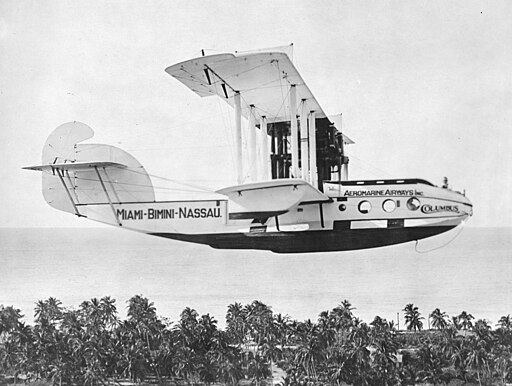
The Felixstowe F5L: A Long-Range Naval Flying Boat
The Felixstowe F5L was a large biplane flying boat that played an important role during and after the First World War. Designed primarily for long-range maritime patrol, it was a development of earlier Felixstowe flying boats created by Lieutenant Commander John Cyril Porte and further adapted by American manufacturers. The aircraft became the backbone of Allied naval air patrols, capable of covering vast oceanic distances in search of submarines and surface raiders.
Development History
The Felixstowe series originated from efforts to improve the Curtiss H-12 flying boat. British engineers at the Seaplane Experimental Station in Felixstowe modified the hull to improve seaworthiness and handling, which resulted in the successful F2A and its subsequent developments. By 1918, the F5 design was finalized, and production was licensed in the United States.
The F5L, built primarily by the Naval Aircraft Factory, Curtiss, and Canadian Aeroplanes Ltd., incorporated American Liberty L-12 engines instead of the Rolls-Royce Eagle powerplants used in the British F5. This modification gave it the “L” designation. The U.S. Navy employed the type extensively into the 1920s, and it remained one of the largest and most capable naval patrol aircraft of its day.
Design Characteristics
The Felixstowe F5L retained the general layout of earlier Felixstowe flying boats. It was a twin-engine, four-bay biplane with a central hull and sponsons for stability on water. The hull was constructed of wood with fabric covering, featuring a stepped design to aid takeoff and water handling. Crew positions were open and arranged along the fuselage, with multiple defensive gun stations.
Its Liberty engines were mounted between the wings in a tractor configuration, driving two-bladed wooden propellers. The aircraft had a long endurance, making it well-suited for anti-submarine patrols, convoy escort duties, and maritime reconnaissance.
Operational Use
During its service life, the F5L operated from seaplane bases on both sides of the Atlantic. In the First World War, it was tasked with patrolling shipping lanes, searching for German U-boats, and providing reconnaissance support to naval units. After the war, the U.S. Navy and Coast Guard continued to use the aircraft well into the 1920s.
The type also saw limited civilian conversion, serving as mail planes and passenger transports in small numbers. However, its large size and operating costs made it impractical for widespread commercial use.
Technical Specifications of the Felixstowe F5L
-
Role: Long-range maritime patrol flying boat
-
Crew: 5 to 7 (pilot, co-pilot, engineer, gunners, observer)
-
Length: ~49 ft (15 m)
-
Wingspan: ~103 ft (31.4 m)
-
Height: ~20 ft (6.1 m)
-
Wing area: ~1,397 sq ft (130 m²)
-
Empty weight: ~9,300 lb (4,218 kg)
-
Maximum takeoff weight: ~14,900 lb (6,759 kg)
Powerplant
-
2 × Liberty L-12 V-12 liquid-cooled piston engines
-
Power output: 400 hp (298 kW) each
Performance
-
Maximum speed: ~90 knots (103 mph, 165 km/h)
-
Cruise speed: ~75 knots (86 mph, 138 km/h)
-
Range: ~830 nautical miles (1,540 km)
-
Service ceiling: ~5,500 ft (1,675 m)
Armament
-
Up to 5 × .30 in (7.62 mm) Lewis machine guns in open defensive positions
-
Bomb load: ~1,000 lb (454 kg) of bombs for anti-submarine or anti-ship missions
Legacy
Although quickly overshadowed by more modern designs in the interwar period, the Felixstowe F5L marked a key stage in the evolution of long-range maritime patrol aviation. Its large wingspan, twin engines, and extended endurance were all characteristics that influenced subsequent seaplane and flying boat development.
For the U.S. Navy, it provided a valuable bridge between wartime improvisation and peacetime standardization of large patrol aircraft. While its wooden hull and fabric construction would soon be outdated, the Felixstowe F5L remains an important example of early 20th-century naval aviation engineering.
_(cropped,_grayscale,_contrast).jpg)