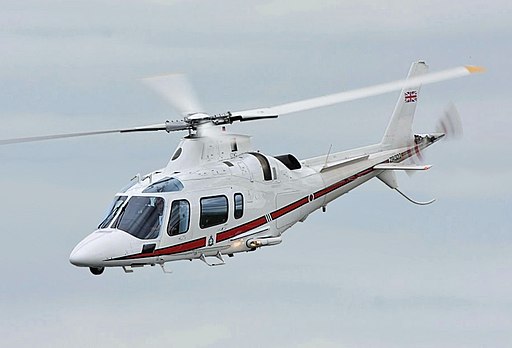
AgustaWestland AW109
AgustaWestland AW109: A Detailed Overview
The AgustaWestland AW109 is a versatile, multi-role, twin-engine helicopter developed by the Italian helicopter manufacturer AgustaWestland, a division of Leonardo S.p.A. Since its introduction in the early 1970s, the AW109 has gained worldwide recognition for its advanced technology, exceptional performance, and adaptability across a wide range of applications. Whether for military, law enforcement, search and rescue (SAR), or VIP transportation, the AW109 has consistently proven to be a reliable and flexible helicopter for a variety of mission profiles.
With a robust design, advanced avionics, and impressive lifting capabilities, the AW109 is highly regarded in both the civilian and military helicopter markets. Over the years, it has seen multiple upgrades, which have improved its performance, safety, and operational versatility. This article provides a comprehensive overview of the AW109, covering its technical specifications, design features, and common applications.
Introduction to the AgustaWestland AW109
The AW109 was originally designed to meet the growing demand for a light to medium twin-engine helicopter with excellent performance characteristics. The aircraft’s primary features include its low operating cost, high maneuverability, and the ability to perform multiple roles. These roles include executive transport, offshore oil and gas support, emergency medical services (EMS), law enforcement, and military operations. The AW109 is widely used by governments, private companies, and militaries around the world.
Over the years, the AW109 has seen several variants that cater to different mission requirements. Among these variants, the AW109 Power, AW109 Grand, and AW109 Trekker have received notable attention due to their increased payload capacity, improved engines, and upgraded avionics systems. The versatility of the AW109 allows for easy reconfiguration depending on mission needs, whether transporting personnel, cargo, or providing high-performance flight capabilities for specific applications like surveillance or medical evacuations.
Technical Specifications of the AgustaWestland AW109
The technical specifications of the AW109 highlight its performance, versatility, and operational efficiency. Below are the key technical parameters:
1. Dimensions and Capacity
- Length (with rotor blades turning): 12.88 meters (42.3 feet)
- Fuselage Length: 10.25 meters (33.7 feet)
- Width (with rotor blades turning): 11.53 meters (37.9 feet)
- Height (main rotor to ground): 3.30 meters (10.8 feet)
- Main Rotor Diameter: 10.69 meters (35.1 feet)
- Tail Rotor Diameter: 2.53 meters (8.3 feet)
- Wheelbase: 3.30 meters (10.8 feet)
The AW109 is designed for both agility and spaciousness. The main rotor diameter of 10.69 meters gives the helicopter excellent lift capabilities, while its relatively compact dimensions make it highly maneuverable in both urban and rural environments. The cabin is large enough to accommodate a variety of configurations, including seating for up to 7 passengers in a VIP transport configuration or up to 6 stretcher patients in EMS operations.
2. Engines
The AW109 is powered by two turboshaft engines that provide the necessary thrust for both performance and reliability. The engines used in the AW109 are known for their high performance and fuel efficiency. The primary engines used are the Pratt & Whitney Canada PW206C or PW207C, depending on the variant.
- Engine Type: 2 × Pratt & Whitney Canada PW206C or PW207C turboshaft engines (depending on the model)
- Power Output: 650 shaft horsepower (shp) per engine
- Total Power (dual engines): 1,300 shp
- Transmission System: The power generated by the engines is transmitted to the main and tail rotors via a dual-redundant transmission system, ensuring operational reliability even in the event of engine failure.
The AW109’s twin-engine design ensures both redundancy and higher performance in critical conditions, offering greater safety and versatility for operations that require long endurance or high power, such as offshore missions or search and rescue.
3. Performance Parameters
The AW109 offers outstanding performance characteristics that make it a reliable platform for a range of demanding missions. Its speed, range, and lift capabilities are among the best in its class, making it ideal for both short- and long-haul missions.
- Maximum Speed: 285 km/h (177 mph)
- Cruise Speed: 250 km/h (155 mph)
- Service Ceiling: 6,096 meters (20,000 feet)
- Range: 570 km (354 miles)
- Maximum Takeoff Weight (MTOW): 3,175 kg (7,000 lbs)
- Hover Ceiling (in ground effect): 3,000 meters (9,843 feet)
- Rate of Climb: 8.5 meters per second (1,650 feet per minute)
With a cruise speed of 250 km/h and a maximum speed of 285 km/h, the AW109 excels in fast, efficient travel. Its range of 570 kilometers makes it ideal for long-distance operations, particularly in remote areas where quick response times are crucial. Its high service ceiling and excellent rate of climb allow it to perform well in mountainous regions or at high-altitude locations, ensuring versatility in a wide variety of mission scenarios.
4. Rotor System
The rotor system of the AW109 plays a significant role in its performance and stability. The main rotor and tail rotor designs are optimized for agility and control, ensuring smooth flight characteristics even under challenging conditions.
- Main Rotor Type: Four-blade, fully articulated design
- Tail Rotor Type: Four-blade, semi-rigid design
- Main Rotor Diameter: 10.69 meters (35.1 feet)
- Tail Rotor Diameter: 2.53 meters (8.3 feet)
The fully articulated design of the main rotor provides superior stability and control, especially in hovering conditions and during tight maneuvers. The four-blade tail rotor design ensures smooth and efficient control during flight, improving maneuverability and reducing vibrations.
Design Features of the AgustaWestland AW109
The AW109’s design incorporates a number of features that enhance its versatility, durability, and performance in a range of mission profiles. Below are some of the key design elements that set the AW109 apart from other helicopters:
1. Airframe and Fuselage
The AW109 is constructed from advanced materials, including composite materials and high-strength alloys, which reduce weight while maintaining strength and durability. This construction ensures a high level of crashworthiness, which is essential in both military and civilian missions.
- Construction: Lightweight materials, including composites, allow for greater fuel efficiency while maintaining structural integrity.
- Cabin Configuration: The cabin can be quickly reconfigured to accommodate passengers, cargo, or specialized equipment, such as medical stretchers or surveillance gear.
The spacious, modular cabin allows for flexible use, making it ideal for various roles, including EMS, offshore oil and gas transport, and law enforcement operations. The cabin also provides ample space for crew members to work in comfort during extended flights.
2. Avionics and Instrumentation
The AW109 is equipped with modern avionics systems that improve the aircraft’s operational efficiency, flight safety, and situational awareness. The aircraft’s avionics suite includes the following key components:
- Flight Management System (FMS): Assists with route planning, navigation, and fuel management, ensuring efficient flight operations.
- GPS Navigation System: Provides accurate positioning for long-distance flights and operations in remote or uncharted areas.
- Weather Radar: Helps detect weather patterns, improving the pilot’s situational awareness and ensuring safe flight in adverse conditions.
- Automatic Flight Control System (AFCS): Reduces pilot workload and enhances flight stability during various phases of flight, especially during low-level operations or in difficult weather conditions.
These advanced avionics systems ensure that the AW109 can operate safely and efficiently in a wide range of conditions, from busy urban areas to remote offshore platforms or high-altitude regions.
3. Safety Features
Safety is a critical component of the AW109’s design, and the aircraft is equipped with numerous safety features to protect the crew and passengers during flight. Some of the key safety features include:
- Dual-engine design: Provides redundancy in case of engine failure, ensuring continued flight with one engine operating.
- Crashworthy fuel system: Designed to minimize the risk of fire in the event of a crash.
- Energy-absorbing seats: Reduces the risk of injury during emergency landings or accidents.
- Helicopter Terrain Awareness and Warning System (HTAWS): Alerts pilots to potential obstacles, improving flight safety in challenging terrain.
These safety features are designed to meet the most stringent safety standards, ensuring the AW109 can operate safely in a variety of missions, from search and rescue to offshore oil platform support.
Applications of the AgustaWestland AW109
The versatility of the AW109 allows it to be used in various roles across both military and civilian sectors. Below are some of the primary applications for the AW109:
1. Military and Law Enforcement
The AW109 has seen extensive use in military and law enforcement operations, where its agility, speed, and multi-role capabilities make it a valuable asset. It is used for roles such as troop transport, search and rescue, reconnaissance, and surveillance. The AW109 is highly adaptable and can be equipped with a range of mission-specific equipment, such as weapons systems, surveillance gear, and medical evacuation (MEDEVAC) equipment.
2. Search and Rescue (SAR)
One of the most common roles for the AW109 is search and rescue. The aircraft’s spacious cabin can accommodate stretchers and medical personnel, while its speed and endurance make it ideal for responding quickly to emergency situations. The AW109 is often used in coastal areas, mountains, and offshore oil platforms for SAR operations.
3. Offshore Oil and Gas Support
The AW109 is frequently used in offshore oil and gas operations, where it is responsible for transporting workers, equipment, and supplies to and from oil rigs and platforms. Its ability to operate in challenging weather conditions, along with its large payload capacity, makes it an ideal choice for these demanding missions.
4. VIP and Executive Transport
In addition to its military and SAR roles, the AW109 is also used for VIP and executive transport. The aircraft’s luxurious cabin can be configured to provide a high level of comfort for business executives, government officials, and other high-profile individuals. Its speed and ability to access smaller airports or helipads make it an efficient choice for time-sensitive travel.
Conclusion
The AgustaWestland AW109 is a highly versatile, reliable, and high-performance helicopter that has earned a solid reputation across various sectors. Whether used for military operations, search and rescue, offshore oil and gas support, or VIP transport, the AW109 excels in its ability to adapt to different mission requirements. With advanced avionics, a robust design, and impressive performance specifications, the AW109 continues to be a leading choice for operators around the world, ensuring its place as one of the most trusted helicopters in the industry.
