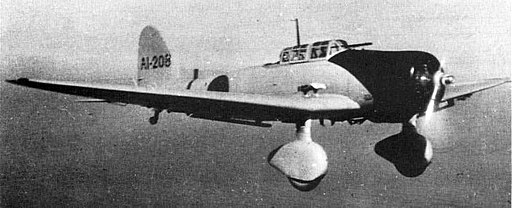
Aichi D3A
Aichi D3A “Val”: The Dive Bomber That Redefined Aerial Combat
The Aichi D3A, known by the Allied reporting name “Val,” holds an iconic status in the annals of military aviation. As the standard carrier-based dive bomber of the Imperial Japanese Navy during World War II, this aircraft was at the forefront of aerial tactics that altered the dynamics of naval warfare. Combining intricate design, robust engineering, and innovative dive bombing techniques, the D3A was not only a formidable weapon but also a symbol of Japan’s burgeoning aviation prowess at the time .
Development and Design Evolution
Origins and Strategic Conception
In the mid-1930s, with rapidly evolving aerial warfare doctrines, the Imperial Japanese Navy required a dive bomber to replace its aging fleet. The Aichi Kokuki company was tasked with fulfilling the 11-Shi specifications set forth by the Navy—criteria that demanded precision, speed, and the ability to deliver explosive ordnance with pinpoint accuracy. The design philosophy of the D3A centered on achieving tight turning radii, stable dive trajectories, and robust construction capable of withstanding the rigorous stresses of steep dive bombings .
The initial prototype made its debut in 1937, and despite early teething problems that included insufficient power and stability issues during high-speed dives, iterative modifications led to significant improvements. Enhanced engine options and refined aerodynamics eventually resulted in an aircraft that met and exceeded operational needs. The evolution from the prototype to the operational D3A exemplified a balance between rugged construction and the aerodynamic finesse required for dive-bombing tactics.
Aerodynamic Innovations and Structural Features
One of the most notable design features of the Aichi D3A is its biplane configuration, which was somewhat unorthodox for the era of monoplane advances. The combination of fabric-covered control surfaces and a mixed construction technique—melding metal and wood—allowed for a lightweight yet sturdy airframe. Its fixed landing gear, while viewed as outdated in later years, provided enhanced structural integrity and simplified maintenance in the harsh maritime environment of aircraft carriers. Furthermore, the aircraft’s elliptical wings, inspired in part by contemporary European designs, contributed to stable flight characteristics during the high-stress phases of dive bombing .
Technical Specifications
Performance and Dimensions
The Aichi D3A was engineered with performance parameters in mind that allowed it to excel as a dive bomber in a carrier-based role. Although variations existed between different models and prototypes, the following specifications represent the refined performance of later models such as the D3A2:
- Maximum Speed: Approximately 430 km/h (270 mph) at optimal altitudes
- Cruise Speed: Roughly 296 km/h (184 mph)
- Range: Around 1,352 km (840 mi), ensuring sufficient operational reach for extended missions
- Service Ceiling: Up to 10,500 meters (34,400 ft), which allowed the bomber to operate above the effective range of many enemy fighters and anti-aircraft artillery
- Time to Altitude: The aircraft could climb to 3,000 meters (9,800 ft) in approximately 5 minutes and 48 seconds
- Wing Loading: Approximately 108.9 kg/m², reflecting the delicate balance between aerodynamic efficiency and structural design
These parameters ensured that the D3A could perform both rapid ingress and deep dive bombing with impressive precision—a necessity for operations over vast expanses of open ocean and against well-defended targets.
Engine and Propulsion
Under the powerful, yet compact, fuselage of the D3A resided a single radial engine, which was pivotal to its operational performance. Early variants were equipped with the Nakajima Hikari 1, while later models saw improvements with the Mitsubishi Kinsei series engines. The engine delivered around 950 horsepower (710 kW), enabling the aircraft to achieve its top speeds and maintain adequate performance even when laden with bombs.
The engine’s radial configuration, although relatively simple compared to inline engines, proved robust and reliable under the demanding conditions of naval operations. Its design facilitated easier maintenance and repair—a crucial factor in the harsh, salt-encrusted environments of aircraft carriers .
Structural and Dimensional Overview
The physical dimensions of the Aichi D3A were optimized for carrier operations while providing sufficient payload capacity and aerodynamic stability:
- Length: Approximately 10.2 meters (33 ft 6 in)
- Wingspan: Around 14.4 meters (47 ft 2 in)
- Height: Close to 3.85 meters (12 ft 8 in)
- Empty Weight: Roughly 2,408 kg (5,309 lbs)
- Maximum Takeoff Weight: Approximately 3,650 kg (8,047 lbs)
- Wing Area: About 34.9 m² (376 ft²)
These dimensions not only allowed the aircraft to be compact enough for carrier storage and operations but also ensured that it had the necessary lift and payload capacity required for dive bombing missions. The robust structure was designed to endure the high g-forces encountered during steep dives and rapid pull-outs, thereby ensuring both operational effectiveness and pilot safety .
Armament and Defensive Capabilities
Offensive Loads
The primary offensive capability of the D3A was derived from its dive bombing role. The standard ordnance load typically featured:
- Main Bomb: A 250 kg bomb mounted under the fuselage, designed to maximize impact during a high-speed dive
- Additional Ordnance: Provision for two extra 60 kg bombs, each carried on under-wing hardpoints, enabling the pilot to load additional firepower when the mission demanded it
This configuration allowed the aircraft to deliver devastating payloads with high precision, especially when combined with its steep dive bombing techniques.
Defensive Armament
To fend off enemy fighters during its vulnerable dive bombing approach, the D3A was outfitted with:
- Forward-Firing Machine Guns: Typically, two fixed 7.7 mm machine guns were mounted for the pilot’s use, offering a measure of offensive capability against incoming enemy aircraft
- Rear Defensive Machine Gun: An additional 7.7 mm machine gun was installed for the observer in a flexible mount at the rear, thereby providing a rearward defensive capability and widening the aircraft’s field of fire during evasive maneuvers
While primarily designed as an attack aircraft, the inclusion of these weapons systems underscored the need for the D3A to maintain a modicum of self-defense while operating within hostile airspace .
Operational History and Tactical Impact
Key Engagements and Tactical Role
The Aichi D3A first saw combat in 1940 and quickly became a mainstay of the Japanese naval air fleet. Its most infamous role came during the attack on Pearl Harbor on December 7, 1941, where D3As, operating in tandem with torpedo bombers, were instrumental in crippling a portion of the American Pacific Fleet. The dive bombing tactics of the D3A allowed pilots to deliver bombs with extreme accuracy, often at low altitudes and high speeds—a method that made it especially effective during both daylight and maskirovka (deceptive) operations.
Throughout the early years of World War II, the D3A served in numerous campaigns across the Pacific, demonstrating resilience and adaptability. Despite advancements in Allied fighter technology and anti-aircraft defenses later in the war, the D3A’s design and tactics had already left an indelible mark on aerial combat doctrines .
Legacy and Lessons Learned
The operational success of the Aichi D3A had long-term implications. Its dive bombing techniques influenced not only Japanese air strategies but also provided lessons to Allied planners regarding the vulnerabilities of naval vessels to aerial assault. The aircraft’s blend of moderate speed, precise bomb delivery, and robust design ensured that it remained effective even as aerial countermeasures evolved throughout the conflict.
Despite its eventual obsolescence as newer technologies emerged, the D3A’s innovative approach to dive bombing remains a studied chapter in military aviation, testifying to a period when precision and courage in the skies could decisively alter the balance of naval power .
Conclusion
The Aichi D3A “Val” stands as a testament to the ingenuity and tactical evolution of World War II aviation. With its carefully honed aerodynamic design, balanced structural dimensions, and sophisticated dive bombing capabilities, the D3A became a crucial tool in the Imperial Japanese Navy’s arsenal. Its technical parameters—ranging from the impressive maximum speed and robust radial engine power to its precision armament and defensive features—allowed it to operate effectively in one of history’s most challenging theaters of war.
