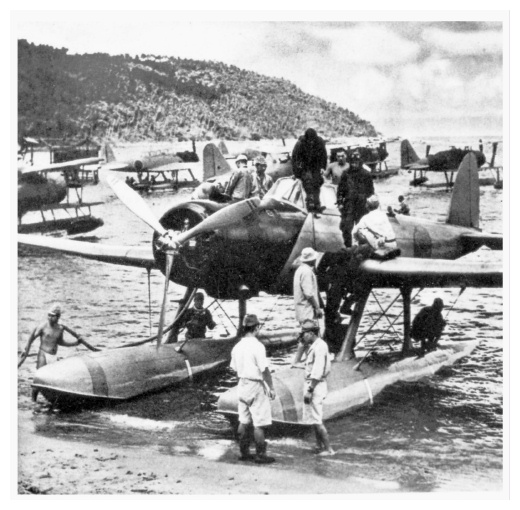
Aichi E13A
Aichi E13A “Jake”: A Distinguished Reconnaissance Seaplane
The Aichi E13A, known by the Allied reporting name “Jake,” stands out as one of the Imperial Japanese Navy’s most versatile and effective reconnaissance seaplanes of World War II. Serving from the early years of the conflict until its conclusion, this aircraft was integral not only in performing long-range observation missions but also in fulfilling secondary bombing and anti-submarine roles. Its robust design, innovative engineering, and adaptability to various maritime operations have earned it a respected legacy in military aviation history.
Development and Design Evolution
Origins and Mission Requirements
In the late 1930s, as Japan’s naval doctrine evolved to meet the demands of modern aerial warfare, the Imperial Japanese Navy set out to replace older reconnaissance seaplanes with a more capable platform. The Aichi Kokuki company was tasked with developing an aircraft that met the Navy’s stringent requirements for long-range observation, artillery spotting, and in some cases, light bombing. This led to the conception of the Type 0 Reconnaissance Seaplane, later designated as the Aichi E13A. Designed to operate from aircraft carriers and surface ships, the aircraft had to cope with the harsh maritime environment while delivering precision and reliability for extended missions.
Structural and Aerodynamic Innovations
The design of the E13A was a careful balance between durability and performance. It featured a twin-float configuration that allowed for stable takeoffs and landings on water, essential for carrier-based operations. The floats were originally mounted using rigid struts, which were later replaced by simpler cable guide systems in some production variants to improve maintenance and aerodynamics. The airframe utilized a combination of metal and fabric-covered surfaces, a common practice at the time for achieving a lightweight yet sturdy structure. This construction yielded an aircraft that was agile in flight and capable of withstanding the stresses of dive bombing, high-speed turns, and extended maritime patrols.
Technical Specifications
Dimensions and Weight
Engineered with the operational demands of naval reconnaissance in mind, the Aichi E13A exhibits well-considered dimensions that optimized both stability and performance:
- Length: Approximately 11.30 meters (37 feet 1 inch)
- Wingspan: Around 14.50 meters (47 feet 7 inches)
- Height: About 7.40 meters (24 feet 3 inches)
- Wing Area: Sufficiently large to ensure excellent lift characteristics while maintaining maneuverability
- Weight: With an empty weight reflecting its light construction, the E13A was capable of carrying significant payloads when fully loaded for various mission profiles
These dimensions allowed the aircraft to operate effectively from aircraft carriers while providing ample space for its crew and onboard equipment.
Engine and Propulsion
At the heart of the E13A’s performance was its robust powerplant:
- Engine: 1 × Mitsubishi Kinsei 43 radial engine
- Configuration: A fourteen-cylinder, air-cooled radial engine paired with a three-bladed propeller
- Power Output: Engine performance was optimized to propel the aircraft at a respectable pace while ensuring reliable operation over long distances
This engine configuration not only delivered the thrust necessary for rapid climbs and sustained flight over vast expanses of ocean, but also contributed to the aircraft’s ease of maintenance—a critical factor for naval operations in remote and harsh environments.
Performance Parameters
The Aichi E13A was designed with an emphasis on endurance and operational flexibility. Its performance figures, based on the refined models such as the E13A1, include:
- Maximum Speed: Approximately 203 km/h (126 mph)
- Cruise Speed: Moderate speeds that balanced fuel efficiency with mission requirements
- Range: An impressive operational radius of up to 1,128 miles (about 1,815 kilometers), enabling sustained reconnaissance missions over enemy territory
- Service Ceiling: The aircraft’s ceiling allowed it to operate at altitudes where it could evade many enemy fighters and anti-aircraft fire
These performance metrics ensured that the “Jake” could perform deep reconnaissance missions, maintain prolonged patrols, and quickly redeploy in response to emerging tactical situations.
Armament and Defensive Capabilities
Offensive Armament
Although primarily designed for reconnaissance, the Aichi E13A was capable of delivering a credible punch when the situation demanded:
- Bomb Load Options:
- Single 250 kg Bomb: For precision strikes on high-value targets
- Multiple Smaller Bombs: Alternatively, the aircraft could be armed with four 60 kg bombs, providing flexibility in target engagement
- Depth Charges: In anti-submarine roles, depth charges could be fitted to counter emerging underwater threats
This offensive capability allowed the “Jake” to extend its role beyond mere observation, adding to its versatility as a multi-mission platform.
Defensive Armament
To protect itself during vulnerable phases of flight, the E13A was equipped with defensive armament:
- Rear Defensive Gunner: Typically manned by an additional crew member armed with a 7.7 mm machine gun or, in some variants, a 20 mm cannon. This rear gun position was crucial for repelling enemy fighters attacking from behind.
This arrangement enabled the aircraft to serve both as an observer and a light attack platform, ensuring a measure of self-defense in contested airspace.
Operational History and Tactical Impact
Roles in the Imperial Japanese Navy
Throughout its service life, the Aichi E13A played a vital role in expanding the operational capabilities of the Imperial Japanese Navy. Its tasks included:
- Reconnaissance Missions: The primary role was long-range reconnaissance, where the aircraft gathered vital intelligence on enemy movements and provided real-time visual information for naval commanders.
- Artillery Spotting and Observation: With its extended range and reliable performance, the “Jake” was an essential tool for directing artillery and naval gunfire during engagements.
- Light Bombing and Anti-Submarine Operations: Its secondary capabilities allowed it to deliver bombs or depth charges, thus diversifying its tactical applications and making it a valuable asset in both offensive and defensive operations.
Combat Performance and Legacy
The E13A’s ability to perform in a variety of roles made it one of the numerically most important seaplanes in the Japanese inventory. Its operational history was marked by numerous missions across the Pacific, where it often operated in hostile environments under challenging conditions. The aircraft’s reliability, combined with its respectable performance and versatility, ensured that it remained in front-line service until the end of the war. Today, the Aichi E13A “Jake” is remembered not only for its technical ingenuity but also for its significant contributions to naval reconnaissance and maritime warfare during a critical period of history.
Production and Legacy
Manufacturing and Distribution
A testament to its operational value, the Aichi E13A was produced in significant numbers:
- Total Production: Approximately 1,418 aircraft were built during its production run.
- Production Distribution:
- Kyushu Hikoki KK: Manufactured the majority, around 1,237 units
- Aichi Tokei Denki KK: Produced about 133 units
- Dai-Juichi Kaigun Kokusho: Contributed roughly 48 units
This large production run underscored the trust placed in the E13A by the Imperial Japanese Navy, ensuring that it became a mainstay in maritime operations thanks to its consistent performance and adaptability.
Enduring Impact
The legacy of the Aichi E13A “Jake” is multifaceted. Its design influenced subsequent generations of reconnaissance aircraft developed in Japan, and lessons learned from its operational use have shaped modern approaches to naval aviation and multi-role aircraft design. Even decades after its retirement, the E13A remains an object of study for aviation historians and engineers alike, offering insights into the evolution of combat seaplanes and the technological innovations of World War II.
Conclusion
The Aichi E13A “Jake” is a remarkable example of how strategic design and technical innovation can converge to create an aircraft that excels in multiple roles. With its robust Mitsubishi Kinsei engine, efficient twin-float configuration, and impressive operational range, the E13A not only met the complex demands of naval reconnaissance and light bombing but also established itself as a versatile platform in maritime warfare.
