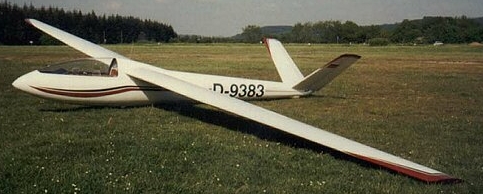
Akaflieg Braunschweig SB-5 Danzig: Germany’s Experimental Two-Seat Glider
The Akaflieg Braunschweig SB-5 Danzig represents a bold chapter in post-war German sailplane engineering. Conceived and built by student engineers at the Technical University of Braunschweig, the SB-5 combines innovative composite construction with a side-by-side cockpit layout—uncommon in high-performance gliders of its era. This article dives into the SB-5’s development, airframe design, aerodynamic features, cockpit ergonomics, flight characteristics, and technical parameters, illustrating how a university project pushed the boundaries of two-seat glider performance.
Historical Development
Genesis of the SB-Series
Akaflieg Braunschweig has a storied history of student-led sailplane projects stretching back to the 1920s. By the late 1960s, advances in composite materials and aerodynamic theory inspired the design of a two-seat trainer and performance glider. The SB-5 project launched in 1970 with the goal of achieving handling qualities rivaling single-seat competitors while retaining instructional versatility.
Design Objectives and Timeline
Key objectives included a high aspect-ratio wing for superior glide performance, a lightweight yet robust composite fuselage, and a spacious cockpit for dual instruction. After wind-tunnel tests of novel Wortmann airfoil sections, the team built the first prototypes in 1974. Flight testing continued through 1977, refining control harmony and validating structural integrity under aerobatic loads.
Airframe and Structural Layout
Composite Sandwich Construction
The SB-5’s fuselage employs a glass-fiber reinforced plastic (GFRP) sandwich over a synthetic foam core. This technique yields a smooth, high-strength shell with excellent fatigue resistance. Carbon-fiber reinforcements in high-load regions—such as wing roots and landing-gear attachments—boost torsional rigidity without a significant weight penalty.
Wing Design and Materials
A single-spar wing features double-tapered planform and full-span flaperons. The spar caps use unidirectional carbon fibers, while the upper and lower skins are GFRP. Foam ribs maintain airfoil accuracy. Plexiglas wing root fairings blend into the fuselage fillets, minimizing interference drag.
Empennage and Control Surfaces
The T-tail configuration employs a fiberglass tailplane with carbon-reinforced leading edges. Elevators and rudder are fabric-covered over a composite frame, preserving light control forces and crisp response. Mass balances inside hinge lines prevent control flutter at high speed.
Aerodynamics and Flight Systems
Airfoil Selection
The SB-5’s wing uses a family of Wortmann FX sections tailored for low drag at high lift coefficients. The root section maximizes climbing performance in weak thermals, while the tip section delays tip stall and maintains efficient cruise at high speeds.
Flaperon Mechanism
Instead of separate ailerons and flaps, the SB-5 integrates both functions into flaperons. Each flaperon can droop up to 15° for low-speed thermalling and ground roll control, then neutral or reflex positions for cruise optimization. Differential deflection reduces adverse yaw without the need for large rudder inputs.
Airbrakes and Landing Gear
Schempp-Hirth airbrakes on the upper wing surface extend symmetrically up to 60° to allow steep, controlled descents. The retractable main wheel and tail-wheel reduce drag in flight. A hydraulic damper cushions landings, while a skid under the nose protects the fuselage during rough-field operations.
Cockpit and Ergonomics
Side-by-Side Seating Layout
Unlike typical tandem two-seat gliders, the SB-5 features side-by-side seating. This arrangement enhances instructor-student communication and offers comparable forward visibility in both seats. The canopy rises on gas-strut supports, providing easy access and excellent external sightlines.
Instrumentation and Avionics
Primary flight instruments—airspeed indicator, variometer, altimeter, and turn-coordinator—mount on a single panel angled toward both occupants. Optional installations include GPS navigation, audio variometers, and FLARM collision-avoidance modules. Dual control sticks and rudder pedals ensure full redundancy for training.
Comfort and Safety Features
Ergonomic seats with adjustable backrests and four-point harnesses enhance comfort on long cross-country flights. A built-in parachute recess behind the seats maintains smooth internal contours. Ventilation vents in the cockpit floor and canopy frame mitigate canopy fogging in humid conditions.
Performance and Handling
Glide Ratio and Sink Rate
With a wing span of 18.0 meters and an aspect ratio of 20:1, the SB-5 achieves a best-L/D ratio of 40:1 at 95 km/h. Minimum sink rate is around 0.60 m/s at 80 km/h, allowing tight climbs in weak thermals. High-speed cruising between thermals remains efficient up to 220 km/h with low drag.
Speed Range and Load Factors
- VNE (Never-Exceed Speed): 250 km/h
- VST (Stall Speed, Flaps Neutral): 65 km/h
- VA (Maneuvering Speed): 180 km/h The airframe is cleared for aerobatic maneuvers up to +5 G and −2 G, enabling standard training loops and rolls.
Control Harmony and Stability
Pilots praise the SB-5’s balanced aileron and elevator forces. Adverse yaw is minimal thanks to differential flaperon action. The high-mounted T-tail offers consistent pitch response, though deep stalls require prompt recovery inputs due to elevator blanketing potential.
Operational Use and Demonstrations
University Flight Training
Following certification in 1978, the SB-5 served as the flagship trainer at Braunschweig’s gliding club. Its performance allowed advanced student pilots to transition directly to cross-country and competition work without switching to a single-seat sailplane.
Competition Flights and Records
A handful of SB-5s entered local and national contests, showcasing impressive speeds and climb rates. While not mass-produced, the glider’s competitive debut in the Deutsche Meisterschaften of 1980 placed it among top-performing two-seaters.
Variants and Experimental Modifications
SB-5B: Wingtip Extensions
An experimental wingtip extension kit increased span to 20 m, boosting glide ratio to 42:1. Removable tips allowed pilots to choose between high-performance cross-country and maneuverable club configurations.
SB-5E: Electric Sustainer Retrofit
Recent university projects have explored adding a small electric motor in the fuselage nose with a folding propeller. The system provides self-launch or sustain power, reducing reliance on aero-tows and improving safety in outlandings.
Technical Specifications
| Parameter | SB-5 Danzig |
|---|---|
| Crew | 2 (side-by-side) |
| Wing Span | 18.00 m |
| Wing Area | 16.20 m² |
| Aspect Ratio | 20:1 |
| Empty Weight | 380 kg |
| Maximum Takeoff Weight | 600 kg |
| Best Glide Ratio | 40:1 at 95 km/h |
| Minimum Sink Rate | 0.60 m/s at 80 km/h |
| VNE | 250 km/h |
| Stall Speed (Flaps Neutral) | 65 km/h |
| Maneuvering Speed (VA) | 180 km/h |
| Structure Load Limits | +5 G / −2 G |
| Airfoil Section | Wortmann FX series |
| Landing Gear | Retractable monowheel + tail-wheel |
Maintenance and Support
Inspection and Overhaul Cycles
Regular airframe inspections occur every 100 flight hours, focusing on composite skin integrity, control-surface hinge wear, and landing-gear hydraulics. Wing spar epoxy joints undergo ultrasonic testing at 500-hour intervals. Canopy seals and hinges receive attention every 50 hours to prevent water ingress.
Parts and Fabrication
As Akaflieg projects are unique, parts manufacturing remains in university workshops or contracted to specialist composite firms. Replacement foam cores, fiberglass fabrics, and carbon-fiber pre-pregs are sourced from aerospace suppliers, ensuring continuity of structural repairs.
Legacy and Future Directions
Influence on Modern Two-Seat Gliders
Though not commercially produced, the SB-5’s advanced use of composites and side-by-side cockpit influenced later factory-built two-seat high-performance gliders. Its flaperon system and airfoil experiments informed subsequent sailplane designs across Germany.
Prospects for Electric Propulsion
Building on early SB-5E work, student teams continue refining electric sustainer integration. Advances in battery energy density could soon allow self-launch capability while maintaining the SB-5’s aerodynamic purity for unpowered flight.
Conclusion
The Akaflieg Braunschweig SB-5 Danzig stands as a testament to the creativity and technical skill of university-based aeronautical engineers. Blending composite innovation, refined aerodynamics, and a unique cockpit layout, the SB-5 achieved performance on par with contemporary single-seat designs. While production remained limited to student workshops, its legacy endures in sailplane communities and modern two-seat trainer concepts. Whether open-cockpit thermalling over the Lüneburg Heath or cruising cross-country in silence, the SB-5 continues inspiring new generations of aviators and engineers alike.
