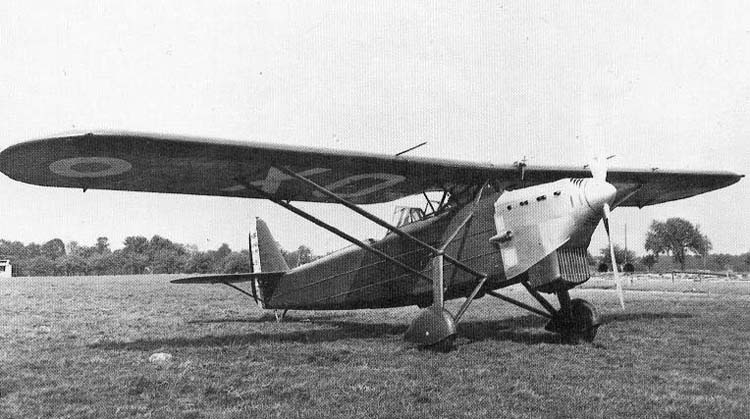
ANF Les Mureaux 113
The ANF Les Mureaux 113 emerged in the early 1930s as a versatile French reconnaissance bomber that combined rugged construction with advanced aerodynamics for its era. Developed by ANF Les Mureaux, it was intended to replace aging observation types within the Armée de l’Air. Its biplane layout and mixed-material airframe offered a blend of stability at low speeds and resilience under fire.
Development History
Origins and Requirements
France’s need for a modern reconnaissance aircraft led to the 1931 specification calling for extended range, improved crew protection, and enhanced photographic capability. ANF Les Mureaux responded by stretching and refining its earlier 110 series to create the 113, emphasizing aerodynamic cleanliness and payload flexibility.
Prototype Trials
The first prototype of the Les Mureaux 113 took flight in late 1932. Flight tests demonstrated excellent low-speed handling and stable photographic platforms. Modifications to engine cowling and wing stagger followed, optimizing airflow and cooling before series production commenced in 1934.
Airframe and Structure
Fuselage Design
The fuselage employed a welded steel tube framework covered with doped fabric and plywood fairings. This hybrid structure achieved high local stiffness around the gunner’s dorsal position while preserving light overall weight. Access panels along the port side allowed rapid inspection of control runs and radio equipment.
Wing and Empennage
The 113’s unequal-span biplane wings utilized two spruce spars and plywood ribs, braced by streamlined interplane struts and steel flying wires. A slight stagger between the wings improved forward visibility and reduced interference drag. Tail surfaces featured balanced elevators and a horn-balanced rudder, ensuring predictable control throughout the flight envelope.
Powerplant and Propulsion
Engine Installation
Most production variants mounted the Hispano-Suiza 12Xbrs liquid-cooled V-12 engine, rated at 650 horsepower for takeoff. The engine sat within a close-fitting metal cowling with adjustable cowl flaps to regulate cooling airflow. A front-mounted spinner and four-blade metal propeller delivered smooth thrust with minimal vibration.
Fuel and Lubrication Systems
Fuel was stored in two wing root tanks totaling 600 liters, providing a range of up to 1,200 kilometers on internal fuel alone. A single auxiliary fuselage tank could be added for extended ferry missions. An automatic oil cooler beneath the fuselage maintained optimal engine temperatures during long loiter periods at high altitude.
Crew Stations and Cockpit
Pilot’s Cockpit
The pilot’s open cockpit featured a reinforced windscreen and side panels to deflect propeller wash and rain. Primary flight instruments were mounted on a curved panel directly ahead, while push-pull tubes connected to the rudder pedals and control column for crisp response.
Observer and Gunner Positions
Directly aft of the pilot, the observer operated a handheld camera and navigational instruments from a semi-enclosed cockpit. A Scarff ring dorsal mount accommodated a single 7.7 mm machine gun for self-defense. A ventral trapdoor below the observer’s station allowed sweeping fire against attacking fighters from beneath.
Performance Characteristics
Speed and Ceiling
With the 650 hp Hispano-Suiza engine, the Les Mureaux 113 achieved a maximum speed of 345 km/h at 4,000 meters and cruised comfortably at 280 km/h. Its service ceiling reached 8,500 meters, enabling it to overfly many ground-based threats while conducting photo reconnaissance.
Climb and Range
Time to climb to 5,000 meters averaged 22 minutes, aided by efficient wing design and favorable power-to-weight ratio. Endurance exceeded five hours at cruising power settings, granting the aircraft a reconnaissance radius of approximately 600 kilometers with a standard payload.
Armament and Equipment
Offensive Load
The 113 carried up to 300 kilograms of light bombs in wing racks or a small semi-recessed belly bay. Typical bomber loads included 6×50 kg fragmentation bombs for tactical interdiction. Quick-release mechanisms enabled ripple drops for strafed ground targets.
Defensive Armament
Defensive armament centered on one 7.7 mm machine gun on the dorsal Scarff ring and one fixed forward-firing .303 calibre Vickers synchronized with the propeller. Ammunition boxes held 1,500 rounds total, split between gun positions. Spare 50-round magazines were stored within easy reach of crew stations.
Avionics and Reconnaissance Gear
Radio and Navigation
A single SCR-274 radio set provided voice and Morse-code communication over 80–150 MHz frequencies. Dual loop and long-wire antennas mounted on struts enabled reliable links with ground stations. Navigation relied on a Sperry drift sight and mechanical gyroscopic compass, supplemented by map boards and signal flares.
Photographic Systems
The observer’s main reconnaissance camera was a F/2.8 Breton 24 cm focal length plate camera, mounted on an adjustable arm for oblique and vertical imagery. Plate magazines held up to six glass plates per sortie. A secondary handheld Vest Pocket camera captured close-up targets.
Operational Employment
Frontline Service
Les Mureaux 113s entered service in 1935 with reconnaissance escadrilles along France’s eastern frontier. Crews praised its stability in turns and predictable stalls when flying slow photographic runs over enemy lines. Early wartime sorties in 1939–1940 confirmed its value for artillery spotting and battlefield mapping.
Retreat and Secondary Roles
During the 1940 defensive collapse, surviving 113s performed courier, liaison, and light bombing attacks under increasingly harsh conditions. A handful were evacuated to North Africa, where they served as advanced trainers and target tugs until 1943.
Variants and Modifications
113 A.2
The original two-seat reconnaissance version, designated A.2, comprised the bulk of production. It featured the Hispano-Suiza 12Xbrs engine and standard camera fit.
113 B.2
A dedicated bomber variant, the B.2, removed photographic bulkheads to enlarge the bomb bay. Reinforced flooring and stronger wing racks allowed up to 400 kg of ordnance.
113 ET.1
A one-off target-tug conversion known as ET.1 replaced the dorsal gun with a winch and spool for drogue targets. It served with training units through 1942.
Technical Specifications
| Parameter | Specification |
|---|---|
| Crew | 2 (pilot and observer/gunner) |
| Length | 11.20 meters |
| Wingspan (upper/lower) | 14.60 m / 13.20 m |
| Height | 4.00 meters |
| Wing area | 42.5 square meters |
| Empty weight | 2,400 kilograms |
| Maximum takeoff weight | 3,600 kilograms |
| Powerplant | 1 × Hispano-Suiza 12Xbrs V-12 engine (650 hp) |
| Maximum speed | 345 km/h at 4,000 meters |
| Cruising speed | 280 km/h |
| Service ceiling | 8,500 meters |
| Rate of climb | 4.2 m/s |
| Range | 1,200 km |
| Endurance | 5.2 hours |
| Bomb load | Up to 400 kg |
| Forward armament | 1 × 7.7 mm Vickers machine gun |
| Defensive armament | 1 × 7.7 mm Lewis machine gun |
Conclusion
The ANF Les Mureaux 113 exemplifies early 1930s French ingenuity in balancing reconnaissance, bombing, and crew survivability. Its sturdy airframe, dependable Hispano-Suiza powerplant, and adaptable mission fit made it a reliable workhorse during the opening phases of World War II. Despite rapid advances in monoplane design, the 113’s service record underscores the lasting value of simplicity and ruggedness under combat conditions.
