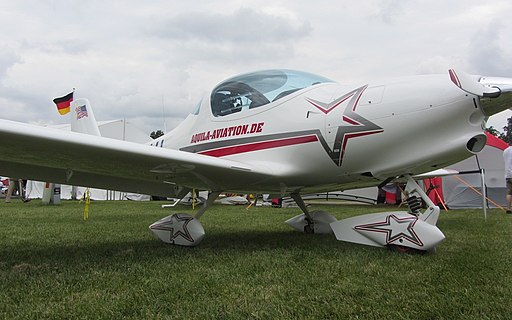
Aquila A 211
The Aquila A 211 is a two-seat, low-wing light aircraft produced by Aquila Aviation in Germany. Building on the success of its predecessor, the A 210, the A 211 entered service in the late 2000s with a refined airframe, updated aerodynamics and an option for a fully glass-cockpit layout. Certified under EASA Part 21.17, it serves flight schools, recreational pilots and aerotowing operations with an attractive blend of performance, efficiency and modern styling.
Design and Development
Airframe and Materials
At the heart of the A 211 lies a composite monocoque fuselage crafted from carbon-fiber-reinforced plastic (CFRP) and fiberglass-reinforced plastic (GFRP). Primary structural members—wing spars, longerons and bulkheads—use unidirectional carbon-fiber skins sandwiching a lightweight core. Secondary fairings and control surfaces employ a glass-fiber sandwich to balance strength with cost-effective manufacturability. This all-composite approach yields high stiffness, corrosion resistance and fatigue margins that exceed many aluminum designs.
Aerodynamic Refinements
Compared to the A 210, the A 211 features a reshaped engine cowling, a sculpted spinner and a redesigned canopy to reduce drag and improve pilot visibility. The wing retains a laminar-flow profile with a modest 4.5° dihedral for inherent roll stability. Winglets at the tips curb induced drag, while two-position Fowler flaps extend chord and camber for steeper approaches and shorter landings. Streamlined fairings cover the main gear and struts, trimming parasite drag without compromising maintenance access.
Cockpit and Ergonomics
Instrumentation and Avionics
The standard A 211 instrument panel houses analog flight instruments alongside a fuel pressure gauge, oil temperature and pressure indicators, a variometer and an engine tachometer. A modular electrical bus permits rapid integration of radios, transponders and GPS or EFIS units. In the A 211 GX variant, pilots benefit from a fully integrated glass cockpit—typically a Garmin-style EFIS suite with synthetic vision, moving-map navigation and built-in autopilot interfaces.
Seating, Visibility and Safety
Side-by-side seating under a one-piece forward-hinged canopy affords excellent panoramic views. Continuously adjustable seats accommodate a broad range of pilot sizes, and six-point harnesses ensure occupant security. Energy-absorbing seat mounts and a robust rollover structure guard against impact loads. Dual-circuit hydraulic brakes on the main wheels deliver dependable stopping power, and a steerable nosewheel simplifies ground handling.
Powerplant and Propulsion
Engine
Power is supplied by a single Rotax 912 S3 four-cylinder, four-stroke engine rated at 73.5 kW (98.6 hp) at 5 800 rpm. Its combined air- and liquid-cooling system, dual ignition and full-pressure lubrication enable sustained climbs and extended ground runs without oil-starvation concerns. A 2 000-hour time-between-overhaul (TBO) underlines Rotax’s reputation for reliability in the light-sport category.
Propeller
A two-blade, constant-speed MT-Propeller MTV-21-A/175-05 sits on the nose, delivering fine-tuned pitch control for optimized takeoff acceleration and cruise efficiency. Hydraulic actuation ensures rapid feathering and pitch adjustments, while the composite construction absorbs vibration and minimizes rotating mass on the engine’s crankshaft.
Performance and Flight Characteristics
Speed and Range
At maximum continuous power, the A 211 can reach up to 266 km/h (143 ktas). In economy cruise (55 percent power), true airspeed settles near 200 km/h (108 ktas), making cross-country legs both swift and fuel-efficient. With a 120 L fuel capacity (usable), pilots can expect a range approaching 990 km (535 nm) at long-range cruise settings with reserves accounted for.
Climb, Ceiling and Stall
Sea-level climb rate hovers around 3.8 m/s (750 ft/min), ensuring prompt departure from traffic patterns and obstacle clearance. Service ceiling rises to approximately 4 450 m (14 600 ft), above which climb performance tapers gradually. Clean stall speed is about 93 km/h (50 kts), dropping to roughly 80 km/h (43 kts) with flaps extended, both accompanied by gentle stall characteristics and predictable buffet cues.
Handling and Stability
Pilots describe the A 211’s roll response as crisp yet harmonically balanced, with neutral yaw tendencies courtesy of optimized tail sizing. Pitch feel remains light across the speed envelope, assisted by mass-balanced control surfaces. The composite wing’s stiffness reduces aeroelastic flex, sharpening control feedback and reinforcing confidence during maneuvers.
Technical Parameters
| Parameter | Value |
|---|---|
| Crew | 1 pilot + 1 passenger |
| Length | 7.40 m (24 ft 3 in) |
| Wingspan | 10.30 m (33 ft 10 in) |
| Height | 2.40 m (7 ft 10 in) |
| Wing area | 10.50 m² (113 ft²) |
| Empty weight | 520 kg (1 146 lb) |
| Maximum takeoff weight | 750 kg (1 653 lb) |
| Useful load | 230 kg (507 lb) |
| Fuel capacity | 120 L (32 US gal) |
| Powerplant | Rotax 912 S3 (73.5 kW/98.6 hp) |
| Propeller | MT-Propeller MTV-21-A/175-05 (2-blade) |
| Maximum speed | 266 km/h (143 ktas) |
| Cruise speed | 210 km/h (113 ktas) |
| Range | 990 km (535 nm) |
| Service ceiling | 4 450 m (14 600 ft) |
| Rate of climb | 3.8 m/s (750 ft/min) |
| Stall speed (clean) | 93 km/h (50 kts) |
| Stall speed (flaps down) | 80 km/h (43 kts) |
| Wing loading | 81 kg/m² (16.6 lb/ft²) |
| Maximum baggage weight | 40 kg (88 lb) |
Variants and Upgrades
A 211 (Base)
The initial A 211 features a conventional analog instrument panel and robust composite construction. It meets VFR day/night training requirements under EASA Part 21.17 certification.
A 211 GX
Upgraded with a factory-installed glass cockpit, this model integrates EFIS, synthetic vision, autopilot interfaces and modern navigation/comm radios. Prewired harnesses simplify the addition of ADS-B, weather sensors and datalogging equipment.
Special Equipment
Owners can opt for ballistic parachute recovery systems, auxiliary fuel tanks, terrain-awareness modules and adjustable fairings for hot-or-high operations. Custom paint schemes and leather seating packages are also available to personalize each airframe.
Operational Roles
Flight Training
Side-by-side seating and intuitive handling make the A 211 a favorite among flight schools. The generous cockpit and smooth flight characteristics accelerate pilot proficiency, while low maintenance demands keep hourly operating costs competitive.
Recreational and Cross-Country Flying
Private owners prize the A 211’s blend of speed, range and panoramic visibility for weekend excursions. Its cruise efficiency lends itself to multi-state flights, and the optional glass cockpit enhances situational awareness on unfamiliar routes.
Aerotowing
With a lightweight yet strong composite structure and reliable Rotax powerplant, the A 211 can be equipped for glider towing. Its climb performance supports moderate tow loads, while the flaps and winglets smooth low-speed handling during release phases.
Maintenance and Support
Routine inspections focus on wing root attachments, flap actuators and composite skin integrity. Rotax engines undergo 300-hour checkups with major overhauls at 2 000 hours. Aquila Aviation’s global dealer network provides spare parts, technical bulletins and field-approved repair kits to minimize downtime.
Conclusion
The Aquila A 211 continues to raise the bar for modern light aircraft by marrying cutting-edge composite construction with refined aerodynamics and flexible avionics options. Whether serving as a primary trainer, a cross-country cruiser or a sport tow platform, its balanced performance, low operating costs and pilot-friendly characteristics make it a standout in the two-seat category.
