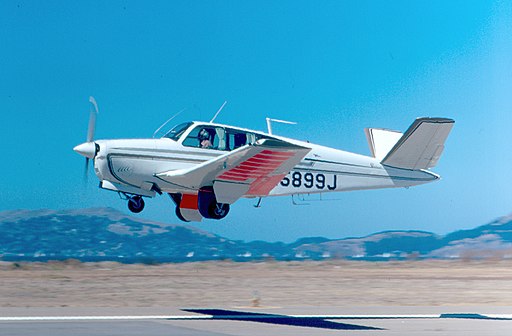
Beechcraft Bonanza: The Timeless Single-Engine Classic
The Beechcraft Bonanza has stood for more than 75 years as one of general aviation’s most admired and enduring designs. Introduced in 1947, its blend of performance, comfort, and reliability set a new benchmark for single-engine aircraft. From its sleek V-tail origins to the straight-tail models of today, the Bonanza family offers pilots a sophisticated mixture of speed, range, and handling that continues to captivate aviators around the world.
Development and Evolution
Postwar Vision
In the aftermath of World War II, Beechcraft sought to translate wartime engineering advances into a high-performance civil airplane. Drawing on lessons learned from military trainers and fighters, chief designer Ralph Harmon conceived a retractable-gear monoplane with an all-metal fuselage and advanced laminar-flow wing. The result was the Model 35 Bonanza, which first flew in December 1945 and entered service two years later.
V-Tail to Conventional Tail
Early Bonanzas featured the iconic V-tail configuration, which combined elevator and rudder functions in two slanted surfaces. The so-called “butterfly tail” reduced weight and drag, yielding cruise speeds over 170 kt on 165 hp. In 1982 Beechcraft introduced the straight-tail Model 36 Bonanza to improve stability and simplify maintenance. Today’s Bonanza 36-series retains that conventional empennage, while continuing to build on a half-century of aerodynamic refinements.
Airframe and Structural Design
Fuselage and Cabin
The Bonanza’s all-metal semi-monocoque fuselage provides a smooth, aerodynamic profile and a roomy cabin for up to six occupants. Side-by-side seating for pilot and co-pilot, plus a bench seat or individual chairs in the rear, makes the Bonanza competitive with light twins in passenger capacity. Large windows and a low-wing placement ensure excellent outside visibility.
Wing Architecture
A mid-mounted cantilever wing employs a laminar-flow airfoil that delays drag rise into high speeds. Internal wing structure consists of two main spars and aluminum ribs. Fuel tanks reside in integral wing cells, each holding 56 gal of usable fuel. Optional tip tanks increase total capacity to 78 gal per side, extending the aircraft’s range for long cross-country legs.
Landing Gear and Flight Controls
The Bonanza features hydraulically actuated, fully retractable tricycle landing gear. Each main leg retracts into the wing, enclosing the wheels to preserve aerodynamic cleanliness. Control surfaces include mass-balanced ailerons, elevators, and a dorsal-fin–augmented vertical stabilizer in straight-tail models. These features combine crisp control response with benign stall characteristics.
Powerplant and Systems
Engine Selection
Current Bonanza 36 variants are powered by a Continental IO-550-series six-cylinder, fuel-injected engine producing 300 hp. Earlier models used Lycoming or Continental engines ranging from 165 hp to 285 hp. The IO-550’s direct-drive setup offers smooth operation, precise throttle response, and peak power up to 7,500 ft density altitude.
Fuel, Oil, and Propeller
Dual fuel pumps feed the engine through an engine-driven pump and electric backup, ensuring consistent delivery under all flight attitudes. Oil capacity sits at 8 qt, circulating through an air-cooled sump. The standard three-blade constant-speed propeller features a full-feather option to minimize drag after engine shutdown. Pilots can choose either Hartzell or McCauley composite blades.
Environmental and Electrical Systems
A continuous-flow oxygen system supports flights above 12,500 ft, while air-conditioning and cabin heaters maintain comfort in varied climates. A 28 V DC electrical bus powers avionics, lighting, and cabin outlets. Dual alternators and battery isolates provide redundancy for extended flights and instrument approaches under challenging conditions.
Performance and Handling
Speed and Range
- Maximum Cruise Speed: 203 kt
- Typical Cruise (75% power): 175 kt at 8,000 ft
- Range (reserve IFR): 920 nm with 45-min fuel reserve These speeds place the Bonanza among the fastest single-engine pistons. With tip tanks and efficient fuel planning, cross-country legs of 1,000 nm are well within reach.
Climb and Ceiling
- Rate of Climb: 1,200 ft/min at sea level
- Service Ceiling: 17,000 ft Strong climb performance accelerates altitude gain to ideal flight levels. Cabin differential pressure up to 5 psi (optional) allows pressurized operations above 25,000 ft on specialized models.
Stall and Landing
- Stall Speed (clean): 59 kts
- Stall Speed (landing configuration): 50 kts
- Landing Distance (50 ft obstacle): 1,300 ft Gentle stall characteristics and effective flaps yield forgiving landings. Full-flap descent angles of 600 ft per nautical mile enable precise approaches into short fields.
Cockpit and Avionics
Ergonomics and Layout
Bonanza cockpits balance a pilot-centric panel with comfortable seating and large doors for easy entry. Adjustable seats and rudder pedals accommodate a wide range of pilot physiques. Overhead circuits and fuel selectors are positioned to minimize distraction during critical phases of flight.
Modern Avionics Packages
Contemporary Bonanzas often feature Garmin G1000 or GFC 700 integrated flight decks. Two large LCD PFD/MFD displays deliver attitude, navigation, engine data, traffic, and weather on a single interface. Synthetic vision, autopilot with envelope protection, and datablock charts simplify complex IFR operations. Analog backup gauges and a dedicated standby attitude indicator ensure safety in case of primary system failure.
Connectivity and Comfort
In-cabin USB power ports, Bluetooth audio panels, and passenger entertainment modules cater to business and leisure travelers. Optional Wi-Fi routers transmit real-time weather, flight plan updates, and in-flight internet access when within range of ground networks.
Variants and Special Editions
Model 35 Series (V-Tail)
Early V-tail Bonanzas ranged from the A35 with 185 hp to the E35 with 225 hp and deluxe interiors. Each iteration featured aerodynamic tweaks, larger fuel tanks, and incremental engine upgrades.
Model 33 Debonair
A lower-cost derivative introduced in the 1960s, the Debonair used the same airframe but carried fewer instruments and simpler finishes. It appealed to operators seeking Bonanza performance at a reduced price point.
Model G36 and G36TC
The contemporary G36 offers 300 hp performance with unpressurized comfort, while the G36TC adds turbocharging for sustained climb above 18,000 ft. Both feature the latest Garmin avionics, enhanced soundproofing, and leather interiors.
Operational Use and Owner Community
Flight Training and Business Travel
Flight schools prize the Bonanza for its performance envelope and handling qualities, preparing students for high-performance and complex-type endorsements. Business travelers appreciate its cruise speed and cabin amenities for trips under 1,000 nm.
Air Racing and Records
Bonanzas have campaigned successfully in cross-country air races, leveraging their speed and efficiency. Modified variants hold speed and altitude records in the single-engine piston category, testament to the airframe’s adaptability.
Owners Clubs and Support Networks
The International Bonanza Society (IBS) and Bonanza/Baron Pilot Training maintain active communities of owners and pilots. Annual conventions feature forums on maintenance best practices, avionics upgrades, and sharing flight-planning tips for exotic destinations.
Maintenance, Support, and Operating Costs
Inspection and Overhaul Cycles
Airframe annual inspections focus on wing spar corrosion zones, V-tail torque fittings on older models, and landing gear retraction systems. Engine TBO sits at 2,000 hr for the IO-550, with condition-based service bulletins guiding accessory replacements.
Parts Availability and Resale Value
Strong factory support and robust aftermarket suppliers keep parts readily available. Bonanzas enjoy stable resale values above comparable singles, reflecting demand for their performance and community-backed support.
Direct Operating Costs
Typical fuel burn at 75 % power averages 17 gal/hr. When amortized over maintenance, insurance, and hangar, the Bonanza’s direct operating cost ranges from $140 to $200 per flight hour, competitive with light twins and high-performance singles alike.
Technical Specifications
| Specification | G36 Bonanza |
|---|---|
| Crew | 1–2 |
| Capacity | Up to 5 passengers |
| Length | 28 ft 7 in (8.71 m) |
| Wingspan | 33 ft 6 in (10.21 m) |
| Height | 9 ft 4 in (2.84 m) |
| Wing Area | 174 ft² (16.17 m²) |
| Empty Weight | 2,720 lb (1,234 kg) |
| Maximum Takeoff Weight | 3,650 lb (1,655 kg) |
| Powerplant | Continental IO-550-B piston, 300 hp |
| Maximum Cruise Speed | 203 kt (376 km/h) |
| Cruise Speed (75% power) | 175 kt (324 km/h) |
| Stall Speed (landing configuration) | 50 kt (93 km/h) |
| Range (45-min reserve) | 920 nm (1,704 km) |
| Service Ceiling | 17,000 ft (5,182 m) |
| Rate of Climb | 1,200 ft/min (6.1 m/s) |
| Takeoff Distance (50-ft obstacle) | 1,300 ft (396 m) |
| Landing Distance (50-ft obstacle) | 1,350 ft (411 m) |
| Fuel Capacity | 100 US gal (378 L) usable |
Conclusion
From its pioneering V-tail beginnings to today’s technologically advanced straight-tail models, the Beechcraft Bonanza remains a symbol of innovation in general aviation. Its combination of speed, range, and cabin comfort continues to serve a diverse spectrum of pilots—from students and air racers to business travelers and explorers. With decades of proven performance and a passionate owner community, the Bonanza’s legacy is as solid as the airframe itself—and its future in the skies looks as bright as ever.
.jpg)