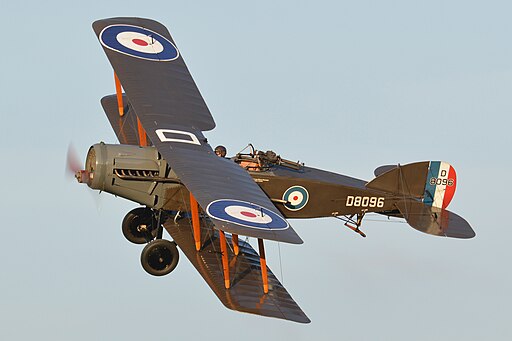
Bristol F.2 Fighter: The Unsung Multirole Ace of World War I
The Bristol F.2 Fighter emerged during the crucible of World War I as a two-seat biplane that defied expectations. Originally conceived as a reconnaissance aircraft, it quickly proved itself a potent fighter, combining speed, maneuverability, and firepower. This article explores its development, design philosophy, structure, systems, operational record, and lasting legacy, culminating in a comprehensive set of technical specifications.
Development and Design
Historical Context
By 1916, the Royal Flying Corps needed a replacement for slow, fragile two-seat scouts. The Bristol Aeroplane Company answered with a rugged design powered by a reliable inline engine. Initial orders emphasized observation duties, but early combat encounters revealed hidden potential as an escort and dogfighter.
Design Objectives and Solutions
Designers balanced three core goals:
- Survivability for crew and airframe
- Ample space for camera gear or wireless equipment
- Fighter-level performance to protect itself and other aircraft
Innovations included a streamlined fuselage, staggered wings for improved visibility, and a forward-firing Vickers gun paired with a flexible Lewis gun for the observer.
Airframe Structure and Materials
Fuselage and Cockpit Layout
The steel-tube fuselage frame, fabric-covered and plywood-skinned in critical areas, offered strength without excessive weight. Tandem cockpits placed pilot and observer close enough for clear communication, yet separated by a fuel tank bulkhead for safety. Dual controls in early variants allowed an instructor or emergency pilot transfer.
Wings and Control Surfaces
A two-bay biplane configuration with slight wing stagger improved lift and reduced interference drag. Wooden spars and ribs, reinforced with wire bracing, supported fabric coverings. Ailerons on both upper and lower wings delivered crisp roll response. Wing tips were rounded, smoothing airflow at high angles of attack.
Powerplant and Propulsion
Rolls-Royce Falcon Engine
Most F.2s mounted the 190-hp Rolls-Royce Falcon I or II water-cooled V-12 engine. Compact and reliable, its smooth torque curve aided climb and acceleration. A ventral radiator under the fuselage offered efficient cooling with minimal drag penalty.
Fuel and Oil Systems
A 130-liter main fuel tank sat behind the pilot, complemented by auxiliary tanks in the upper wing center section. Gravity-feed plumbing and a simple fuel-selector valve let pilots switch tanks mid-flight. A 22-liter oil reservoir, pump-driven through the engine, maintained temperature and pressure even during prolonged climbs.
Armament and Equipment
Pilot’s Offensive Armament
A synchronized 0.303-inch Vickers machine gun on the fuselage centerline provided accurate forward fire. Its ammunition drums held 500 rounds, enabling sustained bursts against enemy fighters.
Observer’s Defensive Firepower
On a raised Scarff ring mount, a 0.303-inch Lewis gun could traverse almost 360 degrees, securing blind spots above and to the sides. Quick-change ammunition drums and spare magazines within arm’s reach ensured continuous coverage during engagements.
Reconnaissance and Wireless Gear
Early reconnaissance variants carried a vertical camera in the rear fuselage with pilot-operated shutter controls. Later F.2Bs sacrificed cameras for a wireless telegraphy set, complete with loop antennae on the upper wings, to relay real-time battlefield information.
Performance and Handling
Speed and Climb
Cruising at around 160 km/h (100 mph), the F.2 could sprint to 200 km/h (125 mph) in a dive. Its climb to 3,000 meters took roughly 20 minutes, respectable for a two-seat platform. Top altitude hovered near 6,000 meters, enabling interception of enemy reconnaissance machines.
Maneuverability and Stability
Well-balanced controls delivered surprising agility. Unlike many two-seaters of its time, the F.2 could turn tightly and execute aerobatic maneuvers when flown aggressively. Stable at medium speeds, it demanded attention on landing approaches due to narrow-track undercarriage swing.
Operational History
Early Combat Trials
In April 1917, F.2s arrived in France. Initial tactics kept them in defensive roles behind friendly fighters, but bold crews soon adopted offensive sweeps, racking up kills and earning respect. “Two-Seat Fighter Squadron” became a common nickname among Allied pilots.
Squadron Deployments
Over 110 squadrons of the RFC and RAF flew F.2s, from the Western Front to Palestine and Mesopotamia. Its versatility shone in ground-attack sorties, night bombing raids with small bombs on improvised racks, and anti-Zeppelin patrols along the coast.
Post-War Service
After the Armistice, surplus F.2s served in air mail, forestry patrols, and civil sport flying. A few found homes in Canada and Australia, where their ruggedness proved ideal for remote operations.
Variants and Modifications
F.2A and F.2B
The F.2A was the initial production model armed as described above. The F.2B introduced aerodynamic refinements—ailerons with horn balances, revised tailplanes for better pitch control, and increased fuel capacity in wing tanks.
Experimental and Export Versions
Limited numbers of F.2C mounted more powerful Falcon II engines for higher altitudes. Export customers in Belgium, Japan, and the United States received minor equipment changes: camera mounts, localized instrument panels, and optional floats for maritime patrol.
Technical Specifications
| Specification | F.2B Fighter |
|---|---|
| Crew | 2 (pilot and observer/gunner) |
| Length | 7.87 m |
| Wingspan | 12.85 m |
| Height | 3.05 m |
| Wing Area | 43.9 m² |
| Empty Weight | 765 kg |
| Loaded Weight | 1,140 kg |
| Powerplant | 1 × Rolls-Royce Falcon II V-12, 190 hp |
| Maximum Speed | 200 km/h at sea level |
| Cruising Speed | 160 km/h |
| Climb to 3,000 m | 20 minutes |
| Service Ceiling | 6,000 m |
| Endurance | 3 hours |
| Armament | 1 × fixed Vickers, 1 × Scarff-mounted Lewis |
| Bomb Load (optional) | Up to 112 kg of small bombs |
Legacy and Impact
The Bristol F.2 Fighter rewrote the rulebook for two-seat combat aircraft. Its success underlined that a well-designed multirole platform could handle both reconnaissance and frontline fighting. Post-war designers embraced its lessons: aerodynamic cleanliness, balanced controls, and flexible armament layouts became standard for interwar two-seat fighters and attack aircraft.
Conclusion
From its humble origins as a reconnaissance workhorse, the Bristol F.2 Fighter soared to prominence as one of the war’s most effective two-seat fighters. Its blend of performance, firepower, and resilience allowed it to serve on multiple fronts and in a variety of roles long after the guns fell silent. Today, its graceful lines and pioneering spirit continue to captivate aviators and historians, reminding us that innovation often takes flight in the heat of conflict.
_(30273241577).jpg)