Bréguet 270: The Unusual French Reconnaissance Aircraft of the 1930s
The Bréguet 270, often referred to as the Bréguet 27, was one of the most distinctive French military aircraft of the interwar period. Developed at the end of the 1920s to replace the aging Bréguet 19 in the reconnaissance and observation role, it combined a large sesquiplane wing arrangement with an unusual short fuselage and rear-mounted tail boom. Its appearance was striking, but the unusual layout was not simply an exercise in style. Bréguet engineers were attempting to solve a practical problem: how to give an observer the widest possible field of view and field of fire while producing a strong, versatile aircraft capable of operating from relatively small airfields. The prototype first flew on 23 February 1929, the type entered French service in 1930, and more than 200 aircraft of the broader Bréguet 27 family were ultimately produced.
The Bréguet 270 belonged to an era when military aviation was changing at extraordinary speed. The graceful biplanes of the 1920s were increasingly being challenged by faster monoplanes, enclosed cockpits, retractable landing gear, and more powerful engines. Yet the French Air Force still needed rugged observation aircraft capable of supporting ground forces, photographing enemy positions, directing artillery, and carrying light bombs. The Bréguet 270 was designed specifically for those practical requirements. It was not intended to be a glamorous high-speed fighter, and its designers accepted some aerodynamic compromises in exchange for strength, visibility, accessibility, and operational versatility.
Development of the Bréguet 270
Replacing the Bréguet 19
The origins of the Bréguet 270 can be traced to a 1928 French military requirement for a new two-seat observation aircraft. The Bréguet 19 had been one of the great French aircraft of the 1920s, but by the end of that decade its design was becoming outdated. A new generation of aircraft was required to provide the French Army with improved observation capabilities while remaining practical for the dispersed operations expected of army cooperation units.
Bréguet responded with a design that departed significantly from conventional aircraft construction of the period. Marcel Vuillierme, René Dorand, René Leduc, and Paul Deville were associated with the development, which resulted in a two-seat all-metal sesquiplane. Rather than simply producing a refined version of the Bréguet 19, the designers reconsidered the entire arrangement of the fuselage and supporting structure.
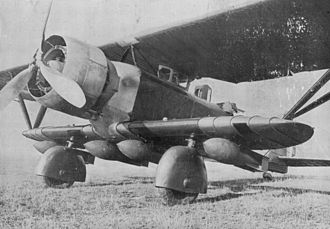
The most radical decision was to minimize the conventional fuselage around the crew. The two open cockpits were positioned in a short central body, while the tail surfaces were carried behind them on a narrow boom. This arrangement dramatically reduced the obstruction around the observer and gave the rear crewman an unusually clear view. For an aircraft whose primary task was aerial observation, that was a major operational advantage.
First Flight and Evaluation
The first Bréguet prototype, designated Bre.270.01, took to the air on 23 February 1929, with Bréguet test pilot Bucquet reportedly at the controls. The aircraft was powered by a 500-horsepower Hispano-Suiza 12Hb engine. Testing subsequently led to several changes, including revisions to the tail surfaces, rear fuselage, and propeller installation.
The prototype was followed by additional experimental machines, some of which tested alternative engines. Despite the unconventional design and relatively modest performance, the aircraft demonstrated enough practical advantages to attract French military interest. The French authorities eventually selected the Bréguet design for production, although the competing Potez 39 was also ordered.
This decision says much about the priorities of French military aviation at the time. The Bréguet 270 was not necessarily the fastest or most aerodynamic aircraft in its category, but it offered a combination of structural strength, excellent visibility, short-field capability, and adaptability that suited the army cooperation mission.
An Unconventional Airframe
The Short Fuselage
The Bréguet 270’s most memorable feature was its short central fuselage. Instead of extending continuously from the engine to the tail as on a conventional aircraft, the main fuselage ended behind the crew positions. A slender boom then connected the central structure to the tail assembly.
The purpose was primarily functional. Traditional fuselages could interfere with the observer’s view and restrict the arc available to a defensive machine gun. By reducing the fuselage around the observer, Bréguet created a remarkably open working environment. The observer could look downward and rearward with fewer structural obstructions, an important capability when locating ground targets, photographing terrain, or watching for enemy aircraft.
The design also reflected the changing nature of army cooperation aviation. An observation aircraft was essentially an airborne extension of the ground army. Its crew needed to see what was happening below them, communicate information, and sometimes engage targets. The Bréguet 270 was therefore designed around the observer rather than around aerodynamic elegance alone.
High-Tensile Steel Construction
Perhaps even more significant than the external appearance was the Bréguet 270’s construction philosophy. The aircraft made extensive use of high-tensile steel for its stressed structural members, rather than relying primarily on light alloys. A contemporary National Advisory Committee for Aeronautics description called it a major departure from accepted construction practice and emphasized that the design used high-tensile steel for the principal stressed components.
The central idea was to create a strong structural “chassis” to which different components could be attached. The engine, wings, lower wing, landing gear, and tail boom were integrated around this robust structure. This approach was inspired partly by automobile construction and was intended to make the aircraft adaptable to different operational configurations.
The result was an aircraft that could tolerate considerable operational punishment. Strength was especially valuable for army cooperation aircraft because they frequently operated from rough or improvised fields and flew at relatively low altitudes, where ground fire was a constant concern.
The Bréguet 270’s Sesquiplane Wings
A Large Upper Wing and Small Lower Wing
The Bréguet 270 used a sesquiplane arrangement, meaning that its upper wing was substantially larger than its lower wing. The upper span was approximately 17.01 metres, while the lower wing spanned only about 7.58 metres. Total wing area was approximately 49.67 square metres.
This configuration offered a compromise between the lifting advantages of a biplane and the reduced drag of a smaller lower wing. The upper wing provided most of the aircraft’s lifting area, while the reduced lower wing minimized some of the structural and aerodynamic penalties associated with a conventional biplane.
The design was not especially fast by the standards of later 1930s aircraft, but the large lifting surface contributed to its ability to operate with significant loads. It also helped the aircraft achieve the low-speed and short-field characteristics that were valuable to army cooperation units.
Short-Field Capability
One of the Bréguet 270’s design objectives was the ability to operate from relatively small airfields. Contemporary descriptions emphasize a very short takeoff run, with a fully loaded aircraft requiring only around 115 metres under specified conditions.
This capability was extremely useful for military aviation. Observation squadrons did not necessarily have access to large, permanent air bases close to the front. They needed to move forward as armies advanced and sometimes operate from fields that were little more than prepared stretches of ground.
The Bréguet 270’s robust undercarriage and high-lift wing arrangement were therefore just as important to its operational value as its maximum speed. It was an aircraft designed to be useful in the real world rather than simply impressive on a specification sheet.
Engine and Performance
The Hispano-Suiza 12Hb
The initial Bréguet 270 production version was powered by the Hispano-Suiza 12Hb, a liquid-cooled V-12 engine producing approximately 500 horsepower. This engine provided enough power for the relatively large aircraft while offering the reliability expected from an established French powerplant.
Published performance figures vary somewhat according to the source and configuration, but the Bréguet 270 A.2 is generally credited with a maximum speed of approximately 225–236 km/h. Its service ceiling was around 7,750–7,900 metres, and its range was approximately 1,000 kilometres.
Those figures were respectable for a large two-seat reconnaissance aircraft of the early 1930s. Nevertheless, the Bréguet 270 was already being overtaken by faster aircraft. Its relatively low maximum speed was one of the compromises imposed by its structural philosophy and its emphasis on short-field performance.
A Different Definition of Performance
It is important to judge the Bréguet 270 according to its intended mission. A reconnaissance aircraft did not need to match a fighter in speed. It needed to carry two crew members, cameras, radios, weapons, and sometimes bombs, while remaining reliable and easy to operate.
The Bréguet 270’s approximately 1,000-kilometre range was therefore more meaningful than its absolute top speed. The aircraft could travel considerable distances to observe enemy movements, remain over an operational area, and return to base without requiring constant forward relocation.
Its ceiling was also valuable. An observation aircraft operating several thousand metres above the battlefield could extend its visual range and reduce its vulnerability to small-arms fire, although increasing altitude naturally made detailed observation more difficult.
Armament and Observation Equipment
Defensive Machine Guns
The Bréguet 270 was not designed primarily as a fighter, but it carried a useful defensive armament. A typical configuration included a fixed forward-firing 7.7 mm Vickers machine gun for the pilot and a 7.7 mm Lewis gun operated by the observer. Some published specifications list two trainable Lewis guns for the observer, reflecting differences between configurations and sources.
The rear gun’s location was one of the reasons for the unusual fuselage arrangement. With fewer structural obstructions around the observer, the gunner had a broad field of fire. The aircraft could therefore defend itself against attacks from the rear while the pilot concentrated on flying.
This was an important consideration for low-level reconnaissance. Observation aircraft were often vulnerable because they had to fly predictable patterns over enemy positions. A flexible defensive weapon gave the crew at least some ability to respond to hostile fighters.
Bombs
Although observation was the primary purpose of the Bréguet 270, the aircraft could also carry a modest bomb load. Commonly cited specifications give a capacity of approximately 120 kilograms, often carried as a collection of small bombs.
This capability reinforced the aircraft’s versatility. An observation mission could become an attack mission when an important target was discovered, allowing the crew to respond without waiting for a separate bomber force.
The Bréguet 270 was therefore representative of an era when military aircraft were often expected to perform several related duties. Reconnaissance, artillery observation, light bombing, liaison, and armed patrols could all overlap.
French Air Force Service
Entering Service in 1930
The Bréguet 270 entered French service around 1930. The French Air Force ordered an initial batch of approximately 85 Bréguet 270 A.2 aircraft, followed by further production and the more powerful Bréguet 271. Sources differ in how they count prototypes and production aircraft, but the broader Bréguet 27 family comprised more than 200 machines.
The aircraft equipped several French observation groups during the 1930s. Its role was closely tied to army cooperation, making it an important part of France’s system for connecting airborne reconnaissance with ground operations.
For much of its early service life, the Bréguet 270 was a practical and useful machine. It could carry substantial equipment, operate from relatively short fields, and provide observers with an unusually clear view of the terrain.
The Bréguet 271
The aircraft’s limitations eventually led to the development of the Bréguet 271, which used a substantially more powerful engine and offered a greater useful load. Approximately 45 Bréguet 271s were ordered.
The progression from the 270 to the 271 demonstrates a common pattern in interwar aviation. Rather than immediately replacing a successful airframe, manufacturers often extended its useful life by fitting more powerful engines. Improved power could increase speed, payload, climb performance, and altitude without requiring the enormous expense of creating an entirely new aircraft.
Some earlier Bréguet 270s were subsequently modified for liaison and VIP transport duties. Their unusual structure could accommodate changes in equipment and crew arrangements, demonstrating the flexibility built into the original design.
Export Versions and International Service
Venezuela and China
The Bréguet 27 family also found international customers. Venezuela acquired aircraft, including Bréguet 270 and 273 variants, while China purchased Bréguet 273 reconnaissance-bombers. Brazil also received a small batch of Bréguet 270 aircraft according to historical sources.
The export versions illustrate how the basic airframe could be adapted to different requirements. The Bréguet 273, for example, was a reconnaissance-bomber derivative powered by a Hispano-Suiza 12Y engine and was developed primarily for export. Ten examples were built for China, while additional aircraft went to Venezuela.
For countries developing their air forces during the 1930s, an aircraft like the Bréguet 270 offered a useful mixture of reconnaissance capability, light bombing potential, and structural durability. It was not a cutting-edge fighter, but it could fulfill several army cooperation tasks with one basic platform.
Specialized Developments
The Bréguet 272 and 274
The Bréguet 270 family produced several experimental and specialized derivatives. The Bréguet 272 was fitted with a Gnome-Rhône radial engine, while the Bréguet 272 TOE was developed for overseas operations and used a Renault radial engine. These experiments reflected an effort to determine whether the airframe could be adapted to different climates and logistical conditions.
An especially interesting development was the Bréguet 274, which received a powerful Gnome-Rhône 14K radial engine. One such aircraft was used for racing by the celebrated French aviator Maryse Hilsz. The aircraft’s participation in speed competitions showed that the rugged military design still possessed considerable potential when fitted with a much more powerful engine.
The high-powered variants are a reminder that the Bréguet 270 was not simply an aircraft with one fixed specification. It was the foundation for an entire family of machines, some of which differed considerably from the original reconnaissance configuration.
High-Altitude and Long-Distance Experiments
The Bréguet 330
The basic design was also used as the foundation for high-altitude and long-duration experimental aircraft. The Bréguet 330 was a high-altitude derivative powered by a Hispano-Suiza 12Nb engine. Two aircraft were built, although the project did not lead to large-scale production.
This experimental work reflected a broader interest in extending the capabilities of aircraft through improved engines, specialized equipment, and modified airframes. The Bréguet 270’s robust structural arrangement made it a useful platform for such experimentation.
The aircraft’s basic concept was therefore much more versatile than its modest production numbers might suggest. It served as a foundation for reconnaissance, bombing, overseas operations, racing, and altitude experimentation.
The Bréguet 270 at the Beginning of the Second World War
A Veteran Facing a New Generation
By the time the Second World War began in 1939, the Bréguet 270 was already approaching the end of its useful military career. The French Air Force still had several observation groups equipped with the aircraft, but its limitations were becoming impossible to ignore.
Modern fighters were substantially faster, more heavily armed, and increasingly equipped with enclosed cockpits and improved radios. Against such aircraft, a slow two-seat biplane was extremely vulnerable. The Bréguet 270 had been designed for a different technological environment, when ruggedness and visibility could compensate for limited speed.
When Germany attacked France in 1940, the remaining Bréguet 270s were therefore quickly outclassed. Some aircraft survived into the Vichy French aviation organization after the fall of France, but the type’s frontline career was effectively over.
Its fate was shared by many interwar biplanes. Designs that had been considered modern in 1930 suddenly appeared hopelessly obsolete when confronted with the high-speed monoplanes of the Second World War.
Maryse Hilsz and the Racing Bréguet
From Observation Aircraft to Competition Machine
One of the most fascinating episodes in the Bréguet 270 family’s history was its association with Maryse Hilsz, one of France’s most celebrated women aviators. Hilsz used a high-powered Bréguet derivative in racing during the mid-1930s, demonstrating that the underlying airframe could achieve impressive performance when its engine and configuration were optimized for speed.
The contrast between roles could hardly have been greater. The original Bréguet 270 was designed to observe battlefields, direct artillery, and carry modest bomb loads. The racing derivative stripped away much of that military equipment and emphasized speed and performance.
This transformation demonstrates an important characteristic of aircraft engineering. A military aircraft’s basic structural strength and aerodynamic characteristics can sometimes make it suitable for entirely different roles once its original equipment is removed or replaced.
Why the Bréguet 270 Was Important
The Bréguet 270 is easy to overlook when compared with more famous French aircraft of the interwar period. It was neither a glamorous fighter nor a major strategic bomber. Yet its design represents an important stage in the evolution of military aviation.
The aircraft embodied a distinctly practical philosophy. Its designers were willing to sacrifice aerodynamic conventionality in exchange for better visibility and firing arcs. They were willing to accept additional structural weight by using high-tensile steel because they valued strength and durability. They designed the aircraft to operate from small fields because army cooperation required mobility. And they created a modular structural arrangement that could support different missions and configurations.
In this respect, the Bréguet 270 was a machine designed around the needs of its crew rather than simply around the pursuit of maximum speed. That made it useful during the early 1930s, even as faster aircraft were already appearing.
Technical Specifications of the Bréguet 270
Specifications vary between individual aircraft and published sources, particularly because the Bréguet 270 family included several engine and equipment configurations. The following figures represent a representative Bréguet 270 A.2 configuration powered by the Hispano-Suiza 12Hb.
| Specification | Bréguet 270 A.2 |
|---|---|
| Country of origin | France |
| Manufacturer | Breguet |
| Designers | Marcel Vuillierme, René Dorand and design team |
| First flight | 23 February 1929 |
| Entered service | 1930 |
| Retired | Approximately 1939 |
| Type | Two-seat reconnaissance / observation aircraft |
| Crew | 2 (pilot and observer) |
| Configuration | Single-engine sesquiplane |
| Construction | All-metal, high-tensile steel stressed structure |
| Engine | Hispano-Suiza 12Hb |
| Engine type | Liquid-cooled V-12 |
| Power | Approximately 500 hp (373 kW) |
| Length | 9.76 m (32 ft 0 in) |
| Upper wingspan | 17.01 m (55 ft 10 in) |
| Lower wingspan | 7.58 m (24 ft 10 in) |
| Height | Approximately 3.55–3.58 m |
| Wing area | 49.67 m² (534.6 sq ft) |
| Empty weight | Approximately 1,676–1,756 kg |
| Gross/loaded weight | Approximately 2,393–2,550 kg |
| Maximum takeoff weight | Up to approximately 2,900 kg in some specifications |
| Fuel capacity | Approximately 490 litres maximum |
| Maximum speed | Approximately 225–236 km/h (140–147 mph) |
| Range | Approximately 1,000 km (620 mi) |
| Service/absolute ceiling | Approximately 7,750–7,900 m |
| Armament | 7.7 mm machine guns; configuration varied |
| Bomb load | Approximately 120 kg |
| Primary role | Army cooperation, reconnaissance and observation |
| Other roles | Light bombing, liaison, experimental and racing applications |
| Production | More than 200 aircraft in the broader Bréguet 27 family |
Conclusion
The Bréguet 270 was an unconventional aircraft created for a very practical purpose. Developed to replace the Bréguet 19, it abandoned conventional fuselage proportions in favor of a short central body and rear tail boom, giving the observer a remarkably open view of the battlefield and a broad defensive field of fire. Beneath its unusual appearance was an equally distinctive engineering philosophy: a strong high-tensile-steel structural chassis designed to provide durability and permit different operational configurations.
Its performance was respectable rather than spectacular. A 500-horsepower Hispano-Suiza engine could propel the aircraft to roughly 225–236 km/h, while its large sesquiplane wing gave it useful payload and short-field characteristics. With a range around 1,000 kilometres and a ceiling approaching 8,000 metres, it was well suited to the reconnaissance and army cooperation duties for which it had been designed.
The Bréguet 270 also proved to be remarkably adaptable. Its family included the more powerful Bréguet 271, export-oriented Bréguet 273, radial-engined experimental variants, high-powered Bréguet 274, and high-altitude Bréguet 330. One derivative was even raced by Maryse Hilsz, demonstrating the potential of an aircraft that had originally been designed to observe artillery positions and support ground forces.
Ultimately, however, the rapid development of aviation determined the Bréguet 270’s fate. By the beginning of the Second World War, its slow biplane configuration left it badly outmatched by modern monoplanes. Aircraft that had been perfectly adequate in the early 1930s were suddenly vulnerable to fighters with far greater speed, armament, and performance.
Nevertheless, the Bréguet 270 deserves attention because it represents a fascinating alternative path in aircraft design. Instead of chasing aerodynamic perfection above everything else, its designers emphasized visibility, structural strength, versatility, and practical military operation. Its strange-looking fuselage was not an eccentric styling decision but an engineering response to the needs of the observer. Its steel structure was deliberately chosen for strength. Its large wings supported short-field operations and useful payloads. And its adaptable chassis allowed the basic aircraft to evolve into several specialized machines.
In that sense, the Bréguet 270 is a perfect example of interwar aviation: innovative, sometimes unconventional, and constantly balancing the competing demands of speed, strength, range, payload, and operational usefulness. It may not have become one of the world’s most famous aircraft, but its unusual design and surprisingly varied career make it one of the more intriguing French military aircraft of the 1930s.
