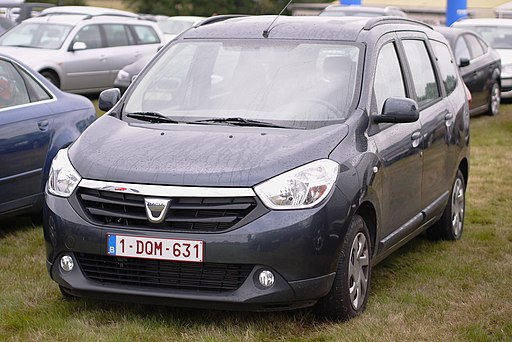
Dacia Lodgy as a Used Car: A Comprehensive Technical and Practical Analysis
The Dacia Lodgy is one of those cars that rarely sparks excitement, yet quietly fulfills one of the most important roles in the automotive world: affordable, practical family transport. Introduced in 2012 as Dacia’s answer to the growing demand for low-cost MPVs, the Lodgy was designed with a very clear purpose—maximize interior space and usability while keeping purchase and ownership costs as low as possible. As a used car, it becomes even more relevant, because it offers something that is increasingly rare in today’s market: a genuinely inexpensive seven-seat vehicle with simple engineering and minimal complexity.
In this long-form technical blog, we will explore the Dacia Lodgy from every angle—design philosophy, engineering, engines, driving dynamics, reliability, ownership experience, and real-world usability. The goal is not just to describe the car, but to understand what it represents as a second-hand purchase, and whether it still makes sense in a market dominated by SUVs and crossovers.
The Concept Behind the Dacia Lodgy
A Return to Simple Motoring
The Lodgy was developed during a time when many manufacturers were moving toward more complex, technology-heavy vehicles. Dacia, however, took the opposite approach. The Lodgy is based on a philosophy of mechanical simplicity and cost reduction, using proven components from Renault’s existing parts bin. This includes engines, gearboxes, and even interior switches that had already been used in older Renault models.
The result is a car that avoids unnecessary innovation in favor of reliability through familiarity. This approach has a direct impact on its behavior as a used car: fewer advanced systems mean fewer expensive failures, but also fewer modern conveniences.
Platform and Structural Design
The Lodgy is built on a modified version of the B0 platform, which underpins models like the Logan and Duster. This platform is known for:
- Robust construction
- Low production cost
- Ease of maintenance
However, it also comes with compromises:
- Basic suspension design (MacPherson front, torsion beam rear)
- Limited refinement compared to newer architectures
- Modest crash safety performance
Still, for its intended purpose—a budget family vehicle—the platform is well suited.
Exterior Design and Dimensions
Function Over Form
The Lodgy’s design is unapologetically utilitarian. Unlike modern MPVs that try to emulate SUVs, the Lodgy embraces its boxy proportions. Every line and angle is designed to maximize interior volume rather than visual appeal.
Key design features include:
- Tall roofline for headroom
- Large glass area for visibility
- Short front overhang for compact maneuvering
This results in a vehicle that looks simple, but delivers exceptional practicality.
Dimensions and Space Efficiency
The Lodgy’s dimensions are optimized for interior space:
- Length: ~4.5 meters
- Width: ~1.75 meters
- Height: ~1.68 meters
- Wheelbase: ~2.81 meters
These figures translate into one of the most spacious cabins in its class, especially considering its price segment.
Interior and Practicality
Cabin Design Philosophy
Step inside the Lodgy, and the focus on cost-saving becomes immediately apparent. The interior is dominated by hard plastics and simple shapes, with minimal decorative elements. However, what it lacks in refinement, it makes up for in durability and ease of use.
Controls are straightforward, with physical buttons and knobs instead of complex touch interfaces. This is particularly beneficial in a used car, where simplicity often equals longevity.
Seating and Versatility
One of the Lodgy’s strongest selling points is its seating configuration:
- Available as 5- or 7-seater
- Removable third-row seats (in some versions)
- Flexible cargo arrangements
The third row, while not luxurious, is usable for adults on shorter journeys—a rare feature in this price category.
Cargo Capacity
With all seats folded, the Lodgy offers impressive cargo capacity, making it ideal for:
- Family vacations
- Commercial use
- Transporting large items
This versatility is one of the key reasons why the Lodgy remains attractive on the used market.
Engines and Powertrain Options
Overview of Available Engines
The Lodgy was offered with a range of petrol and diesel engines:
Petrol Engines
- 1.6 MPI (naturally aspirated)
- 1.2 TCe (turbocharged)
Diesel Engines
- 1.5 dCi (various power outputs)
Each engine has its own characteristics and reliability profile.
Petrol Engines: Strengths and Weaknesses
The naturally aspirated 1.6 MPI is the simplest option:
- Reliable and durable
- Low maintenance costs
- Modest performance
The 1.2 TCe turbo engine offers better performance but comes with notable concerns:
- Gearbox and clutch issues reported after 80,000–100,000 km
- Sensitivity to maintenance quality
As a result, many used car buyers prefer the older 1.6 MPI despite its lower power output.
Diesel Engines: The Workhorse Option
The 1.5 dCi engine is the most popular choice, especially in Europe. It offers:
- Excellent fuel efficiency
- Strong torque for loaded driving
- Proven long-term usability
However, it is not without issues:
- Injector problems appearing around 60,000–80,000 km
- Potential increase in fuel consumption if not maintained properly
Despite these concerns, the 1.5 dCi remains a solid choice when properly serviced.
Driving Experience
Comfort and Ride Quality
The Lodgy is tuned primarily for comfort rather than performance. Its suspension setup allows it to:
- Absorb road imperfections effectively
- Provide a smooth ride on uneven surfaces
- Handle heavy loads without excessive discomfort
However, when unloaded, the rear suspension can feel slightly stiff.
Handling and Dynamics
Driving dynamics are not the Lodgy’s strong point:
- Noticeable body roll in corners
- Limited steering feedback
- Modest grip levels
This is expected for a tall, budget MPV. The car is designed for stability and predictability, not agility.
Fuel Economy and Operating Costs
Real-World Consumption
Typical consumption figures:
- Petrol: 7–8 L/100 km
- Diesel: 4.5–5.5 L/100 km
These numbers make the Lodgy an economical choice, especially for long-distance driving.
Maintenance and Repair Costs
One of the biggest advantages of the Lodgy:
- Low-cost spare parts
- Simple mechanical layout
- Easy servicing
This makes it one of the cheapest MPVs to maintain.
Reliability and Common Problems
General Reliability Overview
The Lodgy’s reliability is closely tied to its simplicity. While it lacks advanced technology, it also avoids many modern failure points.
However, several common issues have been identified:
Engine and Mechanical Issues
- Diesel injector wear at relatively low mileage
- Gearbox and clutch problems in 1.2 TCe engines
- Shock absorber wear after 80,000–100,000 km
Electrical and System Failures
- Lighting system faults (headlights failing to switch on)
- General electrical issues affecting various components (AUTODOC)
Other Common Problems
- Air conditioning failures after 40,000–60,000 km
- Brake wear, especially rear discs
- Corrosion in exhaust components after 100,000 km
These issues highlight the importance of thorough inspection before purchase.
Safety Considerations
Safety is one of the Lodgy’s weakest areas. Compared to modern vehicles, it offers:
- Limited driver assistance systems
- Basic passive safety features
- Lower crash test ratings
This reflects its age and budget positioning.
Ownership Experience
Advantages
Owners appreciate:
- Exceptional value for money
- Spacious interior
- Low running costs
The Lodgy is often described as a “no-nonsense” vehicle that does exactly what it promises.
Disadvantages
Common complaints include:
- Cheap interior materials
- Lack of refinement
- Limited modern features
Despite these drawbacks, many owners consider the trade-offs acceptable.
Used Market Analysis
Pricing and Availability
The Lodgy is widely available on the used market at very low prices, making it accessible to:
- Large families
- Budget buyers
- Small businesses
Depreciation
Due to its already low initial price:
- Depreciation is relatively slow
- Used prices remain stable
Who Should Buy a Used Dacia Lodgy?
Ideal Buyers
- Families needing affordable 7-seat transport
- Drivers prioritizing practicality
- Buyers seeking low ownership costs
Not Ideal For
- Those wanting premium comfort
- Drivers prioritizing performance
- Buyers seeking advanced safety features
Final Verdict
The Dacia Lodgy is not a car that tries to impress—it is a car that tries to serve. It delivers on its core promise: maximum practicality at minimum cost. As a used car, it becomes even more compelling, offering unbeatable space and usability for the price.
Its weaknesses—basic interior, modest safety, and some reliability concerns—are real but manageable with proper maintenance.
Ultimately, the Lodgy represents one of the last examples of truly affordable, purpose-built family transport.
Technical Specifications Table
| Parameter | Dacia Lodgy |
|---|---|
| Production | 2012 – 2022 |
| Body type | MPV |
| Platform | B0 (Renault/Dacia) |
| Length | ~4,498 mm |
| Width | ~1,751 mm |
| Height | ~1,682 mm |
| Wheelbase | ~2,810 mm |
| Seating capacity | 5 or 7 |
| Engines | 1.6 MPI, 1.2 TCe, 1.5 dCi |
| Power output | 85 – 115 hp |
| Transmission | Manual |
| Drive type | Front-wheel drive |
| Fuel consumption | 4.5 – 8.0 L/100 km |
| Boot capacity | Up to ~2,600 L |
| Fuel types | Petrol / Diesel |
| Key strengths | Space, low cost, simplicity |
| Key weaknesses | Safety, refinement, electronics |
