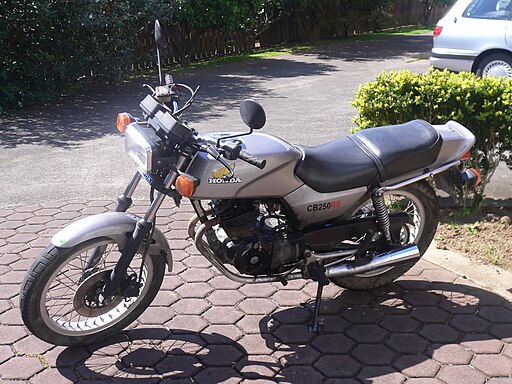
Honda CB250RS
The Honda CB250RS burst onto the scene in the late 1970s as a lightweight roadster built for spirited rides and everyday commuting. With its blend of agile handling, reliable four-stroke twin engine, and uncomplicated maintenance, the CB250RS struck a chord with riders seeking a simple yet engaging machine. While styling cues echoed larger CB series models, its narrow profile and modest power output made it approachable for novices and a capable back-road companion for veterans.
Design and Styling
Frame and Bodywork
Honda equipped the CB250RS with a steel tubular backbone frame that balances rigidity and lightness. The minimalist bodywork consists of a teardrop fuel tank, slim side panels, and a short tail section. Bright chrome fenders and polished engine covers evoke 1970s charm, while a single-piece dual-density seat offers a subtle nod to sportier models. The overall look is clean, compact, and timeless.
Rider Ergonomics
An upright riding position places the handlebars just forward of the top yoke, reducing wrist strain during urban rides. Mid-mount footpegs deliver a natural knee bend without crowding the rider. The seat height of 770 mm provides ground-control confidence for a broad range of riders. Together, these elements foster a relaxed yet alert posture, ideal for both city traffic and twisty country lanes.
Engine and Performance
Engine Specifications
| Specification | Detail |
|---|---|
| Engine Type | 249 cc air-cooled SOHC parallel-twin |
| Bore × Stroke | 53.0 mm × 56.6 mm |
| Compression Ratio | 9.2 : 1 |
| Carburetion | Twin Keihin CV Carburetors |
| Ignition | 12 V CDI |
| Lubrication | Wet sump oil circulation |
Power Output and Torque
The CB250RS develops 23 hp at 9,000 rpm and 20 N·m of torque at 7,500 rpm. Power delivery is smooth and linear, with a slightly peaky character that encourages rev-happy riding. Strong midrange torque between 6,000 and 8,000 rpm means brisk acceleration at typical road speeds. The tight 9,000 rpm redline rewards riders who keep the twin spinning through the gearbox.
Transmission and Drivetrain
A five-speed gearbox channels power through a multi-plate wet clutch, offering crisp shifts and a direct feel. Final drive is handled by a 520-size chain, which strikes a balance between durability and lightweight performance. Sprocket sizes (15-tooth front, 42-tooth rear) deliver a neutral gearing suited for both spirited acceleration and relaxed cruising.
Chassis and Handling
Frame Architecture
The steel backbone frame and engine-as-a-stressed member design centralize mass for sharp turn-in and cornering stability. Welded gussets reinforce areas around the steering head and swingarm pivot, ensuring torsional stiffness. The engine’s narrow cylinder placement keeps the center of gravity low, aiding flick-ability in tight corners.
Suspension
Front Suspension
Telescopic forks with 120 mm of travel feature progressive spring rates to absorb road irregularities without bottoming harshly. Internally, damping valving balances compression and rebound to minimize fork dive under hard braking.
Rear Suspension
Dual preload-adjustable shocks provide 110 mm of rear travel. Coil springs stiffen progressively under load, supporting a passenger or luggage without compromising ride comfort. External reservoirs on some models improve heat dissipation during extended spirited riding.
Wheels and Tires
Cast aluminum 18-inch wheels reduce unsprung weight and resist corrosion. Stock tire dimensions—3.25-18 front and 3.50-18 rear—feature bias-ply construction for sidewall compliance and forgiving handling. Proper tire pressures (front 2.0 bar, rear 2.2 bar) maintain responsive steering and stable cornering feel.
Braking System
At the front, a 260 mm drilled disc brake paired with a dual-piston caliper delivers strong, fade-resistant stopping power. The rear brake is a 180 mm drum, chosen for simplicity and low maintenance. A tandem master cylinder links front and rear brakes, offering balanced bite and stability under heavy deceleration. Regular pad checks and drum shoe inspections keep braking performance consistent.
Electrical System and Instrumentation
Electrical System
A 12 V, 6 Ah sealed battery powers the ignition and lighting circuits. A 140 W alternator ensures adequate charging capacity, even at low engine speeds. Headlight output of 35 W/35 W provides clear visibility in most conditions. Wiring harnesses employ heat-shrunk connectors and protected routing to minimize chafing and moisture intrusion.
Instrument Cluster and Controls
The analog gauge cluster features a speedometer, tachometer, and fuel reserve indicator. Warning lamps for neutral, high beam, turn signals, and oil pressure are grouped for quick scanning. Simple handlebar switchgear includes mechanical sliders for indicators and a flush headlight selector. A keyed steering lock adds anti-theft security when parked.
Dimensions and Capacities
| Measurement | Value |
|---|---|
| Overall Length | 2,020 mm |
| Overall Width | 825 mm |
| Wheelbase | 1,315 mm |
| Ground Clearance | 140 mm |
| Seat Height | 770 mm |
| Curb Weight | 140 kg |
| Fuel Tank Capacity | 12 L |
| Oil Capacity | 2.0 L |
A compact footprint and light curb weight contribute to easy maneuverability in tight spaces. The 12 liter tank provides a practical range of 200–250 km between fill-ups, depending on riding style.
Fuel Efficiency and Range
In mixed urban and suburban conditions, the CB250RS returns approximately 30–32 km/L. Steady cruising at 80 km/h on open roads can push fuel economy beyond 35 km/L. The straightforward carburation system responds well to routine jetting adjustments for altitude or temperature changes, helping maintain optimal fuel delivery and efficiency.
Maintenance and Reliability
Regular Service Items
- Oil and filter change: every 3,000 km
- Valve clearance check: every 6,000 km
- Carburetor synchronization: every 6,000 km
- Chain lubrication and adjustment: every 500 km
- Brake system inspection: every 4,000 km
Common Issues and Tips
- Periodically clean and re-jet carburetors to prevent hesitation at low revs.
- Inspect fork seals for leaks after extended off-road or wet-weather use.
- Replace old rubber hoses and fuel lines to avoid hard starting and vapor lock.
- Keep the battery charged during seasonal storage to protect the CDI ignition system.
The CB250RS’s simple architecture and Honda’s quality control yield a machine that, with basic upkeep, can exceed 100,000 km without major overhauls.
Market Position and Enthusiast Legacy
Competitor Comparison
When new, the CB250RS competed against models like the Kawasaki KH250 and Suzuki GT250. While those two-strokes boasted snappy power delivery, the CB250RS offered tractable torque, smoother operation, and lower maintenance demands. Its slightly higher weight was offset by more predictable handling and stronger brakes.
Enthusiast Community
Decades after production ended, the CB250RS maintains a devoted following. Online forums and regional clubs share hard-to-find parts sources and restoration advice. Customized examples range from vintage café racers to modern “resto-mods,” with aftermarket vendors offering performance exhausts, LED lighting solutions, and improved suspension kits.
Conclusion
The Honda CB250RS remains a testament to Honda’s engineering philosophy of combining simplicity, reliability, and rider engagement. Its nimble chassis, responsive parallel-twin engine, and straightforward maintenance appeal to riders who value mechanical clarity as much as riding enjoyment. Whether carving backroads, commuting through city streets, or embarking on weekend day tours, the CB250RS continues to deliver a rewarding experience that has stood the test of time.
