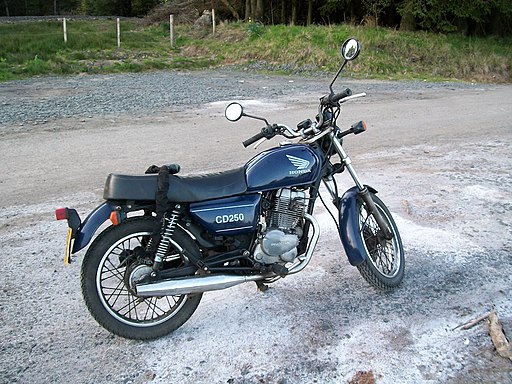
Honda CD250U: The Elegant Entry-Level Classic
The Honda CD250U Dream occupies a distinct place in motorcycling history. Launched in the early 1980s, it married Honda’s renowned engineering reliability with refined styling cues drawn from larger touring machines. Lightweight, nimble, and surprisingly quick for its displacement, the CD250U became a favorite among urban commuters, learner riders, and budget-conscious enthusiasts who still demanded a dash of sophistication. More than just a daily driver, its classic lines and sturdy construction have ensured the Dream’s survival into the modern vintage scene.
Historical Background
Evolution of the Dream Series
Honda’s “Dream” lineage stretches back to postwar Japan, but the CD250U represented a new direction. By the late 1970s, smaller-displacement motorcycles had to offer more than basic transport—they needed commuter comfort, style, and a hint of sportiness. Succeeding the CD200 and CD185, the CD250U introduced a slightly larger engine, crisp five-speed gearbox, electric start, and a subtler chrome treatment that hinted at upscale models.
Market Niche and Rider Appeal
The CD250U wasn’t meant to outpace dedicated sportbikes. Instead, it carved a niche as a premium entry-level machine: light enough for new riders to manage, efficient enough for daily routines, yet polished enough to leave a lasting impression. In many markets it served as a learner-legal ride, building rider confidence before stepping up to bigger Hondas like the CB400 or CB750.
Engine and Performance
Powerplant Architecture
Under the sculpted tank sits a 233 cc single-cylinder, air-cooled, SOHC four-stroke engine. Featuring two valves and a compact combustion chamber, it balances low-rev tractability with a rev-happy top end. An electric starter complements a backup kick lever, ensuring reliable ignition in all conditions.
Technical Specifications
| Specification | Detail |
|---|---|
| Engine Type | Air-cooled single-cylinder SOHC |
| Displacement | 233 cc |
| Bore × Stroke | 67 mm × 66 mm |
| Compression Ratio | 9.2 : 1 |
| Carburetion | 26 mm Keihin constant-velocity |
| Ignition | Fully transistorized CDI |
| Starter | Electric with kick-start backup |
| Transmission | 5-speed manual constant mesh |
| Final Drive | O-ring chain |
| Peak Power | 21 hp @ 8 000 rpm |
| Peak Torque | 18 Nm @ 6 500 rpm |
On-Road Character
Below 4 000 rpm the CD250U pulls smoothly, making U-turns and parking-lot slaloms effortless. Around 5 000 to 7 000 rpm it comes alive with a spirited surge that rewards throttle roll-on. Well-tuned carbs deliver seamless throttle transitions, while a six-liter-per-100 km consumption figure makes long commutes wallet-friendly.
Chassis and Suspension
Frame and Geometry
A double-cradle steel frame underpins the Dream’s balanced handling. With a 1 320 mm wheelbase and a 27° rake, the chassis feels surefooted at speed yet turns in crisply for narrow city streets.
Front Suspension
Telescopic forks offer 135 mm of travel. Though nonadjustable, they strike a comfortable middle ground—soaking up potholes without excessive dive under braking.
Rear Suspension
Dual preload-adjustable shocks give 120 mm of travel. Riders can fine-tune sag for solo touring or two-up trips, keeping the rear end composed regardless of load.
Wheels, Tires, and Braking
Spoked 18-inch wheels wear 2.75-18 front and 3.00-18 rear tires. Drum brakes front (180 mm) and rear (160 mm) provide gentle, predictable stopping power. Their simplicity enhances reliability and keeps maintenance low-tech.
Electrical System and Instrumentation
Charging and Lighting
A compact 12 V, 85 W alternator powers the headlamp, tail/brake light, and turn indicators. Many owners upgrade to LEDs and modern regulators to boost nighttime visibility and eliminate voltage dips.
Cockpit Layout
Twin analog dials display speedometer and tachometer, each housing trip meters and warning lights for neutral, high beam, and indicators. Handlebar-mounted switches remain intuitive, making at-a-glance operation second nature.
Dimensions, Weight, and Ergonomics
| Dimension | Measurement |
|---|---|
| Overall Length | 2 050 mm |
| Overall Width | 780 mm |
| Seat Height | 740 mm |
| Wheelbase | 1 320 mm |
| Ground Clearance | 145 mm |
| Fuel Capacity | 13.2 L |
| Wet Weight | 139 kg |
A relatively low seat height and narrow midsection welcome riders of varied stature. The upright riding position and swept handlebars minimize fatigue on longer jaunts, while the slim profile makes urban weaving and foot placement at stops a breeze.
Maintenance and Reliability
Routine Service
• Oil and filter change every 3 000 km • Valve clearance inspection every 6 000 km • Carburetor cleaning and sync annually • Chain adjustment and lubrication every 1 000 km
Common Wear Points
Given its uncomplicated design, the CD250U rarely throws surprises. Regular checks include: • Drum-brake shoe wear and adjustment • Fork-leg seal inspection • Spoke tension and wheel bearing checks • CDI and regulator output tests in high-heat environments
Home mechanics can tackle most jobs with basic tools and a factory workshop manual.
Customization and Aftermarket Support
Although the CD250U never commanded massive sales, a dedicated aftermarket has blossomed: • High-flow air filters and jet kits to sharpen throttle response • Lightweight slip-on mufflers for weight savings and a richer exhaust note • LED lighting conversion kits for headlamp, tail, and indicators • Cafe-style seats, clip-on handlebars, and mini-fairings to forge custom silhouettes • Drum-to-disc front brake conversion kits for more decisive stopping power
Community and Legacy
Enthusiasts of the CD250U gather online across vintage-bike forums and social media groups. Regular ride-outs, swap meets, and restoration workshops celebrate the Dream’s understated charm. Its enduring appeal rests on a platform that’s both simple to maintain and open to personalization—qualities that resonate with riders looking for a hands-on experience.
Conclusion and Further Exploration
The Honda CD250U Dream epitomizes a golden era of accessible, well-engineered motorcycles. Its blend of user-friendly ergonomics, modest power, and timeless styling ensures it remains a cherished classic. For those eager to explore further, consider: • Comparing the Dream’s ride dynamics with the two-cylinder CB250 models • Investigating modern suspension upgrades that sharpen handling without compromising comfort • Delving into detailed carburetor tuning guides to extract peak performance • Charting a resto-mod build that merges vintage aesthetics with contemporary components
