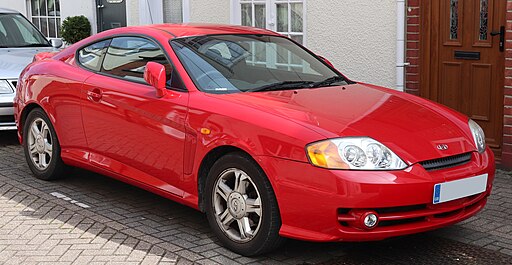
Hyundai Coupe faults
The Hyundai Coupe (also known as the Hyundai Tiburon in some markets) is a sporty compact car that has gained a reputation for reliability. However, like all vehicles, it has some common faults and malfunctions across different model years. Below are some of the most frequently reported issues:
Engine & Performance Issues
- Engine Stalling or Hesitation – Some Hyundai Coupe models experience intermittent stalling or hesitation, often linked to faulty sensors, clogged fuel injectors, or ignition coil problems.
- Misfiring and Rough Idling – Typically caused by worn-out spark plugs, coil packs, or a failing Mass Air Flow (MAF) sensor.
- High Oil Consumption – Some models, especially older ones, may burn oil at a higher rate due to worn piston rings or valve seals.
- Check Engine Light (CEL) Issues – The CEL may illuminate due to faulty oxygen sensors, catalytic converter failures, or throttle position sensor malfunctions.
Transmission & Clutch Problems
- Manual Transmission Gearbox Issues – Owners have reported difficulty shifting gears, often due to a worn clutch, damaged synchros, or a faulty clutch master/slave cylinder.
- Automatic Transmission Slipping – Transmission fluid leaks or internal component wear can cause hesitation or jerky shifts.
- Clutch Wear and Failure – Clutch failure is a known issue, particularly in high-mileage or aggressively driven vehicles.
Electrical & Electronic Faults
- Faulty Central Locking System – Some Coupe models experience issues with the central locking system, where doors fail to lock or unlock properly.
- Power Window Failure – Windows can become stuck or operate slowly due to a failing window motor or regulator.
- Dashboard & Instrument Cluster Issues – Flickering dashboard lights or a non-functional speedometer can be caused by faulty wiring or failing sensors.
- Weak Battery & Alternator Problems – Battery drainage issues and alternator failures are commonly reported, leading to starting difficulties.
Suspension & Steering Issues
- Steering Rack Leaks – Hydraulic power steering systems may develop leaks, causing stiff or unresponsive steering.
- Worn Suspension Bushings – Noisy or unstable handling is often due to worn-out suspension components, such as control arm bushings or ball joints.
- Shock Absorber & Strut Wear – Over time, worn shocks and struts lead to a rough ride and poor road handling.
Braking System Faults
- Brake Pedal Softness or Sponginess – Air in the brake lines or a failing master cylinder can cause a loss of braking power.
- ABS (Anti-lock Braking System) Sensor Faults – Faulty wheel speed sensors can trigger the ABS warning light and affect braking performance.
- Handbrake Weakness – The handbrake may not hold properly due to stretched cables or worn rear brake components.
Cooling & Heating System Problems
- Radiator Leaks & Overheating – Some owners report coolant leaks from the radiator or overheating due to a failing thermostat or water pump.
- Heater Core Issues – A leaking heater core can lead to foggy windows, reduced heating performance, and coolant loss.
- Air Conditioning Malfunctions – AC failure is often due to a faulty compressor, refrigerant leaks, or a failing blower motor.
Bodywork & Interior Issues
- Rust & Corrosion – Older Hyundai Coupe models, especially in colder climates, may develop rust around the wheel arches, door sills, and undercarriage.
- Dashboard Cracks & Fading – The interior dashboard can crack or fade due to prolonged exposure to sunlight.
- Seat Wear & Tear – The leather or fabric seats can wear out, especially in high-mileage vehicles.
While the Hyundai Coupe is generally a well-built car with good longevity, these common faults should be considered when maintaining or purchasing a used model. Regular servicing and early detection of issues can help prolong the vehicle’s lifespan. 🚗💨
Hyundai Coupe as a used car
Hyundai Coupe as a Used Car: A Comprehensive Guide
The Hyundai Coupe, known as the Hyundai Tiburon in some markets, is a stylish and affordable sports coupe that was produced from 1996 to 2008. Over the years, the car gained a loyal following for its sleek design, decent performance, and budget-friendly pricing. If you’re considering buying a used Hyundai Coupe, there are several factors to take into account, including reliability, common issues, maintenance costs, and driving experience. In this detailed guide, we’ll explore the pros and cons of owning a Hyundai Coupe as a second-hand vehicle.
Why Consider the Hyundai Coupe as a Used Car?
The Hyundai Coupe was designed to offer sporty looks and decent driving dynamics at an affordable price. It may not be a high-performance sports car like a Nissan 350Z or a Mazda RX-8, but it delivers a good balance of fun and practicality for budget-conscious buyers. Here are some reasons why the Hyundai Coupe is worth considering as a used car:
1. Stylish Design
The Hyundai Coupe has an eye-catching design that still holds up well today. The second-generation (2002-2008) model was particularly well-received for its aggressive, sporty styling, featuring a sleek silhouette, large alloy wheels, and dual exhaust pipes.
2. Affordability
Compared to other sporty coupes, the Hyundai Coupe is one of the most affordable used sports cars on the market. You can often find well-maintained examples at lower prices than rivals like the Toyota Celica, Mazda RX-8, or Honda Prelude.
3. Decent Performance for the Price
While not a high-performance car, the Hyundai Coupe comes with engine options that provide a balance of power and efficiency. The 2.0L inline-4 and 2.7L V6 engines offer reasonable acceleration and good highway cruising capability.
4. Reliable Engine and Build Quality
Hyundai’s reliability has improved significantly over the years, and many Hyundai Coupe models have proven to be durable and dependable when well-maintained.
5. Low Running Costs
The Hyundai Coupe has relatively low maintenance and insurance costs, making it an attractive option for younger drivers or those looking for a sporty car without high expenses.
Engine Options and Performance
The Hyundai Coupe was offered with different engine options, depending on the model year and market. Here’s a breakdown of the most common ones:
First Generation (1996–2001)
- 1.6L Inline-4 (115 hp) – A basic entry-level engine with moderate performance.
- 1.8L Inline-4 (130 hp) – Slightly more powerful but still not a performance-oriented engine.
- 2.0L Inline-4 (140 hp) – The best option in the first-generation Coupe, offering reasonable acceleration.
Second Generation (2002–2008)
- 1.6L Inline-4 (103-110 hp) – Not very powerful, but good for fuel economy.
- 2.0L Inline-4 (138-143 hp) – A good mid-range choice with a balance of performance and efficiency.
- 2.7L V6 (165-172 hp) – The most powerful engine option, offering stronger acceleration and a sportier feel.
Performance Note:
The 2.7L V6 model is the most desirable for those looking for a sportier drive, but the 2.0L inline-4 offers a more practical balance of power and fuel economy. The 1.6L engine may feel underpowered, especially for highway driving.
Common Issues and Reliability Concerns
Although the Hyundai Coupe is generally reliable, there are some common issues that buyers should be aware of:
1. Engine Problems
- Misfiring or rough idling – Often due to worn spark plugs, ignition coils, or a faulty MAF sensor.
- High oil consumption – Some older models may burn oil due to worn piston rings or valve seals.
- Timing belt replacement – The 2.0L engines require a timing belt change every 60,000–80,000 miles to prevent engine failure.
2. Transmission & Clutch Issues
- Manual gearbox stiffness – Gear changes may become rough over time due to worn synchros or a faulty clutch slave cylinder.
- Automatic transmission hesitation – Some models experience gear slipping or delayed shifting due to worn transmission fluid or internal wear.
- Clutch wear – Especially on high-mileage models or those driven aggressively.
3. Electrical Problems
- Power window failures – Due to faulty window regulators or motors.
- Dashboard warning lights – Often caused by faulty oxygen sensors, ABS sensors, or airbag system faults.
- Central locking faults – Some models develop problems with the key fob or locking mechanisms.
4. Suspension & Steering Issues
- Worn suspension components – Bushings, ball joints, and struts may wear out, leading to a rough ride.
- Power steering fluid leaks – Can cause heavy or unresponsive steering.
5. Rust and Bodywork Concerns
- Rust formation – Common in older models, particularly around wheel arches, door sills, and the undercarriage.
- Fading paintwork – Sun exposure can cause paint peeling or fading, especially on red or black models.
Running Costs and Maintenance
One of the Hyundai Coupe’s main selling points is affordable running costs, including:
1. Fuel Economy
- 1.6L models: ~35 MPG (combined)
- 2.0L models: ~30 MPG (combined)
- 2.7L V6 models: ~25 MPG (combined)
2. Insurance Costs
The Hyundai Coupe falls into a low-to-moderate insurance group, making it cheaper to insure than many other sporty cars.
3. Maintenance & Repairs
- Service intervals: Every 10,000 miles or annually.
- Timing belt change (2.0L models): Every 60,000–80,000 miles.
- Clutch replacement: Typically around 100,000 miles, but may wear sooner with aggressive driving.
Spare parts are affordable and widely available, as Hyundai shares components with other models like the Hyundai Elantra and Sonata.
Final Verdict: Should You Buy a Used Hyundai Coupe?
Pros:
✅ Affordable compared to rivals like the Toyota Celica or Mazda RX-8.
✅ Stylish design that still looks modern.
✅ Reliable engines if well maintained.
✅ Low insurance and maintenance costs.
✅ Decent performance (especially the V6 model).
Cons:
❌ Not a true sports car – performance is good, but not exceptional.
❌ Common electrical issues with windows and dashboard components.
❌ Rust problems in older models.
❌ Manual gearbox wear in high-mileage cars.
Best Models to Buy
For the best experience, consider a 2005-2008 Hyundai Coupe 2.0L or 2.7L V6 model with a full-service history and minimal rust. Avoid high-mileage automatic models as they tend to have transmission issues.
If you’re looking for an affordable, stylish, and fun coupe, the Hyundai Coupe makes a great used car choice, offering a balance of reliability, sporty looks, and budget-friendly ownership. 🚗💨
