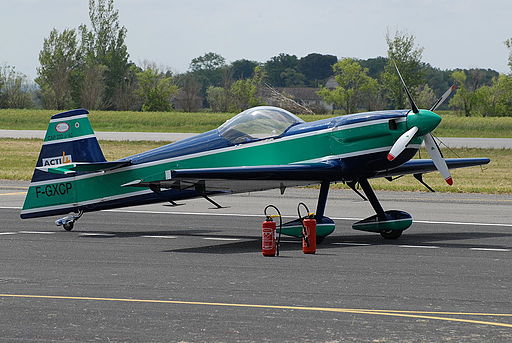
Mudry CAP 230
Mudry CAP 230 stands as a benchmark in single-seat competition aerobatics. Conceived in the mid-1980s by Avions Mudry & Cie, it represents an evolution of the CAP 21 airframe, reinforced to harness a more powerful six-cylinder engine. From its maiden flight in 1987, the CAP 230 combined precision handling with rugged structural integrity, earning a place both in military display teams and civilian aerobatic championships.
Historical Development
The genesis of the CAP 230 traces back to the proven CAP 21 design. In 1985, responding to a request from the French Air Force, Mudry engineers began strengthening the wooden fuselage and wing roots to withstand higher loads and to accept a 300 hp Lycoming AEIO-540 engine. By 1987, the prototype had flown, and between 1986 and 1990 the aircraft became the mount of France’s premier aerobatic squadron.
Design and Construction
Airframe and Materials
The CAP 230 features a full wooden frame—plywood-skinned in high-stress areas—augmented by composite reinforcements at critical junctions. This hybrid approach balances light weight with the ability to resist repeated ±10 g loads during extreme maneuvers.
Wing Geometry and Aerodynamics
The trapezoidal wing planform incorporates triangular leading- and trailing-edge apex surfaces, which delay flow separation at high angles of attack. The result is a crisp roll response through 270° per second, enabling pilots to execute rapid aileron rolls with minimal buffeting.
Fuselage Structure
Aerodynamically faired to minimize drag, the fuselage houses robust bulkheads around the engine mounting and landing-gear pivots. External and internal reinforcements at fuselage station 2 ensure durability under the stresses of inverted flight and high-g pullouts.
Landing Gear
The fixed, aluminum-leg undercarriage uses oleo-strut shock absorbers integrated into each leg. Its simple yet sturdy design withstands hard landings typical of stunt routines, while reducing maintenance complexity.
Powerplant and Propulsion
Engine Configuration
At the heart of the CAP 230 is the Lycoming AEIO-540-L1B5D, a six-cylinder, air-cooled piston engine delivering 220 kW (300 hp) at 2,700 rpm. Fuel injection and a full-pressure lubrication system allow sustained inverted operations without fuel or oil starvation.
Propeller Options
Operators may choose between two- or three-blade constant-speed propellers. This adjustability lets pilots tailor thrust characteristics for rapid acceleration during vertical maneuvers or optimized efficiency on cross-country transits.
Flight Performance
Speed and Altitude Capabilities
With a maximum never-exceed speed of 400 km/h, the CAP 230 cruises comfortably at 300 km/h while retaining plenty of margin for high-energy passes. Its service ceiling extends beyond 4,500 m, permitting dramatic vertical work in thin air.
Climb and Maneuverability
Thanks to its power-to-weight ratio, the CAP 230 climbs at roughly 425 m/min, easily reaching show altitudes. The aircraft’s roll agility—270° per second—paired with precise elevator authority, supports tight loops, flick rolls, and hammerheads.
Load Factors and Strength
Engineered for ±10 g certification, structural components undergo rigorous testing. Pilots can push to the g-limits repeatedly without undue fatigue or deformation of wings and fuselage.
Technical Specifications
Key Dimensions and Weights
| Parameter | Value |
|---|---|
| Length | 6.75 m |
| Wingspan | 8.08 m |
| Height | 1.60 m |
| Wing area | 9.86 m² |
| Empty weight | 630 kg |
| Maximum takeoff weight | 730 kg |
Powerplant and Performance
| Parameter | Value |
|---|---|
| Engine | Lycoming AEIO-540-L1B5D |
| Power output | 220 kW (300 hp) |
| Maximum speed (VNE) | 400 km/h |
| Roll rate | 270°/s |
| Rate of climb | 425 m/min |
| G-limits | +10 / −10 g |
| Fuel capacity | 115 L |
| Range with reserves | 640 NM (~1 185 km) |
| Stall speed (clean) | ~94 km/h |
Variants of the CAP 23x Family
CAP 231 and CAP 231 EX
Introduced in 1990, the CAP 231 added refined wing apex panels to curb high-g buffeting. By 1994, the 231 EX incorporated an all-carbon composite wing, borrowed in concept from the Extra 260, boosting stiffness and trimming weight.
CAP 232
Launched in 1998, the CAP 232 unified a purpose-designed carbon-fiber wing with the reinforced CAP 230 fuselage. It went on to claim multiple world championships, thanks to a roll rate of 420° per second and an initial climb exceeding 1,000 m/min.
Operational Use
Military Employment
Beyond its initial French Air Force aerobatic squadron service, the CAP 230 was adopted by display teams in Morocco and private military flying clubs. Its combination of reliability and show-stopping agility made it an ideal demonstration platform.
Civilian Aerobatics
Worldwide, competition pilots prize the CAP 230 for its predictable handling and robust margins. Flight schools specializing in advanced aerobatics also favor it for training on hammerheads, rolling circles, and advanced vertical sequences.
Maintenance and Support
Routine inspections focus on wing-root fittings, control-surface hinge pins, and firewall integrity. The wooden structure demands vigilant moisture control, while the Lycoming engine follows standard overhaul intervals around 2,000 flight hours. Spare parts remain available through legacy Mudry support channels and third-party suppliers.
Legacy and Impact
The CAP 230 redefined expectations for single-seat competition aircraft. By marrying traditional wooden construction with modern composite patches and a powerful engine, it bridged eras of aerobatic design. Its DNA lives on in later generations of competition planes, which still echo the CAP 230’s blend of precision, strength, and pilot-centric control.
Conclusion
More than three decades after its debut, the Mudry CAP 230 remains a pillar of aerobatic excellence. Its thoughtful structural reinforcements, aerodynamic refinements, and balanced powerplant integration illustrate a design philosophy that values both performance and pilot confidence. For any aviator seeking the purest expression of aerobatic flight, the CAP 230 endures as a timeless choice.
