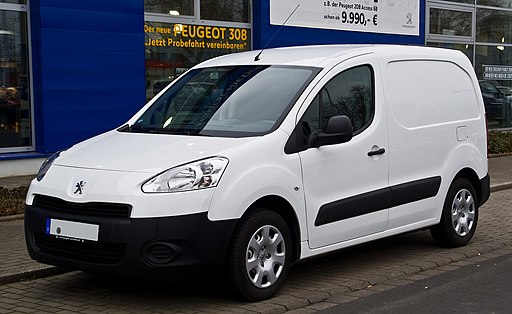
Peugeot Partner faults
Engine and Drivetrain Faults
Turbocharger Failures
Oil-feed restrictions and missed oil-change intervals allow carbon to build up in the turbo’s bearings. Early signs include sluggish boost response, a high-pitched whistle under acceleration, and blue-tinged exhaust smoke. Left unaddressed, the turbine wheel can seize, sending metal debris into the intake and oil system.
EGR Valve Carbon Blockage
Short urban trips and low-temperature driving prevent the exhaust gas recirculation valve from running hot enough to burn off soot. Over time, carbon deposits jam the valve, causing rough idling, loss of mid-range power, and frequent check-engine lights until the EGR is cleaned or replaced.
Diesel Particulate Filter (DPF) Clogging
Frequent low-speed journeys interrupt the DPF’s passive regeneration cycle, leading to soot accumulation. Drivers may notice forced-regeneration cycles that run for several minutes at high exhaust temps, accompanied by a loud whoosh of back-pressure release. If regeneration fails repeatedly, the ECU may disable regen altogether, requiring workshop cleaning or DPF replacement.
Fuel Pump and Injector Wear
Debris in the fuel tank or degraded seals in the high-pressure pump can cause wavering fuel pressure. Symptoms include hard starting, stuttering under load, and black smoke on acceleration. In some cases, a failing common-rail injector triggers misfire codes and limp-home mode.
Transmission and Clutch Issues
Clutch Slipping and Oil Contamination
An oil leak from the crankshaft seal or gearbox vent can contaminate the clutch friction plate, causing slippage under load and a burning smell. Older models also develop a noisy squeal at low revs before full slippage occurs, often necessitating a complete clutch-and-flywheel overhaul.
Worn Shift Cables and Linkages
Plastic-lined shift cables stretch or wear through their outer sleeves, leading to imprecise gear selection and vague lever feel. In severe cases, the driver may experience popping out of gear or complete inability to select certain ratios, requiring cable replacement or linkage adjustment.
Automatic Gearbox Faults (on Auto Models)
Early automatic units suffer from mechatronic valve-body wear. Look out for jerky up-shifts, delayed down-shifts, or hesitation from standstill. Some vans will store TCM (transmission control module) codes that point to internal pressure losses and solenoid failures.
Electrical and Electronics
BSI Module Corruption
Water ingress into the Body Systems Interface—or fractured solder joints inside—can lead to random warning lights, non-functional central locking, dead key-fobs, or no-start conditions. A BSI reflash or complete module swap is often the only cure.
Fuse Box Water Leaks
Poor drainage behind the front doors allows rainwater to pool beneath the dashboard, shorting the under-dash fuse box. Symptoms include blown fuses in rapid succession, intermittent interior lights, and completely dead circuits after a heavy downpour.
Sensor Failures and Wiring Abrasion
MAF sensors, coolant-temp senders, and ABS wheel-speed sensors can accumulate dirt or corrode over time. Equally common are chafed wiring looms in the engine bay, which cause intermittent faults, limp-home mode, or deactivated safety systems.
Suspension, Steering, and Brakes
Anti-Roll Bar Link and Bushing Wear
Rubber bushings and ball-joint links on the sway bar harden and crack, leading to pronounced knocking noises over bumps and uneven tyre wear. Replacement bushings and new drop links restore quiet ride quality.
Power-Steering Pump Whine and Leakage
A whining pump coupled with sudden loss of assist usually indicates internal bearing failure or a cracked high-pressure hose. Low fluid levels accelerate wear on the rack, so prompt hose replacement and fluid top-up are critical.
Corroded Brake Lines and Caliper Seizure
Steel brake pipes rust through, leading to spongy pedal feel and potential brake fluid leaks. Internally seized caliper pistons also cause uneven pad wear and dragging brakes, demanding complete line re-lining and caliper rebuilds.
Body, Doors, and Interior
Sliding Door Runner and Roller Wear
Ungreased door tracks cause side doors to bind, jump off rollers, or fall partially open while driving. Roller kits and periodic lubrication are inexpensive fixes to preserve smooth door operation.
Central-Locking Actuator Failures
Actuators inside individual doors can wear out, resulting in dead locks or doors that won’t unlock via remote. Symptoms include flashing indicators when pressing “unlock” but no actual movement—replacement actuators restore reliable access.
Rust in Sills and Bulkhead
Older Partner vans, especially in salted-road climates, develop rust bubbles around the rear sill, door jambs, and steel bulkhead partition. A thorough underbody inspection and preventative stone-chip protection can slow corrosion before welding is required.
Peugeot Partner as a used car
The Peugeot Partner has earned a reputation as a versatile and economical small van since its debut in 1996. Over three generations, it has evolved from a basic panel van into a multi-role vehicle for tradespeople, families and leisure conversions. As a used buy, the Partner offers modern diesel, petrol and even electric powertrains, generous cargo capacity and proven Peugeot mechanicals. This article dives into its technical parameters, cabin and load-area features, driving dynamics and key considerations when shopping the second-hand market.
Model Generations
First Generation (1996–2007)
The inaugural Partner established the template of a low-silled, sliding-door panel van. It shared running gear with the Citroën Berlingo and offered 1.8 and 1.9 diesel engines alongside 1.6 and 2.0 petrol units. Payloads reached up to 800 kg and cargo volumes topped out around 2.8 m³.
Second Generation (2008–2018)
A ground-up redesign introduced:
- Modern BlueHDi diesel engines complying with Euro 5/6
- Improved chassis rigidity for better handling under load
- Three body lengths (L1–L2–L2H2) and up to 3.7 m³ of cargo space
- Passenger-car comforts on “Tepee” and “Combi” trims
Third Generation (2018–Present)
The current Partner builds on PSA’s EMP2 platform:
- Lighter structure for improved fuel economy
- 1.2 PureTech petrol and 1.5 BlueHDi diesel engines with up to 130 PS
- Introduction of the e-Partner electric van
- Advanced driver-assist features such as automatic emergency braking and lane-keep assist
Engine and Transmission Options
Diesel Engines
- 1.5 BlueHDi 75 PS: 1 840 cm³, 230 Nm @ 1 750 rpm, 5-speed manual
- 1.5 BlueHDi 100 PS: 1 499 cm³, 250 Nm @ 1 750 rpm, 6-speed manual
- 1.5 BlueHDi 130 PS: 1 499 cm³, 300 Nm @ 1 750 rpm, 8-speed automatic
Petrol Engines
- 1.2 PureTech 110 PS: 1 199 cm³, 205 Nm @ 1 500 rpm, 6-speed manual
- 1.2 PureTech 130 PS: 1 199 cm³, 230 Nm @ 1 750 rpm, 6-speed manual
Electric Variant
- e-Partner 50 kWh: 136 PS (100 kW), 260 Nm, single-speed gearbox
- WLTP range up to 275 km, 7 kW AC on-board charger, 100 kW DC fast-charge
Technical Parameters
| Parameter | L1H1 | L2H1 | L2H2 |
|---|---|---|---|
| Wheelbase | 2 786 mm | 2 786 mm | 2 786 mm |
| Overall Length | 4 403 mm | 4 753 mm | 4 753 mm |
| Overall Width (mirrors folded) | 1 848 mm | 1 848 mm | 1 848 mm |
| Overall Height | 1 830 mm | 1 830 mm | 1 879 mm |
| Cargo Volume | 3.3 m³ | 3.9 m³ | 4.4 m³ |
| Maximum Payload | 1 000 kg | 1 000 kg | 950 kg |
| Fuel Tank Capacity | 60 L | 60 L | 60 L |
| Turning Circle | 11.5 m | 11.5 m | 11.5 m |
| Front Brakes | Ventilated discs | Ventilated discs | Ventilated discs |
| Rear Brakes | Drums | Drums | Drums |
Engine Performance and Efficiency
| Engine | 0–100 km/h | Top Speed | WLTP Combined Consumption | CO₂ Emissions |
|---|---|---|---|---|
| 1.5 BlueHDi 75 PS (manual) | 16.8 s | 156 km/h | 4.4 L/100 km | 117 g/km |
| 1.5 BlueHDi 100 PS (manual) | 13.5 s | 171 km/h | 4.1 L/100 km | 109 g/km |
| 1.5 BlueHDi 130 PS (auto) | 11.5 s | 183 km/h | 4.5 L/100 km | 119 g/km |
| 1.2 PureTech 110 PS (manual) | 11.9 s | 180 km/h | 5.9 L/100 km | 133 g/km |
| e-Partner 50 kWh (electric) | 11.0 s | 135 km/h | 18.0 kWh/100 km | 0 g/km |
Interior and Practicality
Cabin Features
The Partner cabin blends durability with comfort:
- Adjustable driver’s seat and telescopic steering
- Dual-zone climate control on higher trims
- Multifunction touchscreen with Apple CarPlay and Android Auto
- Multiple storage bins, cupholders and under-seat drawers
Cargo Area
Well-lit and roomy, the load bay offers:
- Flat load floor with low rear sill (just 590 mm off the ground)
- Three sliding-door apertures with 650 mm width each
- Up to nine steel tie-down rings rated at 250 kg each
- Optional full or half-height bulkheads and roof-rack mounts
Driving Dynamics
Ride and Handling
Suspension is tuned for mixed use:
- Front MacPherson struts, rear twist-beam axle
- Progressive dampers that firm up under heavier loads
- 11.5 m turning circle ideal for urban delivery routes
Noise and Comfort
Cabin refinement improves on later models:
- Acoustic wind-shield and thicker door seals
- Engine noise subdued at cruising speeds, though diesels remain audible under load
- EV variant delivers near-silent acceleration and reduced vibration
Used-Car Considerations
Common Wear Points
- EGR valve carbon buildup causing rough idle and limp-home mode
- Turbocharger oil-feed restrictions leading to slow boost response
- Water ingress around sliding-door seals risking rust and electronic faults
- Clutch wear on high-torque diesel models, often evident as slipping under load
Maintenance History
Seek evidence of:
- Timing belt and water pump replacement every 120 000 km
- DPF service or professional forced regeneration on diesels
- Regular gearbox oil changes, especially on automatic variants
- Battery health checks and charging records for e-Partner
Market Pricing
Approximate European values for 2018–2022 models:
- 1.5 BlueHDi 100 PS L2H1: €12 000–€15 000
- 1.5 BlueHDi 130 PS L2H1 auto: €14 500–€18 000
- 1.2 PureTech 110 PS L1H1: €11 000–€13 500
- e-Partner 50 kWh L2H1: €24 000–€28 000
Prices vary with mileage, optional equipment and service history.
Inspection and Buying Tips
- Test boost delivery by revving to 2 000 rpm in neutral before a drive.
- Slide both doors fully to check runners, rollers and seal integrity.
- Load the van before braking tests to assess stopping distance under weight.
- Use a diagnostic scanner to reveal stored fault codes even without warning lights.
- Inspect wheel arches, sill joints and sliding-door undersides for corrosion.
Conclusion
The Peugeot Partner’s blend of compact exterior dimensions, flexible cargo configurations and efficient powertrains makes it a standout in the used-van market. Buyers who prioritize documented maintenance, careful inspection of common wear areas and a thorough test-drive routine will secure a reliable Partner capable of serving as a daily workhorse or leisure vehicle for years to come.
_%E2%80%93_Frontansicht,_3._M%C3%A4rz_2014,_D%C3%BCsseldorf.jpg)