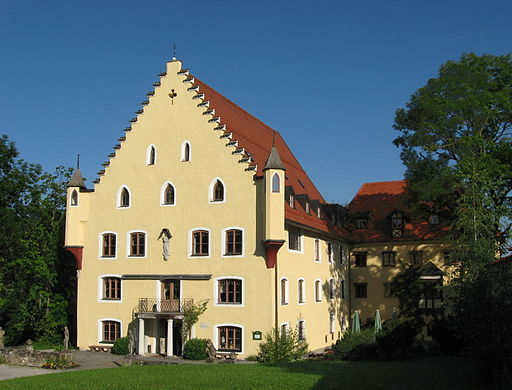
Schloss Hopferau
Nestled amid rolling meadows and dense spruce forests in the Allgäu region of Bavaria, Schloss Hopferau emerges like a living chronicle of alpine history. From its lofty vantage point on a gentle hilltop, the castle watches over a patchwork of fields, woodlands, and winding streams. More than a historic monument, it serves as a testament to centuries of noble ambition, artistic patronage, and the enduring bond between architecture and nature.
Location and Landscape
Schloss Hopferau occupies a strategic perch overlooking the Hopfensee valley. To the north, the lake’s turquoise waters mirror the peaks of the Ammergau Alps; to the south, fertile farmland stretches toward distant woodlands. Seasonal contrasts transform the setting: spring brings blooming orchards, summer lures hikers to alpine pastures, autumn cloaks the forest in fiery hues, and winter blankets castle walls with sparkling snow.
The Myth of Hopferau
Local lore speaks of a woodland spirit who guarded the surrounding forests long before human hands raised stone walls. Shepherds whispered of lantern lights dancing at twilight and melodic echoes carried by the wind. Though these tales faded over time, they infused the early builders with a sense of enchantment, inspiring many of the castle’s decorative motifs and reinforcing its mystical allure.
The Founding of Schloss Hopferau
Medieval Roots
The origins of Schloss Hopferau trace back to the late 12th century, when a minor knight named Rudolf von Hopferau secured imperial favor and erected a fortified manor. Initially a modest stone tower with wooden palisades, it guarded a minor trade route linking Tyrol with Swabia. Over subsequent decades, the Hopferau family reinforced the stronghold, adding a curtain wall, watchtowers, and a deep moat fed by crystal-clear springs.
Renaissance Transformation
By the mid-16th century, shifting political alliances and the rise of courtly culture prompted Baron Heinrich von Hopferau to undertake a sweeping renovation. Commissioning master masons and stonemasons from Innsbruck, he replaced the austere keep with an elegant Renaissance residence. Symmetrical facades, arched loggias, and sculpted reliefs celebrated classical antiquity, reflecting the baron’s ambition to rival larger Bavarian courts.
Architectural Highlights
The Keep and Gatehouse
Dominating the castle’s west wing, the original medieval keep still stands as a reminder of Hopferau’s defensive origins. Its thick walls conceal spiral staircases leading to battlements that offer panoramic views of the Alps. The adjacent gatehouse features twin towers flanking a pointed-arch entrance, once hooped by a heavy oak portcullis.
The Great Hall
At the heart of the Renaissance wing lies the Great Hall, a lofty chamber crowned by a vaulted ceiling. Sunlight streams through tall mullioned windows, illuminating mosaic-patterned floors and intricately carved wooden benches. This space hosted banquets, courts of justice, and music performances, cementing its role as the social hub of castle life.
Residential Wings
Flanking the Great Hall, the residential quarters combine comfort with grandeur. Private chambers boast tiled stoves, coffered ceilings, and painted friezes depicting classical myths. A winding corridor known as the Gallery of Ancestors displays painted portraits of the Hopferau lineage, linking present generations with medieval founders in a single narrative sweep.
Artistic and Decorative Features
Frescoes and Murals
Throughout the castle, wall surfaces serve as expansive canvases. In the Knights’ Staircase, a 17th-century fresco illustrates scenes from the life of Saint George, while the Council Chamber’s mural cycle portrays allegories of justice, wisdom, and temperance. Subtle color palettes and naturalistic details reveal the influence of Italian masters.
Stained Glass and Carvings
Light filters through jewel-toned stained-glass windows in the chapel wing, casting colored mosaics across flagstone floors. Elsewhere, oak carvings adorn door jambs and window surrounds, featuring motifs drawn from local flora and heraldic devices of the Hopferau family. These delicate sculptures balance the solidity of stone with organic refinement.
The Chapel
Tucked into a quiet corner of the north wing, the castle chapel offers a serene retreat. A painted wooden altarpiece depicts the Annunciation, framed by a carved rood screen separating the nave from the dais. Patrons and retainers once knelt here each morning, their whispered prayers echoing softly against limestone walls.
Gardens and Surroundings
The Terrace Gardens
Descending from the castle’s south façade, tiered gardens cascade toward manicured lawns. Boxwood parterres outline beds of roses, lavender, and medicinal herbs, while sculpted stone urns punctuate pathways. From the highest terrace, visitors enjoy an unobstructed view of Hopfensee’s placid surface and the peaks beyond.
The Forest Park
Beyond formal gardens, a wooded park invites exploration along gravelled avenues and mossy glades. A series of rustic pavilions and ornamental bridges spans small streams, providing vantage points for birdwatching and woodland repose. In the 18th century, the park became a living laboratory for botanists who introduced rare alpine species.
Life at the Castle Through the Centuries
Noble Families and Court Life
For five centuries, the Hopferau lineage maintained the castle as both home and seat of local authority. Court life revolved around seasonal festivities: harvest balls in autumn, masked carnivals in carnival season, and summer weddings blessed beneath the chapel’s vaulted ceiling. Entertainers—minstrels, jugglers, and storytellers—traveled from Bavarian towns to perform beneath torchlit ramparts.
Wars, Sieges, and Reconstructions
The Thirty Years’ War brought hardship to Schloss Hopferau, with occupation by mercenary forces and a brief siege that left parts of the curtain wall in ruins. Subsequent owners rebuilt damaged sections in Baroque style, introducing curved gables and elaborate cornices that contrasted with the castle’s earlier austerity. Each reconstruction layered new architectural spirits onto the old bones.
Modern Era and Current Use
Restoration Projects
By the mid-20th century, neglect had taken its toll: rotting timbers, leaking roofs, and fading frescoes threatened the castle’s fabric. A dedicated preservation society mobilized craftsmen, historians, and volunteers to stabilize structures and painstakingly restore interiors. Efforts prioritized authentic materials—lime plaster, hand-forged nails, and natural pigments—ensuring continuity with original techniques.
Cultural Events and Programs
Today, Schloss Hopferau hosts a vibrant calendar of cultural events. Open-air concerts in the courtyard range from Baroque ensembles to contemporary chamber music. Annual medieval fairs recreate jousts and crafts demonstrations. Scholarly conferences draw historians keen to discuss topics from regional medieval politics to Renaissance art techniques.
Sustainable Management
The castle’s stewards strive for environmental balance. Solar panels discreetly integrated into outbuildings provide renewable energy, while rainwater harvesting systems supply irrigation for gardens. Educational workshops teach visitors about sustainable heritage conservation, emphasizing how historic sites can model ecological responsibility.
Visiting Schloss Hopferau
Guided Tours and Exhibitions
Daily guided tours trace the castle’s evolution from medieval fortress to Renaissance palace. Specialized tours explore the chapel’s iconography, the Great Hall’s acoustics, or the frescoes’ symbolism. Rotating exhibitions spotlight artifacts such as period armor, illuminated manuscripts, and early scientific instruments once used by castle residents.
Seasonal Activities
Winter transforms the castle grounds into a snow-covered wonderland, with torchlit night tours and living nativity scenes in the courtyard. Spring welcomes botanical walks led by horticulturalists, while summer evenings feature stargazing sessions on the battlements. Autumn harvest festivals celebrate local produce with tastings, workshops, and folk dancing.
Practical Tips
- Opening Hours: The castle is open daily from mid-March through late October, with weekend winter hours.
- Tickets: Admission tiers include general entry, guided-tour packages, and combined passes with nearby alpine museums.
- Accessibility: Ground-floor spaces and gardens are wheelchair accessible. Some upper rooms require assistance on historic staircases.
- Travel: Regular bus service connects Hopferau village with Füssen and Schwangau. Ample parking is available on-site.
Schloss Hopferau in Popular Culture
Literary References
Writers have long been drawn to Hopferau’s romantic silhouette. Poets reference its towers in odes to Bavarian landscapes, while novelists set courtly dramas within its halls. Contemporary fantasy authors evoke its medieval keep as inspiration for tales of chivalry, magic, and hidden archives.
Film and Photography
Filmmakers prize the castle’s blend of architectural styles as an authentic backdrop for historical dramas. Drone cinematography captures the interplay of sunlight and shadow across crenellations, while wedding photographers favor the south terrace’s lake views. Social media hashtags dedicated to Hopferau showcase its enduring visual appeal.
Conclusion
Schloss Hopferau weaves together stones, wood, and stories across eight centuries. Its walls bear witness to shifting artistic trends, noble ambitions, wartime scars, and rebirth through conservation. As a living museum, performance venue, and tranquil retreat, the castle invites each visitor to become part of its ongoing narrative—discovering that every corridor, fresco, and garden bench holds a piece of Bavarian heritage waiting to be explored.
