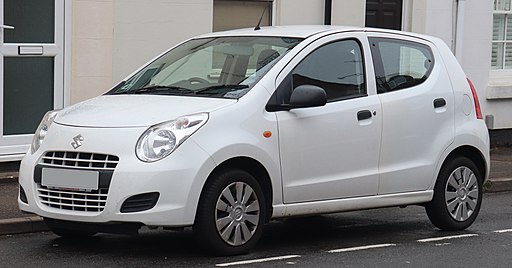
Suzuki Alto faults
Engine and Oil System
Oil Leaks and Consumption
- Symptoms: Oil spots under the engine, frequent dipstick top-ups between services
- Causes:
- Degraded valve-cover gasket allowing seepage onto exhaust
- Cracked oil‐filter housing or sump plug threads
- Blocked PCV system leading to excessive crankcase pressure
- Remedies:
- Replace valve-cover gasket with OEM part
- Inspect and renew oil-filter housing or sump gasket
- Clean or replace PCV valve and breather hoses
Overheating and Cooling Faults
- Symptoms: Temperature gauge spikes, steam under the bonnet, occasional boil-over
- Causes:
- Failed plastic thermostat housing or weeping water pump
- Radiator core or end-tank cracks
- Blocked coolant passages from scale or debris
- Remedies:
- Fit updated metal-reinforced thermostat housing and water pump
- Replace radiator with OEM or aftermarket aluminum-core unit
- Flush cooling system and refill with correct coolant mix
Timing Chain Tensioner Wear
- Symptoms: Tick or rattle at cold start, rough idle until warmed up
- Causes:
- Weak tensioner spring allowing timing chain slack
- Worn guide rails accelerating chain wear
- Remedies:
- Replace timing-chain tensioner and nylon guide rails
- Inspect chain and sprockets; renew if beyond service limits
Loss of Power and Misfiring
- Symptoms: Hesitation under acceleration, intermittent misfire codes (P030x), rough running
- Causes:
- Carbon build-up in throttle body or EGR valve
- Worn spark plugs or failing ignition coils
- Fuel-injector deposits restricting spray pattern
- Remedies:
- Clean throttle body, EGR assembly, and MAF sensor
- Fit new spark plugs and test/replace coils as needed
- Use injector-clean additive or perform professional injector service
Transmission and Drivetrain
Manual Clutch Wear and Slipping
- Symptoms: High biting point, slipping under load, burning-smell clutch engagements
- Causes:
- Worn friction plates from city driving or aggressive launches
- Contaminated or low gearbox oil
- Remedies:
- Replace clutch assembly (plate, pressure plate, release bearing)
- Drain and refill gearbox with correct grade oil
CVT and Automated-Manual (AGS) Shudder
- Symptoms: Judder at low speeds, delayed pull-away, “slip detected” warning lights
- Causes:
- Glazing on CVT belt or chain from overdue fluid changes
- Faulty AGS actuator or low hydraulic pressure
- Remedies:
- Service CVT with Subaru-approved fluid and filter at 40,000 km intervals
- Recalibrate or replace AGS actuator unit
Electrical and Electronics
Starter Motor Failures
- Symptoms: Clicking noise on ignition, no crank or intermittent engagement
- Causes:
- Worn starter-motor brushes or corroded solenoid contacts
- Weak battery or poor terminal connections
- Remedies:
- Renew starter motor or solenoid assembly
- Clean battery terminals, test and replace weak battery
Power Window and Central Locking Faults
- Symptoms: Windows failing to move or stalling, doors not locking/unlocking centrally
- Causes:
- Worn window-regulator gears or seized tracks
- Faulty door-lock actuator motors
- Remedies:
- Change regulator assemblies and lubricate tracks
- Replace door-lock actuators and check wiring grounds
Parasitic Battery Drain
- Symptoms: Flat battery after a few days of inactivity, interior lights dimming
- Causes:
- Aftermarket alarm modules or faulty control-unit not entering sleep
- Interior light or ECU ground-point corrosion
- Remedies:
- Perform draw test to isolate circuit
- Update or remove offending module, clean ground connections
Suspension and Steering
Suspension Noise and Wear
- Symptoms: Clunks over bumps, vague handling, rear‐end knocks
- Causes:
- Worn front strut-top mounts or rear torsion-beam bushings
- Aged anti-roll bar links with deteriorated bushings
- Remedies:
- Replace strut-mount bearings and poly or OEM bushes
- Fit new sway-bar end links
Steering Rack Leaks and Play
- Symptoms: Fluid under subframe, sudden steering stiffness, excessive play
- Causes:
- Failing rack seals allowing power-assist fluid loss
- Worn rack inner bushes
- Remedies:
- Rebuild rack with seal kit or fit remanufactured assembly
- Check and top up power-steering fluid
Brakes and Wheels
Brake Noise and Uneven Wear
- Symptoms: Squealing or grinding under braking, pedal pulsation
- Causes:
- Glazed pads or warped rotors
- Corroded caliper slide pins causing sticking
- Remedies:
- Machine or replace rotors and fit quality pads
- Overhaul calipers and lubricate guide pins
Wheel Bearing Wear
- Symptoms: Low-speed humming or growling noise, play in wheel
- Causes:
- Bearing grease breakdown from water ingress or age
- Remedies:
- Replace wheel-hub bearing units with sealed assemblies
Body and Interior
Rust on Sills and Wheel Arches
- Symptoms: Bubble formation in paint, visible corrosion at lower panels
- Causes:
- Chipped paint and absent underseal in salt-belt regions
- Remedies:
- Treat rust with chemical converter, sand and repaint
- Apply protective undercoating
Weak Air Conditioning
- Symptoms: Poor cooling output or no cold air, compressor not engaging
- Causes:
- Clogged cabin-filter or low refrigerant level
- Worn AC compressor clutch or evaporator leaks
- Remedies:
- Clean or replace cabin-filter, pressure-test and recharge system
- Renew compressor or repair evaporator as required
Suzuki Alto as a used car
The Suzuki Alto stands out in the microcar segment for its exceptional fuel economy, minimal running costs, and surprising practicality in urban environments. As a used purchase, it delivers low depreciation, straightforward maintenance, and a compact footprint ideally suited to tight parking and heavy traffic. Buyers seeking an entry-level commuter or a budget-friendly second vehicle will find the Alto’s blend of reliability, ease of ownership, and basic yet functional feature set highly appealing.
Generations and Model Evolution
Eighth Generation (HA12/HA22; 2004–2009)
The eighth-generation Alto introduced under-bonnet refinements to the 660 cc kei-car engine, boosting output to 54 PS while retaining a simple SOHC design. Front-wheel drive is standard, with all-wheel drive offered in select markets. The cabin layout emphasizes vertical space, giving surprisingly generous headroom. Safety features were basic: driver’s airbag, side impact bars, and optional ABS.
Ninth Generation (HA25S; 2009–2014)
A more modern exterior and retuned 0.66 L three-cylinder engine marked this facelifted version. Dual overhead camshafts, variable valve timing, and lighter internals lifted power to 64 PS in naturally aspirated form. A continuously variable transmission (CVT) became available alongside a five-speed manual, improving low-speed drivability and fuel efficiency. Standard equipment expanded to include power windows, remote keyless entry, and a simple audio head unit.
Tenth Generation (HA35/HA36; 2014–Present)
The current Alto generation adopted Suzuki’s HEARTECT platform, shedding weight and increasing chassis stiffness. Engine options include a 660 cc naturally aspirated unit and a turbocharged variant producing 64 PS with 98 Nm of torque. Safety advanced with dual front airbags, electronic stability control, hill-hold control in AWD trims, and a rearview camera on higher grades. Cabin appointments grew to feature touch-screen infotainment and automatic climate control in select markets.
Engine and Performance Specifications
| Generation | Displacement | Configuration | Power | Torque | Fuel Delivery | Economy (Combined) |
|---|---|---|---|---|---|---|
| Eighth (2004–09) | 0.66 L | SOHC inline-3 | 40 kW (54 PS) | 63 Nm | MPFI | 4.8–5.2 L/100 km |
| Ninth (2009–14) | 0.66 L | DOHC inline-3 with VVT | 47 kW (64 PS) | 89 Nm | MPFI | 4.4–4.8 L/100 km |
| Tenth (2014–Now) | 0.66 L | DOHC inline-3 | 47 kW (64 PS) | 89 Nm | MPFI or Turbocharged VVT | 3.6–4.5 L/100 km |
Drivetrain and Transmission
Manual Gearbox
Most Altos offer a five-speed manual transmission with short throws and light clutch effort. Gear ratios are spaced to maximize acceleration from low revs and maintain efficiency on the highway. Clutch assemblies typically last beyond 100,000 km with normal driving.
Automated Manual (AGS)
Suzuki’s Auto Gear Shift system pairs the five-speed gearbox with actuators for clutch and shift control. It delivers smoother take-offs than a pure manual and saves weight compared to a traditional torque-converter auto. Regular inspection of the actuator oil reservoir around 80,000 km preserves shift quality.
Continuously Variable Transmission (CVT)
Found on mid-trim and upper-trim grades from the ninth generation onward, the CVT uses a sealed chain and pulley design. Oil changes every 40,000 km with the correct CVT fluid are essential to prevent belt wear and shudder. Turbocharged models with CVT demand shorter intervals around 30,000 km.
All-Wheel Drive
Available on specialty trims, the part-time AWD system uses an electronically controlled coupling to send up to 50 percent of torque to the rear axle when front slip is detected. No transfer case fluid service is usually required, but checking the coupling’s electrical connection and wiring loom every 50,000 km is recommended.
Chassis, Suspension, and Brakes
Suspension Layout
- Front: MacPherson struts with coil springs
- Rear: Torsion beam axle with telescopic dampers
This setup yields a compliant ride at low speeds and predictable handling in corners. Common wear items include top strut mounts and rear trailing-arm bushings, typically addressed by 120,000 km.
Steering
The rack-and-pinion steering is electric-assist, offering light effort for city parking and adequate feedback on open roads. Seal condition in the rack should be checked if stiffness or noise develops.
Braking System
Ventilated front discs and solid rear drums are standard on base models. Higher grades upgrade to rear drums with integrated self-adjusting shoes or full discs in certain markets. Brake-fluid flush every two years prevents moisture-induced corrosion and pad-caliper binding.
Interior Dimensions and Features
Passenger Space
- Front Headroom: 1,015 mm
- Rear Headroom: 985 mm
- Front Legroom: 1,040 mm
- Rear Legroom: 830 mm
The Alto’s upright seating and thin seatbacks maximize usable cabin volume in a remarkably short wheelbase footprint.
Cargo Capacity
- Rear Seats Up: 178 L
- Rear Seats Folded (60/40 Split): 391 L
A flat load floor and low lift-over height simplify loading groceries or small furniture. Optional roof rails can support up to 30 kg of additional cargo.
Equipment Highlights
- Basic audio system with USB and Bluetooth connectivity
- Manual air-conditioning standard; automatic climate control in higher trims
- Power windows and remote keyless entry on mid-range grades
- Optional rearview camera, hill-hold control, and parking sensors
Common Maintenance and Known Issues
Timing Chain Tensioner Wear
Some early sixth-generation models exhibit noise at start-up due to chain-tensioner spring fatigue. Replacing the tensioner and guide rails around 100,000 km eliminates tick at idle and prevents jump-off risks.
CVT Shudder and Fluid Contamination
A gritty or jerky feeling at low speeds can signal degraded CVT fluid. Performing a drain-and-fill service with Suzuki-approved oil and filter every 40,000 km restores smooth operation.
Suspension Noise
Clunks over bumps often trace to worn rear torsion-beam bushings or front strut mounts. Polyurethane bushing upgrades and OEM mount replacements cure vibration and rattle.
Rust and Corrosion
Salt-belt markets see corrosion around wheel arches and sill panels. Early treatment with rust-inhibitor sprays and periodic underbody inspections extend body life well past 150,000 km.
Electrical Gremlins
Loose ground points can cause intermittent flickering of interior lights or erratic gauge behavior. Cleaning and tightening chassis grounds at the firewall and dash harnesses restores reliable operation.
Buying Guide and Pricing
Pre-Purchase Checklist
- Verify full service history for oil and transmission-fluid changes
- Listen for timing-chain noise at startup and assess smooth idle
- Inspect CVT for shudder under light throttle in drive mode
- Check suspension for clunks and steering play at the rack
- Examine body panels for paint bubbling and undercoating integrity
- Confirm functionality of all electrical components and door locks
Market Values
- Eighth-Generation Models (2004–2009): €1,000–€2,500 depending on mileage
- Ninth-Generation Models (2009–2014): €2,500–€4,500 with mid-range trim and lower km
- Tenth-Generation Models (2014–2018): €4,500–€7,500 for well-equipped, low-km examples
Pricing varies by region, trim level, condition, and availability of AWD variants.
Ownership Experience
Driving a used Suzuki Alto means embracing simplicity and economy. Expect fuel-consumption figures in the 3.6 to 5.2 L/100 km range and insurance premiums among the lowest in the class. Maintenance tasks are straightforward with widely available parts and minimal need for specialized tools. While performance is modest, the Alto’s nimble footprint, low running costs, and proven reliability deliver enduring appeal for budget-minded urban commuters and first-time car buyers.
.jpg)