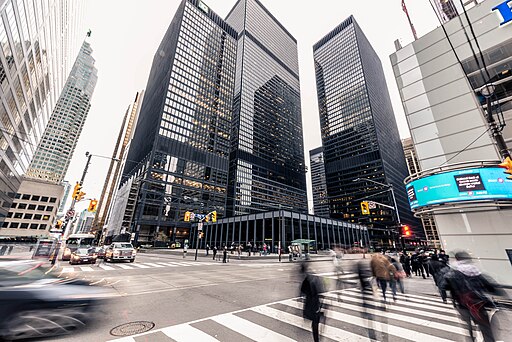
Toronto-Dominion Centre: A Modernist Masterpiece in Steel and Glass
Overview and Urban Context
Toronto-Dominion Centre (TD Centre) anchors Toronto’s Financial District as a landmark modernist ensemble. Designed by Ludwig Mies van der Rohe and completed in 1969, the complex redefined high-rise office development with its minimalist language of exposed steel and glass. Encompassing four towers around a sunken plaza, TD Centre symbolizes the shift toward open-plan workplaces and integrated urban realms.
Architectural Vision
Miesian Minimalism
True to Mies’s mantra “less is more,” TD Centre’s design emphasizes purity of form and structure. The buildings rise as rectilinear volumes clad in bronze-tinted glass and black steel I-beams, their façades expressing the underlying column grid without superfluous ornamentation. This restrained aesthetic pioneered a typology of corporate identity that spread to skylines worldwide.
Plaza and Public Realm
At the heart of the complex lies a two-acre sunken plaza paved in granite and framed by Italian travertine benches. Seasonal plantings, sculptural installations and an underground concourse activate the space year-round, while an iconic pavilion café designed by Mies offers a transparent counterpoint to the heavier tower masses above.
Structural and Construction Details
Foundations and Frame
Each tower rests on deep caisson foundations drilled into Toronto’s limestone bedrock. From these, a welded steel frame—reinforced with concrete encasement at column bases—rises to the full 56 floors of the TD Bank Tower, efficiently carrying gravity and lateral loads. Bolted connections and high-strength steel ensured rapid erection, with the main tower topping out in just under two years.
Façade and Exterior Envelope
The curtain wall employs bronze-anodized aluminum mullions and 8 mm reflective glass panels, set within exposed I-beam members that serve both as sun-shading fins and as visual ties to the structural grid. This unitized system delivered tight tolerances for air and water infiltration while projecting the bold vertical rhythms that define the complex’s iconic profile.
Technical Specifications
| Parameter | Specification |
|---|---|
| Architectural Height | 223 m (731 ft) for TD Bank Tower |
| Floor Count | 56 above grade; 6 below grade (parking & services) |
| Gross Floor Area | ≈ 400 000 m² |
| Office Floor Area | ≈ 300 000 m² |
| Construction Material | Welded steel frame with reinforced-concrete encasements |
| Façade Type | Unitized curtain wall; bronze-anodized aluminum & reflective glass |
| Architect | Ludwig Mies van der Rohe |
| Completion | 1969 |
: Technical parameters sourced from Technické parametry – Toronto-Dominion Centre.
Mechanical, Electrical, and Plumbing Systems
HVAC and Energy Controls
A central chilled-water plant in the basement feeds variable-air-volume (VAV) air-handling units split between each tower. Automated building-management controls modulate airflow and temperature floor by floor, optimizing performance and occupant comfort.
Vertical Transportation
TD Centre boasts 34 high-speed traction elevators across the towers, grouped into low-, mid- and high-rise banks. Two freight elevators serve each building’s loading dock and mechanical levels, ensuring smooth logistics without disrupting tenant access.
Life Safety and Resilience
Pressurized exit stairs, a dedicated rooftop water reservoir and a fully addressable fire-alarm network guarantee uncompromising egress and fire-protection coverage. The complex’s structural redundancy and steel-concrete composite columns provide enhanced seismic and wind resilience.
Interior Spaces and Functionality
Office Layout and Amenities
Open-plan floor plates averaging 5 400 m² allow column-free workspaces, floodlit by natural daylight through all-glass façades. Tenant amenities include a fitness centre, conference facilities and a business-lounge pavilion in the plaza, fostering collaboration and civic engagement.
Retail and Public Realm
Over 50 retail units occupy the ground level and two basement concourses, directly linked to the PATH network’s 30 km of underground walkways. Cafés, banks and service outlets animate the complex, transforming it into a year-round microcosm of downtown life.
PATH Integration and Connectivity
TD Centre’s four-level subterranean concourse connects seamlessly to adjacent office buildings, subway stations and retail hubs. This climate-controlled nexus not only shelters tenants from Toronto’s seasonal extremes but also channels more than 200 000 daily pedestrian movements through its corridors.
Renovations and Sustainability Upgrades
Beginning in the early 2000s, TD Centre underwent phased modernization to meet evolving performance standards. Upgrades included:
- LED lighting retrofits with occupancy and daylight sensors
- Water-recycling loops and low-flow fixtures reducing potable use by 35 %
- Installation of energy-efficient chillers and variable-speed pumps
- LEED Platinum certification achieved for retro-commissioning and envelope enhancements
Legacy and Impact
More than a collection of towers, Toronto-Dominion Centre stands as a testament to the power of integrated design—where structure becomes architecture, and public realm elevates corporate space. Its pioneering use of exposed steel, minimalist detailing and seamless pedestrian connections have influenced generations of developers and architects, cementing TD Centre’s role as a blueprint for the modern city.
.jpg)