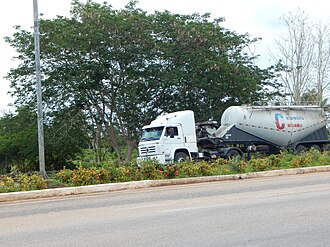
Volkswagen Worker: The Rugged Workhorse Built for Demanding Jobs
The Volkswagen Worker is a truck family that earned its reputation by focusing on one of the most important qualities in commercial transportation: getting the job done reliably. Developed by Volkswagen Caminhões e Ônibus primarily for demanding Latin American operating conditions, the Worker became particularly associated with construction, agriculture, regional freight and other vocational applications where a truck may spend as much time on rough roads and work sites as it does on paved highways. Its straightforward engineering, robust chassis and wide selection of configurations made the Worker a familiar sight in markets where durability and ease of operation were often more important than luxury or high-speed performance.
Unlike a single truck model designed around one specific application, the Worker name covered a broad family of medium- and heavy-duty vehicles. Depending on the version, customers could choose different wheel configurations, engine outputs, gross vehicle weights and body arrangements. This versatility allowed the Worker to serve as a cargo truck, tipper, concrete mixer, tractor or specialized vocational platform. Its underlying philosophy was simple: build a truck capable of enduring difficult working conditions while keeping maintenance and operation manageable for fleet owners and drivers.
Although newer Volkswagen truck families have taken over much of the manufacturer’s product range, the Worker remains an important part of Volkswagen Caminhões e Ônibus history. It helped establish the company’s identity as a manufacturer capable of building vehicles specifically suited to the realities of emerging and developing markets. Its combination of mechanical toughness, practical dimensions and flexible chassis configurations made it particularly valuable in environments where road quality could vary dramatically from one route to the next.
The Origins of the Volkswagen Worker
Developed for Real-World Commercial Conditions
The Worker emerged from a philosophy that commercial trucks should be designed around the actual work they perform rather than around purely theoretical performance figures. In many parts of Latin America, a truck might leave a paved highway and spend the next several hours traveling along gravel roads, construction sites, agricultural tracks or poorly maintained secondary routes. The vehicle therefore needed to withstand vibration, dust, heavy loads and frequent low-speed operation.
Volkswagen responded by developing a family with an emphasis on robustness and practicality. The Worker was positioned between lighter distribution vehicles and the company’s larger heavy-duty trucks, providing operators with a useful middle ground. Its chassis could accommodate substantial cargo bodies, while its mechanical components were selected to tolerate demanding operating cycles.
This made the Worker particularly attractive to businesses whose vehicles could not remain on perfect roads. Construction contractors, municipal operators, agricultural businesses, quarrying companies and regional freight carriers could all find useful configurations within the range.
A Family Rather Than a Single Truck
One of the most important things to understand about the Worker is that the name refers to an entire family. Different Worker models were offered with different engines, axle arrangements and gross vehicle weights, meaning that specifications can vary significantly between individual versions.
Among the better-known configurations were 4×2, 6×2 and 6×4 trucks, with some models specifically designed for construction and off-road work. The 6×4 configuration was particularly valuable for demanding applications because it provided two driven rear axles and therefore significantly greater traction than a conventional 4×2.
This modular approach allowed Volkswagen to use the Worker name across a wide range of commercial applications. A relatively light model could perform regional distribution, while a heavier 6×4 could carry construction materials or operate as a dump truck. The basic philosophy remained consistent even when the hardware changed.
Design Philosophy of the Worker
Robustness Before Luxury
The Worker was never intended to compete primarily on luxury. Its cab and chassis were designed around practical commercial requirements, with durability and serviceability taking precedence over elaborate features.
This philosophy was particularly appropriate for the environments in which the truck operated. A vehicle working at a construction site may be exposed to dust, mud, vibration and frequent loading cycles. A farm truck may have to travel along uneven roads and work far from major service facilities. In such conditions, straightforward mechanical systems can be valuable because operators need equipment that can be understood, maintained and repaired without excessive complexity.
The Worker therefore developed an image as a dependable workhorse. Its appeal was not based on glamorous styling or exceptional highway speed but on the confidence that the truck could continue working under difficult circumstances.
The Cab and Driver Environment
Although the Worker emphasized practicality, the driver was still an important part of the design. A commercial truck can only be productive if the person operating it can work safely and efficiently.
The cab-over-engine layout used by many Volkswagen commercial vehicles helped keep the truck compact while giving the driver a relatively direct view of the road. This was useful for maneuvering in urban areas, construction sites and loading yards. The relatively short front end also reduced the overall length required for a given cargo body.
Visibility was particularly important for vocational applications. A driver operating a tipper, mixer or construction truck may spend a significant amount of time maneuvering around buildings, equipment and other workers. A compact cab and good forward visibility could make these tasks easier.
Engines and Mechanical Performance
Diesel Engines Designed for Work
Worker models were powered by diesel engines selected for commercial applications where torque and durability were critical. Depending on the model and production period, the family used different engine families and power outputs, so no single engine specification applies to every Worker.
The engines were generally characterized by useful low- and mid-range torque rather than an emphasis on high-revving performance. This is exactly what a working truck needs. A heavily loaded vehicle leaving a construction site, climbing a gradient or pulling through an unpaved section needs strong torque at low engine speeds.
Fuel economy was also important. Commercial trucks spend much of their lives operating under load, so even a small improvement in consumption can have a major financial effect over hundreds of thousands of kilometers. The Worker’s engine and drivetrain combinations were consequently selected to provide an appropriate balance between power, durability and operating cost.
Manual Transmissions and Driver Control
Manual transmissions were an important part of the Worker concept. The gearbox allowed drivers to choose the appropriate ratio for the load and terrain, particularly when operating in demanding environments.
For highway driving, the driver could select higher gears to keep engine speed under control and improve fuel efficiency. In construction or off-road conditions, lower gears could be used to provide greater wheel torque and controlled movement.
This type of direct mechanical control was particularly appreciated in markets where vocational truck drivers were accustomed to managing their vehicles according to road and load conditions. It also supported the Worker philosophy of keeping the vehicle mechanically straightforward.
The Worker in Construction
A Natural Fit for Tippers and Mixers
Construction was one of the areas in which the Worker concept made the most sense. Construction trucks regularly encounter environments that are hostile to conventional road vehicles. They may operate on loose soil, steep access roads, unfinished surfaces and sites filled with debris.
A 6×4 Worker could provide substantially better traction than a 4×2 truck because both rear axles were driven. This allowed the truck to continue moving when the surface became soft or uneven. Strong chassis construction was equally important because tipper bodies, concrete mixers and other equipment can impose significant loads on the frame.
The truck’s ability to accept different vocational bodies also made it a flexible investment. An operator could use the same basic chassis concept for different construction tasks, depending on the body and equipment installed.
Off-Road Capability
Although the Worker was not a specialized military off-road vehicle, many versions had strong cross-country characteristics for a commercial truck. High ground clearance, robust suspension components and driven rear axles made suitable models capable of handling rough working environments.
This was particularly useful in regions where construction projects were located away from paved roads. A truck that can carry its load only as far as the end of the highway is of limited value to a construction company. The Worker was designed to continue into the work site itself.
Agriculture and Regional Freight
A Versatile Agricultural Truck
Agriculture presented another important application for the Worker. Farms often require trucks to transport harvested crops, fertilizer, animal feed, machinery and other materials between fields, storage facilities and roads.
Agricultural routes can be difficult because road surfaces vary considerably with weather. Rain can turn an ordinary dirt road into a muddy track, while harvest operations can place heavy demands on vehicles over long working days. A robust truck with good traction can therefore provide considerable practical value.
The Worker could also be fitted with different cargo bodies depending on the operation. This flexibility meant that the truck could be configured around the specific type of agricultural cargo being transported rather than forcing the operator to use a generic body.
Regional Freight Operations
The Worker also found a role in regional freight, particularly where operators wanted more capacity than a light-duty delivery vehicle but did not require a full-size long-haul tractor.
Regional freight can involve a mixture of highway and secondary-road operation. The truck may spend part of the day at highway speeds before reaching smaller towns or industrial areas. A versatile medium-duty platform is well suited to this type of work because it balances payload, maneuverability and durability.
Axle Configurations and Payload
Why 4×2 and 6×4 Matter
The choice between axle configurations is one of the most important decisions when specifying a commercial truck. A 4×2 Worker generally offers a simpler drivetrain and is well suited to road-oriented freight applications. It can provide lower operating complexity while still offering useful payload capacity.
A 6×4, by contrast, is designed for situations where traction and heavy-duty operation are priorities. With two driven rear axles, it can distribute traction over a larger number of wheels and is better suited to construction sites, rough roads and heavy loads.
The additional mechanical components of a 6×4 naturally add weight and complexity, so such a configuration makes most sense when its additional capability will actually be used. This illustrates why having multiple Worker configurations was so useful: operators could choose the truck according to the real demands of their business.
Maintenance and Practicality
Designed to Be Kept Working
For commercial operators, downtime can be more expensive than almost any individual component. A truck that spends several days waiting for a complicated repair is not generating revenue, even if its original purchase price was attractive.
The Worker developed its reputation partly because of its practical mechanical approach. Conventional diesel engines, manual transmissions and straightforward chassis components were familiar to mechanics across Volkswagen’s traditional markets. This could make routine servicing and repairs easier to manage.
The truck’s vocational nature also meant that durability was central to its design. Suspension, axles, frame components and driveline parts had to withstand repeated loading and the stresses associated with uneven surfaces.
Total Cost of Ownership
A truck’s economic value is determined by much more than its purchase price. Fuel consumption, maintenance requirements, tire wear, downtime, payload and resale value all contribute to total cost of ownership.
The Worker was designed to provide a practical balance between these factors. Its relatively straightforward technology could be advantageous for operators who prioritized reliability and maintainability, while the availability of multiple configurations helped businesses avoid buying a truck significantly larger or more expensive than necessary.
The Legacy of the Volkswagen Worker
An Important Chapter in Volkswagen Truck History
The Worker played an important role in establishing Volkswagen Caminhões e Ônibus as a serious manufacturer of work-oriented commercial vehicles. It demonstrated that the company could develop trucks specifically suited to regional operating conditions rather than simply adapting products designed for other markets.
The family also helped bridge the gap between lighter distribution trucks and larger heavy-duty models. By offering a range of axle configurations and capacities, Volkswagen could address a broad spectrum of customer requirements under one recognizable product identity.
Although the Worker has been succeeded in many applications by newer Volkswagen truck families, its influence remains visible in the company’s approach to vocational vehicles. The same emphasis on robustness, configurability and practical operation continues to be important in modern trucks.
Volkswagen Worker Technical Specifications
Because the Worker name covers multiple models and generations, the specifications below should be treated as representative rather than as a universal specification sheet. Exact figures varied according to model, production year, engine, axle arrangement and market.
| Specification | Representative Worker specification |
|---|---|
| Manufacturer | Volkswagen Caminhões e Ônibus |
| Vehicle type | Medium/heavy-duty commercial truck |
| Common configurations | 4×2, 6×2, 6×4 |
| Typical applications | Construction, agriculture, regional freight, vocational transport |
| Engine type | Turbocharged diesel, model-dependent |
| Typical power range | Approximately 140–310 hp, depending on version |
| Typical torque range | Approximately 450–1,100 Nm, depending on engine |
| Transmission | Manual, model-dependent |
| Drive configuration | 4×2 / 6×2 / 6×4 |
| Gross vehicle weight | Approximately 8–31 tonnes, depending on model |
| Cab design | Cab-over-engine |
| Suspension | Heavy-duty leaf-spring configuration, model-dependent |
| Fuel | Diesel |
| Chassis | Heavy-duty ladder frame |
| Primary strengths | Durability, payload flexibility, vocational capability |
| Typical body types | Cargo, tipper, mixer, flatbed and specialized bodies |
Conclusion
The Volkswagen Worker earned its reputation for a reason. It was created for businesses that needed trucks to perform difficult, repetitive work rather than simply look impressive on a highway. Its range of axle configurations, diesel engines, chassis options and body possibilities allowed it to serve construction companies, farmers, regional freight operators and countless other businesses that depended on reliable transportation.
What made the Worker especially successful was the balance between capability and practicality. A truck used on a construction site needs traction and a strong chassis, but it also needs to be maintainable. An agricultural truck needs to cope with rough roads, but it must remain economical enough to operate throughout a demanding season. A regional freight truck needs useful payload capacity without becoming unnecessarily large. The Worker addressed these different requirements through a flexible family of configurations.
Its legacy is therefore larger than any individual model. The Worker represents an important period in Volkswagen’s development as a commercial-vehicle manufacturer and illustrates an enduring principle of truck design: the best work vehicle is not necessarily the most powerful or technologically complicated one, but the one that can perform its intended job reliably, economically and repeatedly. For that reason, the Volkswagen Worker remains an interesting and important chapter in the history of practical heavy-duty trucks.
