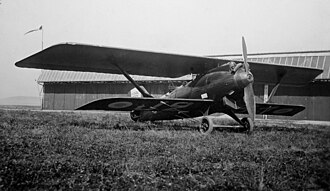
Bréguet 19: The French Biplane That Conquered the Skies of the Interwar Era
The Bréguet 19, also known as the Breguet XIX, Br.19, or Bre.19, was one of the most important French military aircraft of the 1920s and early 1930s. Designed as the successor to the famous Bréguet 14 of the First World War, it was conceived primarily as a reconnaissance aircraft and light bomber, but its remarkable combination of speed, range, structural strength, and payload capacity made it useful for a remarkably wide variety of missions. It became equally famous for its military career and for the spectacular long-distance flights that demonstrated the capabilities of early interwar aviation. Production began in 1924, and more than 2,000 aircraft were built in France, with approximately 700 additional examples produced under licence abroad.
The Bréguet 19 was an aircraft of transition. Its construction and appearance belonged to the biplane era, with fabric-covered wings, external bracing, open cockpits, and a piston engine mounted in the nose. Yet its extensive use of duralumin, streamlined fuselage, comparatively high speed, and ability to undertake long-distance flights pointed toward a new generation of aircraft. It was faster than many contemporary bombers and could even outpace some fighters, an achievement that generated considerable interest when the aircraft appeared. Its impressive performance also made it a natural candidate for record attempts, and modified Bréguet 19s became some of the most famous long-distance aircraft of the 1920s.
Development of the Bréguet 19
Successor to the Bréguet 14
The origins of the Bréguet 19 lay directly in the experience gained with the Bréguet 14, one of France’s most successful reconnaissance and bombing aircraft during the First World War. The earlier aircraft had demonstrated the advantages of a strong, relatively lightweight structure and had established Breguet as a major name in military aviation. When the war ended, however, aircraft technology was advancing rapidly, and the Bréguet 14 was already beginning to look like a product of an earlier generation.
The new Bréguet 19 was therefore intended to retain the strengths of its predecessor while introducing a more modern aerodynamic and structural approach. The first concept was particularly ambitious. The initial prototype was planned around a Bugatti U-16 engine, driving a four-bladed propeller, and was displayed at the Paris Aviation Salon in November 1921. By the time the aircraft actually flew in March 1922, however, the design had been revised to use a single Renault 12Kb engine producing approximately 450 horsepower.
This change was characteristic of aviation development during the early 1920s. Engine technology was advancing rapidly, and designers frequently experimented with different powerplants in search of the ideal balance between power, weight, reliability, and availability. The Renault installation proved successful, and the Bréguet 19 went through an extensive evaluation programme before being ordered by the French military.
Early Success
The prototype quickly demonstrated that it possessed unusually good performance for an aircraft in its class. In February 1923, the prototype participated in an international military aircraft competition in Madrid and won the speed contest. Shortly afterward, it established an altitude record while carrying a useful load. These successes were extremely valuable commercially because they demonstrated that the Bréguet 19 was not simply another conventional military biplane. It was an aircraft with performance that could compete with considerably more specialized machines.
The French military ordered the aircraft after its trials, and production began on a large scale in 1924. Export interest followed quickly. The combination of proven French engineering, relatively modern construction, and high performance made the Bréguet 19 attractive to air forces that were building or modernizing their fleets during the interwar period.
Design and Construction
The Distinctive Sesquiplane Layout
One of the most recognizable characteristics of the Bréguet 19 was its sesquiplane configuration. Unlike a conventional biplane in which the upper and lower wings are relatively similar in size, the Bréguet 19 had a substantially larger upper wing and a considerably smaller lower wing. This arrangement reduced the structural and aerodynamic penalties associated with a full-size lower wing while preserving much of the lifting and structural efficiency of the biplane concept.
The aircraft’s upper wing stretched approximately 14.83 metres, while the lower wing was significantly shorter. This gave the Bréguet 19 a distinctive profile that separated it visually from many earlier French biplanes. The arrangement was particularly appropriate for a machine expected to combine speed with a substantial military load.
The wings were externally braced, using struts and wires to maintain structural rigidity. Although this inevitably generated aerodynamic drag, such construction was still common in the 1920s because it provided a practical method of producing strong and relatively lightweight wings with the technology available at the time.
Extensive Use of Duralumin
The Bréguet 19’s construction was especially advanced in its extensive use of duralumin. The fuselage consisted largely of a framework of duralumin tubes, while the forward fuselage was covered with metal sheets. Fabric remained on the wings, rear fuselage, and tail surfaces. This combination produced an aircraft that was considerably more modern than its fabric-and-wood predecessors while retaining traditional fabric-covered flying surfaces.
This construction philosophy was important for several reasons. Duralumin offered useful strength without the weight penalty associated with heavier steel structures. It also provided Breguet with a material that could be formed into relatively clean fuselage structures, contributing to the aircraft’s streamlined appearance.
The result was a machine that looked surprisingly refined for a biplane. The rounded fuselage, enclosed forward metal structure, relatively clean engine installation, and carefully arranged landing gear all helped reduce drag. The Bréguet 19 therefore represented an important step toward the all-metal aircraft that would become increasingly common during the 1930s.
Engine and Performance
A Powerful Renault V-12
The standard Bréguet 19 was powered by a variety of engines during its career, reflecting the aircraft’s long production history and the requirements of different operators. Among the most important were the Renault 12K series, Lorraine-Dietrich 12Db and 12Eb, Hispano-Suiza 12H, and other engines used in later versions.
One representative Bréguet 19 A.2 configuration used a 450-horsepower Lorraine 12Ed Courlis W-12. With this engine, published specifications give a maximum speed of approximately 214 km/h, a service ceiling of about 7,200 metres, and a range of roughly 800 kilometres. Other versions with different engines produced somewhat different figures.
For a reconnaissance and light-bomber aircraft of the early 1920s, this was impressive performance. The Bréguet 19 was fast enough to complicate interception and high enough to operate above the effective altitude of many early fighters. Its performance was one of the principal reasons the aircraft attracted so much attention from foreign air forces.
Speed as a Form of Protection
The Bréguet 19’s speed was particularly important because it reduced its dependence on defensive maneuverability. A reconnaissance aircraft could not behave like a dedicated fighter, and a bomber carrying fuel, equipment, bombs, and two crew members had obvious limitations in a dogfight. Speed therefore became a form of protection.
The aircraft’s designers understood this well. Instead of attempting to make the Bréguet 19 exceptionally agile, they created an aircraft capable of moving rapidly across the battlefield, completing its reconnaissance or bombing mission, and returning before enemy fighters could effectively intervene.
This philosophy was increasingly important during the interwar years. Aircraft were becoming faster, but military planners were still trying to determine how best to balance speed, defensive armament, payload, and range. The Bréguet 19 was one of the successful early attempts to achieve that balance.
Military Versions
Bréguet 19 A.2 Reconnaissance Aircraft
The Bréguet 19 A.2 was the principal reconnaissance version. It carried a crew of two, normally a pilot and an observer, with the observer responsible for tasks such as aerial photography, navigation, artillery observation, and communications.
Reconnaissance remained an essential military function after the First World War. Armies increasingly relied upon aerial photography to map terrain, observe troop movements, locate artillery positions, and monitor logistical activity. The Bréguet 19’s speed and altitude made it well suited to this work.
Its armament typically consisted of a forward-firing Vickers machine gun for the pilot and two flexible Lewis guns operated by the observer. Light bombs could also be carried when required.
This combination gave the aircraft considerable flexibility. It could perform reconnaissance during one mission and carry out a light bombing assignment during another. Such adaptability was particularly valuable to air forces that could not afford large numbers of highly specialized aircraft.
Bréguet 19 B.2 Bomber
The Bréguet 19 B.2 was the light-bomber version. Although closely related to the A.2, it was optimized for carrying bombs and conducting attack missions.
The distinction between reconnaissance and bombing aircraft was not always absolute during this period. Both types required similar performance characteristics, and a two-seat aircraft could often carry cameras, wireless equipment, machine guns, and bombs depending on its mission. The Bréguet 19 benefited from precisely this flexibility.
The aircraft’s relatively high speed meant that it could penetrate enemy airspace more effectively than many older bombers. Its metal-intensive structure also made it well suited to repeated military operations in difficult conditions.
Service With the French Air Force
A Mainstay of French Aviation
The French military became the most important operator of the Bréguet 19. More than 1,000 aircraft were reportedly built for French service, and the type equipped numerous groups of the French Aéronautique Militaire during the 1920s. Some French units continued operating the aircraft until approximately 1935, an unusually long service life for a military aircraft of this period.
This longevity is particularly significant because aviation technology changed dramatically between 1924 and 1935. Aircraft that were considered modern during the early 1920s could become obsolete within a decade. The Bréguet 19 nevertheless remained useful because its underlying design was adaptable and because its later versions received more powerful engines and other improvements.
By the early 1930s, however, newer monoplanes and more streamlined bombers were rapidly overtaking it. The Bréguet 19’s biplane configuration imposed increasing aerodynamic limitations, and its relatively slow performance compared with modern aircraft eventually made replacement unavoidable.
International Operators
A Truly Exportable Aircraft
The Bréguet 19 achieved remarkable international success. Aircraft were supplied to numerous countries, and licensed production took place in Spain, Belgium, Yugoslavia, and Japan. More than 2,000 were manufactured in France, while approximately 700 additional aircraft were produced abroad under licence.
This international production was a strong endorsement of the basic design. Foreign air forces could acquire an aircraft that had already demonstrated its capabilities while also benefiting from local manufacturing arrangements.
Spain became particularly associated with the type. Spanish-built aircraft were produced by CASA, and the Bréguet 19 later saw combat during the Spanish Civil War. Indeed, one of the aircraft’s early combat appearances occurred during the opening phase of the conflict in 1936, when Nationalist forces used a Bréguet 19 to bomb Otxandio in the Basque Country. The aircraft also formed an important part of the Republican bomber fleet.
Greece and the Second World War
The Bréguet 19 also survived into the early years of the Second World War in some smaller air forces. Greece still had operational examples when the Greco-Italian War began in 1940. Eighteen aircraft were reportedly operational at the outbreak of hostilities, serving in observation units.
On 4 November 1940, a Greek Bréguet 19 located the Italian 3rd Julia Alpine Division in a mountain pass near Metsovo. Several Bréguets were subsequently sent to attack the Italian formation, but they encountered Italian Fiat CR.42 fighters. One aircraft was shot down, another was forced to crash-land, and a third returned heavily damaged.
This episode illustrates both the continuing usefulness and the growing obsolescence of the type. The Bréguet 19 could still perform reconnaissance and attack missions effectively, but by 1940 it was facing fighters vastly more advanced than those for which it had originally been designed.
The Bréguet 19 and Long-Distance Aviation
From Bomber to Record-Breaker
Perhaps the most fascinating chapter in the Bréguet 19’s history was its transformation into a long-distance aircraft. The standard military machine already possessed useful range, but engineers and aviators quickly realized that its strong structure and efficient design could support additional fuel.
The first significant long-distance modifications involved additional fuel tanks fitted to standard aircraft. These experiments eventually produced the dedicated Bréguet 19 GR, or Grand Raid, versions. The GR aircraft were heavily modified for endurance, with greatly increased fuel capacity and other changes intended to maximize range.
The first Bréguet 19 GR, aircraft number 64, was fitted with a fuel capacity of approximately 2,000 litres and captured a world distance record in 1925. Later aircraft received even larger tanks, reaching approximately 2,900 to 3,000 litres and eventually more than 3,500 litres in a particularly ambitious version.
The transformation was remarkable. An aircraft originally designed to carry bombs over a battlefield was now being prepared to fly thousands of kilometres across countries and continents.
Famous Long-Distance Flights
The Bréguet 19 became associated with a remarkable series of long-distance flights. In February 1925, Belgian aviator Edmond Thieffry flew from Brussels to Léopoldville in central Africa, demonstrating the aircraft’s ability to undertake extended journeys over difficult terrain.
Two Japanese Bréguet 19 A.2 aircraft were purchased by the Asahi Shimbun newspaper and fitted with additional fuel tanks. In July 1925, crews led by H. Abe and K. Kawachi flew them along the Tokyo–Paris–London route. Such flights were not merely publicity exercises. They demonstrated the increasing practicality of long-distance aviation and helped establish aircraft as tools for connecting distant parts of the world.
In 1926, Polish aviator Bolesław Orliński and his crew flew a modified Bréguet 19 from Warsaw to Tokyo and back. The aircraft even suffered damage to one of its lower wings during the outward journey, yet the crew continued. The flight became one of the most famous demonstrations of the Bréguet 19’s endurance and structural robustness.
The Grand Raid Versions
Increasing the Fuel Capacity
The Grand Raid modifications transformed the Bréguet 19 into an entirely different kind of machine. The aircraft’s fuselage was adapted to accommodate enormous quantities of fuel, and the cockpit position and wings were modified on some versions to optimize the aircraft for long-distance operations.
Three aircraft were converted in 1926 to the Bréguet 19 GR 3000 litre standard. Different engines were installed, including Hispano-Suiza, Renault, and Farman powerplants. One aircraft was eventually fitted with a 600-horsepower Hispano-Suiza engine, a fuel capacity of approximately 3,500 litres, and an enlarged wingspan. It was named Nungesser et Coli in honor of the two French aviators who disappeared while attempting a transatlantic flight in 1927.
Another famous aircraft was the Point d’Interrogation, a Bréguet 19 TF Super Bidon used for major long-distance attempts. These aircraft showed how adaptable the underlying design was. With the bomb load removed and fuel capacity dramatically increased, the same basic airframe could become a long-range experimental aircraft.
The Bréguet 19 in Spain
Spanish Production
Spain became one of the most important foreign users of the Bréguet 19. Licensed production by Construcciones Aeronáuticas S.A. (CASA) allowed Spanish aviation to manufacture the aircraft domestically, helping establish industrial expertise while providing the Spanish military with a capable reconnaissance and bombing platform.
The Spanish aircraft remained in use for years, eventually seeing combat during the Spanish Civil War. By then, the Bréguet 19 was technologically outdated compared with modern monoplanes, but its availability and reliability ensured that it remained useful.
Its participation in the conflict also gave the type a final and very different combat chapter. An aircraft designed in the optimistic technological atmosphere of the early 1920s was now operating in a conflict that foreshadowed many of the aerial warfare techniques of the Second World War.
Later Developments
The Bréguet 19.7 and 19.8
The design continued to evolve long after the original aircraft entered service. The Bréguet 19.7 was one of the most important late variants and received a 600-horsepower Hispano-Suiza 12Nb engine. Its maximum speed increased to approximately 242 km/h, demonstrating how improved engines could extend the useful life of the basic airframe.
An even more powerful version, the Bréguet 19.8, used a 780-horsepower Wright Cyclone radial engine and could reach approximately 279 km/h. Many of these aircraft were completed in Yugoslavia using Bréguet 19.7 airframes.
These late versions reveal both the strengths and limitations of the design. The airframe remained capable of accommodating increasingly powerful engines, allowing substantial performance improvements. At the same time, the continued need for more horsepower demonstrated that the basic biplane configuration was approaching the limits of its aerodynamic efficiency.
Yugoslav Development
Yugoslavia became particularly important in the later history of the Bréguet 19. Aircraft were produced at Kraljevo, and Yugoslav engineers developed their own versions, including the 19.9 and 19.10 prototypes with more powerful engines.
This local development demonstrates how the Bréguet 19 had evolved from a French military aircraft into an international aviation platform. By the 1930s, its basic architecture had been adapted to suit the industrial capabilities and operational requirements of different countries.
Why the Bréguet 19 Mattered
The Bréguet 19 was important for reasons that went far beyond its basic role as a bomber or reconnaissance aircraft. It demonstrated the practical value of lightweight metal construction at a time when many aircraft still relied heavily on wood. Its speed showed that a relatively large biplane could achieve performance approaching that of smaller fighters, while its long-distance variants demonstrated the potential of aircraft to connect cities and continents.
Its military career also illustrates the rapid evolution of aviation. In 1924, the Bréguet 19 was a modern and fast aircraft. By 1935, it was nearing the end of its French service life, and by 1940 some remaining examples were desperately outdated. The aircraft therefore provides an excellent measure of how quickly aircraft technology advanced between the two world wars.
Perhaps most importantly, the Bréguet 19 demonstrated that military aircraft could have lives beyond their original purpose. The same airframe served as a reconnaissance aircraft, bomber, night fighter, record-breaker, export aircraft, trainer, and experimental long-distance machine. Few aircraft of its generation had such a varied career.
Technical Specifications of the Bréguet 19
Specifications varied substantially according to engine, military version, and later modifications. The following figures represent a commonly cited Bréguet 19 A.2 reconnaissance configuration, rather than the radically modified Grand Raid aircraft.
| Specification | Bréguet 19 A.2 |
|---|---|
| Country of origin | France |
| Manufacturer | Breguet Aviation |
| Designer | Marcel Vuillerme |
| First flight | March 1922 |
| Production began | 1924 |
| Type | Reconnaissance aircraft / light bomber |
| Crew | 2 |
| Configuration | Single-engine sesquiplane |
| Construction | Duralumin structure with fabric-covered wings and rear fuselage |
| Engine | Lorraine 12Ed Courlis W-12 |
| Engine power | Approximately 450 hp (336 kW) |
| Length | 9.61 m (31 ft 6 in) |
| Wingspan | 14.83 m (48 ft 8 in) |
| Height | 3.69 m (12 ft 1 in) |
| Wing area | Approximately 50 m² |
| Empty weight | Approximately 1,387 kg (3,058 lb) |
| Maximum takeoff weight | Approximately 2,500 kg (5,512 lb) |
| Fuel capacity | Approximately 365 litres |
| Maximum speed | Approximately 214 km/h (133 mph) |
| Range | Approximately 800 km (500 mi) |
| Service ceiling | Approximately 7,200 m (23,600 ft) |
| Forward armament | 1 × 7.7 mm Vickers machine gun |
| Defensive armament | 2 × 7.7 mm Lewis machine guns |
| Bomb capability | Provision for light bombs |
| Primary roles | Reconnaissance, artillery observation, light bombing |
| Approximate French production | More than 2,000 |
| Approximate licensed production | About 700 additional aircraft |
Conclusion
The Bréguet 19 was far more than a conventional interwar French bomber. It was one of the defining aircraft of the period between the two world wars, combining the structural lessons of First World War aviation with the increasing demands for speed, range, and international air mobility. As the successor to the Bréguet 14, it inherited a proven philosophy, but its extensive use of duralumin, streamlined fuselage, sesquiplane wings, and increasingly powerful engines gave it a distinctly modern character.
Its military career was impressive in its own right. The Bréguet 19 served with the French Air Force for more than a decade, was exported across Europe and Asia, and was built under licence in several countries. It remained active in Spain during the Spanish Civil War and even survived in Greek service into the opening stages of the Second World War. Few aircraft could claim such a broad international career.
Yet it was the aircraft’s long-distance achievements that transformed the Bréguet 19 into an aviation icon. Modified Grand Raid aircraft carried enormous fuel loads and undertook journeys across Africa, Europe, and Asia. Flights by Thieffry, Orliński, Japanese crews, and other aviators demonstrated that aircraft were becoming practical instruments of global travel rather than machines confined to the battlefield.
The Bréguet 19 also illustrates the extraordinary speed of technological change during the interwar era. Its basic biplane architecture was already becoming conservative by the early 1930s, yet improved engines allowed later versions to remain competitive for surprisingly long periods. The 19.8, with its 780-horsepower Wright Cyclone, could reach approximately 279 km/h—an astonishing improvement over the earliest aircraft and a reminder of how much aviation had changed in barely a decade.
Ultimately, the Bréguet 19 deserves its place in aviation history because it successfully bridged several worlds. It was a military reconnaissance aircraft, a light bomber, an export success, a platform for technological experimentation, and one of the great long-distance aircraft of the 1920s. Its story is therefore not simply the story of another French biplane. It is the story of an aircraft that helped demonstrate just how rapidly aviation was moving from the battlefields of the First World War toward the interconnected world of modern air travel.
