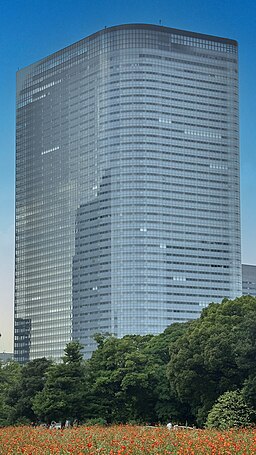
Dentsu Building
The Dentsu Building: A Towering Symbol of Modern Tokyo
Rising proudly along the waterfront of the Shiodome district in Tokyo, the Dentsu Building is not just an architectural landmark, but a reflection of Japan’s economic resurgence, innovation in high-rise engineering, and the evolving nature of urban workspace design. Designed by renowned French architect Jean Nouvel and completed in 2002, this sleek skyscraper serves as the headquarters of Dentsu Inc., one of the world’s largest advertising and public relations companies. Beyond its commercial purpose, the Dentsu Building has become an iconic piece of Tokyo’s skyline and an exemplar of sustainable, cutting-edge construction in densely packed urban environments.
Architectural Concept and Design
The Dentsu Building was born from a vision to integrate modern architectural minimalism with environmental sensitivity. Jean Nouvel’s design utilizes clean, streamlined forms that harmonize with the Shiodome area’s mix of postmodern and glass-and-steel towers. The building’s east-facing curved façade, lined with glass panels, gracefully follows the bend of the nearby railway tracks and Tokyo Bay shoreline, establishing a dialogue between the structure and its urban context.
One of the primary goals of the design was to allow as much natural light into the building as possible while minimizing heat gain. This is achieved through the use of high-performance glass and louvers that shade the interior without blocking views of the cityscape. The result is a structure that is not only visually stunning but also energy-efficient.
Structural Specifications and Technical Parameters
- Building Name: Dentsu Building
- Location: 1-8-1 Higashi Shimbashi, Minato-ku, Tokyo, Japan
- Architect: Jean Nouvel
- Structural Engineer: Takenaka Corporation
- Owner/Developer: Dentsu Inc.
- Main Contractor: Obayashi Corporation
- Completion Date: December 2002
- Primary Use: Commercial offices (Dentsu HQ), retail
- Total Floors: 48 floors above ground, 5 below ground
- Total Height (Architectural): 213.34 meters (700 feet)
- Roof Height: 213.34 meters
- Floor Area: Approximately 160,000 square meters (1,722,226 square feet)
- Footprint: Around 12,000 square meters
- Construction Type: Reinforced concrete and steel composite structure
- Elevators: 70 high-speed elevators, including shuttle and local types
- Foundation Type: Pile foundation system with seismic isolation base structures
Advanced Engineering Features
The Dentsu Building’s structural design was shaped not only by aesthetic considerations but also by Japan’s stringent seismic safety codes. Tokyo lies in a seismically active region, and the building incorporates several critical systems to enhance earthquake resilience:
- Seismic Isolation: The building is equipped with base isolation mechanisms, including laminated rubber bearings and viscous dampers, which significantly reduce the transmission of seismic energy to the superstructure.
- Steel-Reinforced Concrete Core: A massive central core constructed with steel-reinforced concrete provides lateral stiffness, while the perimeter column system absorbs bending forces during seismic activity.
- Wind Load Management: Due to its height and location near Tokyo Bay, the structure was designed to handle high wind loads, using advanced wind tunnel testing and aerodynamic shaping.
The building also includes a sophisticated building management system (BMS) that integrates fire safety, HVAC, energy use, and security into a single digital platform.
Sustainable Design and Green Features
Though constructed before the green building movement became mainstream, the Dentsu Building features several sustainability-forward systems that were ahead of their time:
- Double-skin façade: In some sections, the building features a passive double-glass skin that creates a thermal buffer zone, reducing the need for mechanical heating and cooling.
- Rainwater harvesting: The building has systems to collect and recycle rainwater for non-potable uses, such as toilet flushing and irrigation of rooftop gardens.
- Energy efficiency: High-efficiency lighting, motion sensors, and climate control systems were integrated throughout to reduce energy consumption.
- Natural ventilation: In specific areas, the design allows for controlled natural ventilation, reducing reliance on mechanical air conditioning.
These environmentally conscious features made the Dentsu Building one of Tokyo’s early adopters of sustainable commercial architecture and paved the way for future green developments.
Interior Design and Layout
The interiors of the Dentsu Building reflect its modern and forward-thinking ethos. With over 160,000 square meters of floor area, the office layout is open-plan with modularity in mind, allowing Dentsu to accommodate different departments, collaborative teams, and client-facing areas under one roof.
Key aspects of the interior design include:
- Sky gardens and atriums: Several sky lounges and internal gardens break the monotony of glass and steel, offering green spaces for employees to relax and interact.
- Flexible meeting spaces: Designed to support creativity and collaboration, meeting rooms of various sizes are dispersed throughout the building, many of which include floor-to-ceiling windows with panoramic city views.
- Retail and public space: The lower levels include retail outlets, restaurants, and cafés, contributing to the building’s integration with the surrounding urban landscape.
- Art installations and cultural integration: Dentsu, being a creative company, has incorporated various art installations within the lobby and public spaces, reinforcing the building’s cultural relevance.
Role in Urban Redevelopment
The Dentsu Building was a cornerstone project in the transformation of Shiodome, a former railway yard turned into a model of Tokyo’s 21st-century urban planning. The redevelopment turned a neglected post-industrial zone into a high-density, mixed-use area with ultra-modern infrastructure. As one of the tallest buildings in the district, the Dentsu Building serves as a visual anchor and symbol of the area’s revitalization.
Moreover, its proximity to transportation hubs such as Shimbashi Station and its connection to underground pedestrian networks makes it a highly accessible workplace, aligning with Japan’s emphasis on transit-oriented development.
Legacy and Cultural Significance
The Dentsu Building is more than just a corporate headquarters; it’s a symbol of Japan’s corporate modernization and international design sophistication. It represents the fusion of Japanese engineering excellence with global architectural trends. By collaborating with Jean Nouvel, Dentsu demonstrated a commitment not only to functionality but also to aesthetic and environmental responsibility.
The building has also featured in various media and architectural studies, often cited as a textbook example of skyscraper design that balances context, technology, and corporate identity.
Conclusion
The Dentsu Building stands as a masterwork of early 21st-century architecture, embodying innovation, sustainability, and resilience in the heart of Tokyo. From its earthquake-resistant foundation to its elegant glass façade and environmentally conscious systems, every aspect of the building reflects thoughtful engineering and design. It is not only a home to one of Japan’s most powerful companies but also a benchmark for how skyscrapers can shape and elevate the identity of a city. Whether viewed from across Tokyo Bay or from within its refined interiors, the Dentsu Building continues to impress, inspire, and influence the future of urban architecture.
