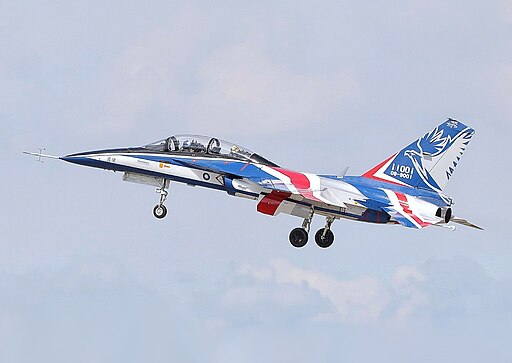
AIDC T-5 Brave Eagle
The AIDC T-5 Brave Eagle marks a pivotal step in Taiwan’s pursuit of self–reliant aerospace innovation. Developed by the Aerospace Industrial Development Corporation (AIDC), this next–generation advanced trainer is designed to bridge the gap between basic flight instruction and the high–performance requirements of modern combat aircraft. With its blend of agile aerodynamics, a sophisticated digital cockpit, and optional light–combat capabilities, the T-5 Brave Eagle is set to become a cornerstone in pilot conversion training and mission simulation.
By integrating cutting–edge materials, advanced propulsion systems, and state–of–the–art avionics, the T-5 not only trains pilots in the fundamentals of high–performance jet operations but also familiarizes them with contemporary tactical systems and weapons integration. Its dual–role capability—serving both as a high–performance trainer and a potential light attack platform—underscores its strategic value in a rapidly evolving aerospace environment.
Development and Design Philosophy
Historical Context and Rationale
In recent years, the Republic of China (Taiwan) recognized the critical need for an advanced training platform that reflects the performance dynamics of modern fighter aircraft. Traditional trainer jets were beginning to show limitations in replicating the maneuvering, avionics, and mission complexities found in today’s operational airframes. In response, AIDC initiated the development of the T-5 Brave Eagle under a philosophy that emphasized indigenous innovation, cost–effectiveness, and long–term adaptability.
This initiative was driven by several strategic imperatives:
- Modernization of Training: To shorten the conversion time for young pilots transitioning to front–line combat aircraft through exposure to high–fidelity flight characteristics.
- Technological Sovereignty: To reduce dependence on foreign platforms by developing an advanced trainer that could evolve in tandem with Taiwan’s growing aerospace industry.
- Dual–Role Capability: To provide a versatile platform that supports both pilot training and limited combat operations under contingencies, thereby maximizing resource utilization.
Core Design Innovations
The design of the T-5 Brave Eagle is grounded in several core tenets that aim to meet today’s demanding flight training and tactical simulation requirements:
- Optimized Aerodynamics: The airframe is sculpted using modern composite materials and refined shapes to reduce drag and enhance maneuverability. Advanced computational simulations and wind tunnel tests have resulted in a design that offers a balanced lift-to–drag ratio across varying flight regimes—from low–speed stalls to high–speed passes.
- Integrated Digital Fly–by–Wire System: A digital flight control system seamlessly translates pilot inputs into precise aerodynamic responses. This fly–by–wire system not only improves handling under high–G maneuvers but also provides inherent safety and stability during training missions, easing the learning curve for novice pilots.
- Modular Avionics Architecture: The T-5 Brave Eagle’s cockpit incorporates state–of–the–art multifunction displays, digital communication systems, and modular sensor arrays. This design allows for incremental upgrades and ensures compatibility with emerging technologies, keeping the platform relevant over an extended service life.
- Optional Combat Integration: While its primary role is training, the T-5’s design accommodates weapon integration. Optional hardpoints for air-to-air and air-to-ground munitions mean that brave eagles can simulate combat engagements or even serve as a light attack asset when required.
These innovations collectively contribute to an aircraft that not only meets modern training requirements but also offers a glimpse into future tactical flexibility.
Technical Specifications
A detailed examination of the T-5 Brave Eagle’s technical specifications highlights the meticulous engineering underlying its design. The following sections break down its key parameters.
Airframe and Dimensions
The airframe of the T-5 is optimized for agility, safety, and operational efficiency. Its dimensions are carefully calibrated to achieve a balance between performance and payload capacity for training and optional combat modules.
| Parameter | Specification | Comments |
|---|---|---|
| Crew | 2 (Tandem: Instructor and Student) | Dual–seat configuration enhances in–flight instruction and safety. |
| Length | ~12.0 m (39.4 ft) | A streamlined fuselage reduces aerodynamic drag. |
| Wingspan | ~9.0 m (29.5 ft) | Compact wings improve maneuverability during high–G turns. |
| Height | ~3.8 m (12.5 ft) | Low–profile design minimizes radar signature and drag. |
| Wing Area | ~20 m² (215 ft²) | Provides stable lift over a wide range of speeds. |
| Empty Weight | ~3,000 kg (6,614 lbs) | Lightweight construction through composite materials. |
| Maximum Takeoff Weight | ~6,000 kg (13,228 lbs) | Capacity to carry extra fuel, training instrumentation, and optional combat stores. |
These dimensions ensure that the T-5 remains nimble in training scenarios while offering sufficient structural integrity for dynamic maneuvers and potential combat operations.
Engine and Propulsion
At the heart of the T-5 Brave Eagle is a modern propulsion system that combines efficiency with high–performance output. The single afterburning turbofan engine is engineered to deliver the thrust necessary for rapid acceleration, high–speed dashes, and realistic fighter–like behavior.
| Parameter | Specification | Comments |
|---|---|---|
| Engine Type | Single afterburning turbofan | Modern, high–efficiency engine suitable for advanced jet trainers. |
| Thrust | ~7,200 lbf (approximately 32 kN) | Enables strong acceleration and the ability to simulate fighter–like speed profiles. |
| Maximum Speed | Approx. Mach 1.1 (around 1,150 km/h) | Offers supersonic capability in afterburner mode for advanced training. |
| Cruise Speed | ~750 km/h | Optimized for extended mission profiles without excessive fuel burn. |
| Stall Speed | ~220 km/h | Designed for safe handling during takeoff and landing. |
| Rate of Climb | ~45 m/s | Ensures rapid altitude gain, crucial for high–performance maneuvers. |
| Service Ceiling | ~15,000 m | Provides a high operating altitude in training and tactical simulations. |
| Range | ~1,600 km (with auxiliary fuel tanks) | Supports long-duration missions and extended training sorties. |
These propulsion parameters equip the T-5 with the ability to replicate real–world combat environments, helping pilots train for high–intensity situations.
Avionics and Flight Instruments
The T-5 Brave Eagle’s cockpit is designed to meet modern digital standards while remaining intuitively accessible to student pilots. Its avionics suite integrates multiple subsystems for a comprehensive flight experience.
- Digital Flight Control: A fly–by–wire system processes pilot inputs and adjusts control surfaces in real time, enhancing handling precision and minimizing pilot workload during strenuous maneuvers.
- Glass Cockpit Displays: Multi–function LCD panels provide real–time data on airspeed, altitude, engine performance, and navigation. The digital interface supports scenario simulation, giving trainees exposure to mission–oriented displays found in front–line fighter jets.
- Navigation and Communication Systems: An integrated suite of communication radios, GPS, and VOR receivers, coupled with data–link capabilities, facilitates seamless interaction with ground control and other aircraft in tactical formations.
- Health Monitoring and Diagnostics: The aircraft continuously monitors critical parameters such as engine temperature, fuel consumption, and structural stress. Automated alerts ensure that maintenance crews and pilots are aware of any deviations from safe operational limits.
Armament and Mission Flexibility
While primarily a trainer, the T-5 Brave Eagle is designed with future growth in mind. Optional weaponization provides flexibility to exercise combat training scenarios and even conduct limited light attack missions.
| Parameter | Specification | Comments |
|---|---|---|
| Internal Gun | Optional 20 mm cannon | Provides close–range firepower for tactical simulation and training engagements. |
| External Hardpoints | Up to 6 hardpoints (configurable) | Designed to carry a mix of air–to–air missiles, air–to–ground rockets, or precision bombs, depending on mission requirements. |
| Maximum Payload | ~1,200 kg (variable configuration) | Flexibility to tailor loadouts for different training or light combat roles. |
This dual–role design philosophy not only enhances the training experience by familiarizing pilots with combat systems but also offers strategic versatility in times of heightened operational demand.
Performance and Handling Characteristics
Aerodynamic Efficiency
The T-5’s aerodynamic configuration has been optimized through advanced computational modeling and wind tunnel testing. Its refined wing geometry and streamlined fuselage contribute to low drag and high maneuverability across multiple flight regimes. These features are critical during both basic flight training and high–performance maneuvers such as rapid climbs, abrupt directional changes, and sustained high–G turns.
Handling and Safety
A key focus during the T-5’s design was ensuring forgiving handling characteristics alongside responsive performance:
- Predictable Stall Behavior: The training aircraft is engineered so that stalls occur in a controlled manner, allowing pilots to recover safely while learning critical low–speed management.
- Robust Structural Integrity: Reinforced airframe components and modern composite materials provide both strength and durability, ensuring that the aircraft withstands the stresses of high–G maneuvers and repeated training cycles.
- Redundant Safety Systems: Multiple backup systems in the flight control and avionics suites provide critical fail–safe responses during emergency scenarios, further enhancing pilot safety and confidence.
Operational Role and Strategic Impact
Advanced Pilot Training
The primary mission of the AIDC T-5 Brave Eagle is to serve as an advanced trainer that prepares pilots for the complex challenges of modern air combat. It achieves this by:
- Simulating Real–World Combat Scenarios: The T-5’s performance characteristics, digital avionics, and optional weapons integration allow instructors to design training exercises that mirror the operational environment of tactical fighter jets.
- Enhancing Transitional Training: By bridging the gap between basic flight instruction and high–performance jet operations, the T-5 reduces conversion time and better prepares pilots for next–generation combat aircraft.
- Developing Tactical Proficiency: Advanced mission–oriented displays and integrated communication systems provide a realistic simulation of air–to–air and air–to–ground operations, honing the tactical acumen of trainee pilots.
Dual–Role Flexibility and Future Potential
Beyond its role in pilot training, the convertible nature of the T-5 Brave Eagle offers exciting possibilities:
- Light Combat Capability: The ability to integrate offensive systems on the T-5 provides an additional layer of operational flexibility. In contingency scenarios, the aircraft may perform limited ground attack or reconnaissance missions.
- Test Bed for Emerging Technologies: The modular avionics and upgradeable flight systems ensure that the T-5 can serve as a technological demonstrator, allowing the incorporation of next–generation sensors, weapons, and communication systems over its service life.
- Cost–Effective Operational Platform: By combining advanced training capabilities with optional combat modules, the T-5 delivers enhanced versatility while maintaining economic efficiency—a critical factor for future defense planning.
Legacy and Future Prospects
Advancing Indigenous Capabilities
The AIDC T-5 Brave Eagle is more than just a trainer—it is a symbol of Taiwan’s growing expertise in aerospace design and engineering. Its development represents a strategic shift towards self–sufficiency in military aviation and sets a benchmark for future indigenous aircraft projects.
Influence on Future Aircraft Development
With its state–of–the–art design and modular approach, the T-5 is poised to influence not only training protocols but also the development of next–generation multirole combat aircraft. Its success will likely inspire iterative improvements and spawn further innovations in both aerodynamics and systems integration, reinforcing Taiwan’s position within the current global aerospace arena.
Conclusion
The AIDC T-5 Brave Eagle embodies the convergence of advanced technology, innovative design, and strategic foresight. As an advanced trainer engineered for both pilot conversion and potential light combat roles, it sets new standards in performance, safety, and adaptability. From its streamlined airframe and robust propulsion system to its modern digital cockpit and flexible weapons integration, every facet of the T-5 has been meticulously designed to meet the demands of modern aerial warfare training.
As the platform enters service and evolves through future upgrades, its legacy will extend far beyond the training cockpit—shaping the future of indigenous aircraft design while ensuring that the next generation of pilots is well–equipped to face the challenges of tomorrow’s skies.
.jpg)