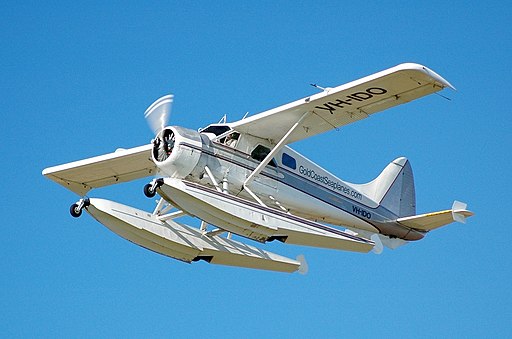
de Havilland Canada DHC-2 Beaver: The Iconic STOL Workhorse
Few aircraft evoke the spirit of bush flying like the DHC-2 Beaver. Since its first flight in 1947, this high-wing, single-engine marvel has hauled freight, floated down remote rivers and carried prospectors to uncharted mountain strips. Rugged, reliable and oh-so-adaptable, the Beaver remains a living legend in utility aviation.
Design & Development
Genesis & Design Goals
De Havilland Canada set out to build an aircraft that could
- Lift heavy loads into short, rough fields
- Withstand minimal maintenance in the wilderness
- Switch seamlessly between wheels, skis or floats
Building on lessons from the Tiger Moth and Noorduyn Norseman, engineers stretched the cabin, beefed up the wing structure and specified a powerful radial engine for instant thrust on takeoff.
Airframe & Construction
- Wing: High-lift Gull-wing design with full-span slotted flaps and large ailerons for superb low-speed control.
- Fuselage: Welded steel-tube center section with aluminum-clad monocoque tailboom; rugged enough for remote repairs.
- Empennage: Fabric-covered rudder and elevators on a duralumin frame, built for corrosion resistance.
Every structural joint is designed for easy inspection and field-repair, so mechanics armed with basic tools and sheet aluminum can keep Beavers flying where no hangar exists.
Powerplant & Performance
Engine Options & Upgrades
- Standard: Pratt & Whitney R-985 Wasp Jr. radial, 450 hp, renowned for torque and simple overhaul procedures.
- Modern Conversions: PT6A-34 turboprop upgrades (600–650 shp) delivering higher cruise speeds, better hot-and-high performance and longer TBOs.
Performance Metrics
| Parameter | R-985 Radial | PT6A Turbo Otter |
|---|---|---|
| Cruise Speed (@65% Power) | 125 kt (232 km/h) | 145 kt (269 km/h) |
| Stall Speed (Flaps Down) | 35 kt (65 km/h) | 37 kt (69 km/h) |
| Takeoff Ground Roll | 200 ft (61 m) | 160 ft (49 m) |
| Landing Ground Roll | 220 ft (67 m) | 180 ft (55 m) |
| Rate of Climb | 1,220 ft/min | 1,600 ft/min |
| Service Ceiling | 18,000 ft | 20,000 ft |
| Range (45 min reserve) | 455 nm (842 km) | 525 nm (972 km) |
Its legendary short-takeoff ability—borne from the slotted flaps and potent radial—means a loaded Beaver can clear a 50 ft obstacle in under 400 ft of runway.
Landing Gear & Configurations
Wheels, Skis & Floats
- Wheels: Fixed tailwheel with low-pressure tundra tires for gravel bars and bush strips.
- Skis: Straight or amphibious ski sets for winter operations, easily swapped in a day.
- Floats: Straight-float or amphibious-float kits by Edo or Wipaire, turning lakes into runways.
Modular attachment points let operators reconfigure landing gear on the ramp, maximizing utilization across seasons and terrains.
Cockpit & Avionics
Layout & Ergonomics
Pilots step into a wide-cabin cockpit with excellent visibility over the nose and outboard windows to monitor floats or skis. Seats slide longitudinally up to 20 cm; rudder pedals adjust to pilots of varying heights.
Avionics Suite
- Basic VFR: Steam gauges, dual 8.33 kHz comms, standby magnetic compass.
- Glass Upgrade: Garmin G500 TXi or Aspen Evolution with synthetic vision, ADS-B In/Out and autopilot options.
- Bush Accessories: Weather-proof handheld radio mounts, portable ELTs and cargo-floor-mounted winch controls.
Side panels conceal wiring looms, simplifying future avionics swaps without structural modifications.
Dimensions & Technical Specifications
| Parameter | Specification |
|---|---|
| Wingspan | 48 ft 0 in (14.63 m) |
| Length | 30 ft 3 in (9.22 m) |
| Height | 9 ft 8 in (2.95 m) |
| Wing Area | 385 ft² (35.8 m²) |
| Empty Weight | 2,150 lb (975 kg) |
| Maximum Takeoff Weight | 5,100 lb (2,313 kg) |
| Useful Load | 2,950 lb (1,338 kg) |
| Fuel Capacity | 110 US gal (417 L) |
| Cabin Volume | 110 ft³ (3.12 m³) |
Operational Roles & Use Cases
Bush Flying & Remote Access
The Beaver thrives where runways vanish, hauling
- Cargo pallets to mining camps
- Scientific teams to polar research stations
- Photographers over glacier fields and canyons
Its float-plane variant transforms lakes into highways, while tundra tires tackle gravel bars.
Commercial & Leisure Applications
- Sightseeing: Spacious cabin and big windows make glacier or canyon flights unforgettable.
- Skydiving: Rapid climb and a cavernous cargo door speed up jump cycles.
- Aerial Survey: Slow-flight stability and low-vibration ride lend themselves to mapping and photography.
Maintenance & Logistics
Inspection Intervals
- 50-hour: Oil, filter, propeller and brake check
- 100-hour/Annual: Airframe rigging, torque checks on wing roots, engine run-up
- 300-hour: Radial engine top-end inspection; turboprops follow hot-section schedule
Cost of Ownership
Radial Beavers average $180–$220/hour in direct costs; PT6A conversions tighten that to $160–$190/hour thanks to longer TBOs and fuel efficiency. Parts are plentiful through de Havilland Canada’s legacy support network and third-party specialists.
Pilot’s Perspective: Handling Characteristics
In the left seat, you feel the rush of torque as the radial spools up. Taxiing on floats feels balanced; liftoff is a firm shove, and the bird climbs like a freight train escaping its shackles. In the pattern, stall buffet arrives early, with the wing settling predictably. Down low, its docile manners and prodigious ground-effect help nail tricky river landings or alpine strips.
Variants & Modernizations
- DHC-2 Mk 1–6: Incremental changes in structural fittings and instrumentation.
- Hot-Rod Beavers: Experimental PT6A-20 and PT6A-27 re-engines pushing over 700 shp.
- Avionics Remanufacture Projects: OEM-style factory-reman panels with EFIS, WAAS GPS and digital autopilots.
Legacy & Continuing Influence
The Beaver established STOL as a design discipline. Its DNA lives on in aircraft like the Quest Kodiak and Viking Air’s Twin Otter series. More than 1,600 airframes were built, and hundreds remain active—testimony to a design born for extremes yet endlessly adaptable.
.jpg)