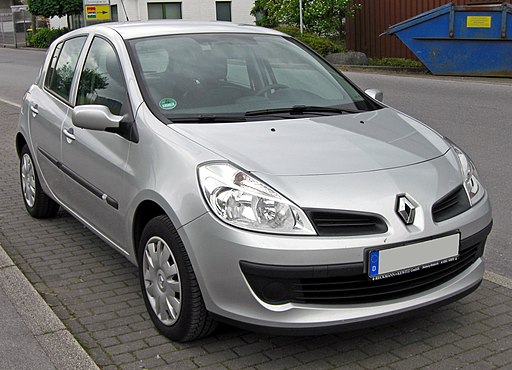
Renault Clio faults
Engine and Emissions
Diesel Particulate Filter (DPF) Clogging
Short urban trips stop the DPF reaching regeneration temperature. Soot builds up, triggering repeated forced-regens, reduced power and warning lights. Professional cleaning or replacement is often required once the ECU ceases regeneration cycles.
EGR Valve Carbon Build-Up
Low-speed driving leaves carbon deposits around the EGR pintle, causing rough idle, loss of mid-range torque and persistent check-engine warnings. Cleaning or replacing the valve and cooler restores performance.
Turbocharger Wear and Oil-Feed Blockages
On turbo-diesel (dCi) and turbo-petrol (TCe) engines, oil coking in the feed line starves the bearings. Early symptoms are slow boost response, high-pitched whine and blue smoke. In severe cases the turbine seizes, spraying debris through the intake.
Ignition Coil and Spark-Plug Failures
Petrol Clios often develop misfires, hesitation or hard starting due to ageing coils and worn spark plugs. Cylinders cut out under load, the engine rattles at idle and fault codes (P0300-series) appear. Coil-pack replacement cures the pulsing.
Transmission and Clutch
Dual-Clutch EDC Jerking and Hesitation
The EDC gearbox can snatch, hesitate on take-off or deliver harsh up-shifts if fluid changes are overdue or the mechatronic valve body wears. A fluid and filter service can help, but valve-body rebuilds or software updates are sometimes necessary.
Clutch Slippage and Contamination
High-torque diesel models occasionally show clutch slip under load. Oil leaks from the crankshaft seal or gearbox vent can contaminate the friction plate, producing a burning smell and rising revs without acceleration. Full clutch-and-seal replacement is the fix.
Manual-Gear Shift-Cable Wear
Stretching or fraying of the shift cables creates a vague, imprecise lever feel. Difficulty engaging gears—especially reverse—or popping out of gear indicates worn cables or linkage bushings, which must be renewed for crisp shifts.
Electrical and Electronics
BSI Module and Fuse-Box Water Ingress
Clogged sunroof or door drains allow rainwater into the under-dash electronics. Symptoms include random warning lights, central-locking failures and intermittent no-start conditions. Rerouting drains and replacing/refurbishing the BSI cures most gremlins.
Immobiliser and ECU Glitches
Faulty antenna rings or cracked ECU capacitors can cut the communication between key-fob and engine control unit, preventing start or causing stalls. Sometimes a reflashing or full ECU swap is required.
Sensor Failures and Wiring Abrasion
MAF, ABS wheel-speed and coolant-temperature sensors foul or corrode, triggering limp-home mode. Exposed engine-bay loom sections can chafe through their insulation, causing sporadic open-circuit faults that mimic sensor failures.
Infotainment and Climate-Control Faults
Touchscreen freezes, erratic Bluetooth pairing or unresponsive HVAC controls are often traced to wiring harness faults behind the dash or aged control modules. Module reflashes or harness repairs restore full function.
Suspension and Steering
Anti-Roll Bar Links and Bush Wear
After 80 000–100 000 km, front drop-links and rubber bushes harden or crack, leading to clunks over bumps and uneven tyre wear. Replacing the links and bush kits removes noise and improves cornering precision.
Shock Absorber Leaks and Mount Fatigue
Rattles or a harsh ride on rough surfaces point to failed dampers or collapsed top mounts. Leaking oil and worn mounts reduce ride comfort and wheel control; damper and mount replacement is recommended.
Power-Steering Pump Whine and Leaks
A whining noise at full lock and sudden loss of assistance often indicate pump bearing wear or cracked high-pressure hoses. Low fluid levels accelerate rack wear, so hose renewal and fluid top-up are critical.
Brakes and Safety
ABS Sensor and Tone-Ring Corrosion
Wet climates corrode ABS sensor heads and reluctor rings, causing intermittent anti-lock and traction-control lights. Fitting sealed-type sensors and treating tone rings with anti-rust coatings restores reliable ABS function.
Brake-Pad Wear Sensor Errors
Faulty wear-sensor wires on front pads trigger false dash alerts. Replacing both pads and new sensor leads stops erroneous warnings and ensures accurate pad-change reminders.
Caliper Seizure and Uneven Pad Wear
Corroded caliper pistons or sliders cause dragging brakes, premature pad wear and elevated fuel consumption. Caliper rebuild or replacement and new flexible hoses restore braking balance.
Body and Interior
Door-Handle and Latch Breakage
Plastic-reinforced handles and latch mechanisms in the rear doors can crack with age, making doors difficult to open. Aftermarket handle assemblies or donor-part swaps cure the issue.
Sunroof and Door-Seal Leaks
Blocked drains around panoramic roofs or worn door seals lead to water ingress in the footwells and BSI area. Clearing drain channels and fitting fresh seals prevents damp carpets and electrical faults.
Instrument-Cluster Pixel Failure
On high-mile Clios, sections of the digital display dim or drop out entirely. Cluster refurbishment or full-unit replacement restores visibility of speed, fuel and warning indicators.
Window-Regulator Cable Fraying
Especially on MK3 and MK4 models, front-window cables snap or jump off their drum, jamming the glass. Wholesale regulator units from specialists or recycled parts solve the problem and return smooth operation.
Renault Clio as a used car
The Renault Clio has been a benchmark in the supermini segment since its debut in 1990. Blending dynamic styling, agile handling and efficient powertrains, it appeals to first-time buyers and seasoned motorists alike. As a used-car choice, the Clio offers robust mechanicals, varied trim levels and economical running costs. This article outlines its evolution, technical specifications and key considerations for those exploring the second-hand market.
Model Generations
First Generation (1990–1998)
The original Clio introduced Renault’s new design language with rounded headlights and a cable-operated parking brake. Available as a three- or five-door hatch, it featured 1.2- to 1.8-litre petrol engines alongside a 1.9-litre diesel. Basic interiors were practical, with sturdy plastics and intuitive switchgear.
Second Generation (1998–2005)
Renault refined the Clio’s chassis for sharper handling and upgraded its cabin materials. Engine choices expanded to include a 2.0-litre 16-valve petrol and a common-rail 1.5-litre dCi diesel. Performance fans welcomed the RenaultSport variants, delivering up to 172 PS in the Clio V6.
Third Generation (2005–2012)
A more sculpted exterior and improved crash protection defined this update. The engine lineup consisted of 1.2 PureTech petrols and 1.5 dCi diesels with power outputs from 75 PS to 106 PS. A dual-clutch EDC transmission debuted on hot-hatch models and higher-spec trims.
Fourth Generation (2012–2019)
Built on a new platform, this Clio offered refined ride quality and weight savings. Turbocharged 0.9 TCe and 1.2 TCe petrol engines joined an uprated 1.5 dCi. Interiors featured touchscreen infotainment, customizable ambient lighting and advanced driver-assist systems.
Fifth Generation (2019–Present)
The latest Clio blends crossover cues with hatchback practicality. Powertrains include a mild-hybrid 1.0 TCe, a 1.3 TCe petrol and a 1.5 Blue dCi diesel. Higher trims boast digital instrument clusters, adaptive cruise control and semi-autonomous parking aids.
Engine and Transmission Options
Petrol Engines
- 0.9 TCe 90 PS: three-cylinder turbo with 135 Nm, 5-speed manual
- 1.2 TCe 100 PS: naturally aspirated four-cylinder with 205 Nm, 6-speed manual
- 1.2 TCe 130 PS: turbo four-cylinder with 240 Nm, 6-speed manual or 7-speed EDC
- 1.6 TCe 200–220 PS: featured in RenaultSport models, paired with a mechanical limited-slip differential
Diesel Engines
- 1.5 dCi 75 PS: entry-level diesel with 180 Nm, 5-speed manual
- 1.5 dCi 90 PS: improved torque to 200 Nm, 6-speed manual
- 1.5 dCi 110 PS: mid-range diesel with 260 Nm, 6-speed manual
Hybrid and Electric
- 1.6 E-TECH Hybrid 140 PS: petrol engine plus two electric motors, multi-mode automatic
- Clio EV Prototype: under development with a 40 kWh battery, WLTP range projected around 300 km
Technical Specifications
| Specification | 1.2 TCe 100 PS (4th Gen) | 1.5 dCi 90 PS (4th Gen) | E-TECH Hybrid 140 PS |
|---|---|---|---|
| Displacement | 1 197 cm³ | 1 461 cm³ | 1 598 cm³ + electrics |
| Power Output | 100 PS @ 4 900 rpm | 90 PS @ 3 750 rpm | 140 PS combined |
| Peak Torque | 205 Nm @ 2 000 rpm | 200 Nm @ 1 750 rpm | 300 Nm combined |
| Transmission | 6-speed manual | 6-speed manual | Multi-mode automatic |
| 0–100 km/h | 10.9 s | 14.2 s | 9.9 s |
| Top Speed | 180 km/h | 170 km/h | 185 km/h |
| WLTP Combined Consumption | 5.0 L/100 km | 3.7 L/100 km | 4.8 L/100 km equiv. |
| CO₂ Emissions | 112 g/km | 98 g/km | 108 g/km equiv. |
| Dimension | Value |
|---|---|
| Length | 4 050 mm |
| Width (excl. mirrors) | 1 798 mm |
| Height | 1 440 mm |
| Wheelbase | 2 588 mm |
| Boot Volume (rear seats up) | 391 L |
| Boot Volume (seats folded) | 1 069 L |
| Fuel Tank Capacity | 45 L |
| Turning Circle | 10.4 m |
Interior and Practicality
Cabin Layout and Comfort
Clio cabins blend ergonomic design with quality finishes. Higher trims feature diamond-stitched seats, climate control and ambient lighting. Entry-level models retain durable fabrics, simplified HVAC knobs and a basic audio system.
Cargo Space
Generous boot volume suits daily errands and weekend trips. Split-folding rear seats provide flexible layouts for bicycles or garden supplies. Hidden under-floor storage trays add 15 L of concealed capacity.
Driving Dynamics and Refinement
Ride and Handling
Suspension tuning varies by generation: MacPherson struts up front and torsion-beam rear for standard models, multi-link setups on RenaultSport variants. Clio delivers sharp turn-in, minimal body roll and confident grip in corners.
Noise and Vibration
Modern Clios benefit from acoustic windshields and improved door seals. Engine noise remains muted at cruising speeds, though coarse tyres on sport trims introduce extra rumble over rough surfaces. Hybrid models excel in near-silent acceleration.
Common Wear Points and Faults
Diesel Clio models are prone to EGR valve clogging and DPF blockages in urban use. Early dual-clutch transmissions may jerk when cold and require fluid services every 60 000 km. Turbo-petrol engines can suffer carbon deposits on intake valves, leading to rough idle. Electrical concerns include aging ECU capacitors and sunroof drain leaks that affect BSI modules.
Maintenance and Buying Considerations
Inspection Checklist
- Verify timing-belt and water-pump replacement records at specified intervals
- Test dual-clutch transmission for hesitation on cold starts
- Operate sunroof drains by pouring water into gutters and checking footwells
- Scan for stored fault codes using an OBD-II tool
Service History Requirements
A complete service book with annual oil changes, filter replacements and brake-fluid flushes is essential. Clutch wear on high-torque variants and battery health reports for hybrids add confidence in purchase decisions.
Pricing and Market Value
Well-maintained fourth-generation Clios (2012–2019) with mid-range engines typically trade between €6 000 and €10 000. Hybrid models command a premium of 10 to 20 percent. Early-model Clios under €5 000 require careful inspection to avoid costly repairs.
Conclusion
A used Renault Clio combines economical running costs, engaging driving dynamics and adaptable cabin layouts. Prospective buyers should focus on full service histories, diligent inspection of known wear points and a thorough test drive. With attentive ownership, a Clio can deliver reliable motoring and appealing value for years to come.
