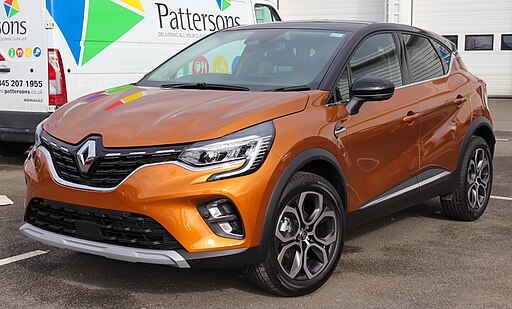
Renault Captur faults
Engine and Emissions
- Diesel particulate filter clogging Short urban journeys often prevent the DPF reaching full regeneration temperature. Soot builds up, triggering repeated forced-regens, loss of power, persistent warning lights, and ultimately requiring professional cleaning or replacement.
- EGR valve carbon build-up Low-speed driving leaves soot deposits on the EGR pintle, causing rough idle, loss of mid-range torque, and check-engine warnings. Cleaning or swapping the valve and associated coolers restores smooth running.
- Turbocharger wear and oil-feed restrictions On turbo-diesel and TCe petrol units, oil-coking in the feed line leads to slow boost response, high-pitched whine, blue smoke, and in severe cases turbo seizure. Regular oil changes and occasional feed-line inspections help prevent failure.
- Fuel-injector and high-pressure pump faults Leaking injector seals or a weakening HP pump manifest as hard starting, stuttering under load, black smoke, and limp-home mode. Injector replacement and fuel-system flushing are standard remedies.
Transmission and Clutch
- EDC (dual-clutch) jerky shifts Early Captur automatics with the EDC gearbox can exhibit judder, hesitation on take-off, or harsh up- and down-shifts. Mechatronic valve-body wear or low fluid levels often necessitate valve-body rebuilds or software updates.
- Manual shift-cable stretch and linkage wear Stretched or frayed shift cables give a vague lever feel and imprecise gear selection. In extreme cases you may be unable to engage certain ratios until the cables and bushings are renewed.
- Clutch slipping under load High-torque diesel variants sometimes suffer premature clutch wear or contamination from leaking crankshaft seals. Symptoms include rising revs without acceleration and a faint burning odor; full clutch and seal replacement cures the issue.
Electrical and Electronics
- Central-electronics (BSI) gremlins Water ingress behind the A-pillar or cracked capacitors inside the BSI module trigger random warning lights, dead key-fobs, or no-start conditions. Refurbished BSI units or rerouting of drainage channels are common fixes.
- Infotainment and HVAC control failures Faulty MediaNav and touchscreen units lose Bluetooth or navigation functions. Similarly, climate-control buttons can stop responding, often corrected by module reflashes or harness repairs.
- Battery drain and alternator wiring faults Parasitic draws from alarm modules or poorly routed alternator leads lead to flat batteries. Owners report no-start after a few days’ standing; inspecting fuse-box drains and rerouting alternator wiring cures the problem.
- Cracked wheel-hub assemblies Certain 2017 models suffered front-hub casting cracks, audible as abnormal knocking under load. Renault dealers replace affected hubs free of charge under recall campaigns.
Body, Seals, and Corrosion
- Panoramic-roof bonding defects Models with the Grand Captur panoramic glazing can experience adhesive failures, risking roof detachment. Inspect for bubbling sealant and test drains by pouring water into gutter channels.
- Door-seal and water-ingress issues Clogged side-door drains commonly flood footwells after heavy rain or pressure washes. Damp carpets and musty odors indicate clogged channels—clearing drains and resealing door frames prevents further leaks.
- Tailgate-handle rust and latch wear The rear handle area often develops surface corrosion, leading to latch binding or failure to open. Early wire-brush and touch-up paints stave off deeper rust; full latch replacements restore reliable function.
- Seat-belt-buckle bolts A 2018 recall covered missing or loose rear-belt-buckle bolts, risking occupant safety. Confirm with VIN check and have any loose fixings tightened or renewed by a dealer.
Suspension and Steering
- Anti-roll-bar link and bushing degradation After 80 000 km, front sway-bar drop links and rubber bushes harden and crack, causing pronounced clunks over bumps and uneven tyre wear. Polyurethane bush kits and OEM links restore quiet, precise handling.
- CV-joint clicking Worn outer CV-joints signal themselves by clicking or popping under sharp turns. Replacement gaiters and joints are a straightforward repair to prevent driveline damage.
- Power-steering pump whine and leaks Bearing wear in the pump or cracked high-pressure hoses produce a whining noise under lock and loss of assist. Prompt hose renewal and fluid replenishment protect the steering rack from premature wear.
Brakes and Safety
- Front-arch liners rubbing brake hoses On early-series Capturs, misrouted wheel-arch liners chafe hydraulic hoses, risking fluid leaks and spongy pedals. Repositioning liners and replacing damaged hoses eliminate the hazard.
- ABS sensor and tone-ring corrosion Wheel-speed sensors and their reluctor rings corrode in wet climates, causing intermittent ABS or traction-control warning lights. Fitting sealed-type sensors and anti-rust treatments on rings resolves the issue.
- Brake-pad wear sensors Erratic dash alerts stem from failed wear-sensor wires on front pads. Replacing both pads and sensors stops false warnings and ensures timely pad-change reminders.
Renault Captur as a used car
The Renault Captur blends compact footprint with SUV-inspired styling, making it perfect for urban adventurers and first-time buyers. Since its debut in 2013, Captur has combined elevated ride height, generous interior packaging and a range of efficient powertrains. As a used-car purchase, it offers strong value, versatile cabin layouts and proven mechanicals. This article examines its evolution, technical specifications and key considerations for prospective buyers.
Model Generations
First Generation (2013–2019)
Renault’s inaugural Captur sat on a shortened Clio platform, delivering playful design cues and a raised driving position. It featured 0.9-litre turbocharged petrol, 1.2-litre petrol and 1.5-litre dCi diesel engines. Customizable accents—including two-tone roofs, contrasting mirrors and hood stripes—helped Captur stand out in city traffic.
Second Generation (2019–Present)
The new Captur adopted the CMF-B small-car architecture, underpinning the latest Clio and Arkana. Dimensions grew slightly, boosting rear legroom and cargo volume. Powertrain upgrades introduced mild-hybrid and plug-in hybrid options, along with improved digital instrument clusters and advanced driver-assist features.
Engine and Transmission Options
Petrol Engines
- 0.9-litre TCe 90 PS: three-cylinder turbo delivering 135 Nm of torque, paired with a 5-speed manual
- 1.0-litre TCe 100 PS: naturally aspirated 4-cylinder producing 160 Nm, available with 6-speed manual
- 1.3-litre TCe 130 PS: turbocharged 4-cylinder offering 240 Nm, mated to 6-speed manual or 7-speed dual-clutch EDC
Diesel Engines
- 1.5-litre dCi 90 PS: four-cylinder common-rail unit with 220 Nm torque, 5-speed manual only
- 1.5-litre dCi 110 PS: uprated version pushing 260 Nm, offered with 6-speed manual for stronger midrange pull
Hybrid and Mild-Hybrid
- Captur E-Tech Hybrid: combines a 1.6-litre petrol engine with twin electric motors for 140 PS total, using a 5-speed automated gearbox
- Captur E-Tech Plug-In: adds a 9.8 kWh battery for 50 km pure-electric range, featuring a multi-mode automatic transmission
- Mild-hybrid (12 V) on TCe 100 PS: small battery system recovers energy under braking and smooths stop-start operation
Technical Parameters
| Specification | 0.9 TCe 90 PS | 1.3 TCe 130 PS (EDC) | 1.5 dCi 110 PS | E-Tech Hybrid 140 PS |
|---|---|---|---|---|
| Displacement | 898 cm³ | 1 332 cm³ | 1 461 cm³ | 1 598 cm³ + electrics |
| Power | 90 PS @ 5 000 rpm | 130 PS @ 5 500 rpm | 110 PS @ 4 000 rpm | 140 PS combined |
| Torque | 135 Nm @ 2 500 rpm | 240 Nm @ 1 600 rpm | 260 Nm @ 1 750 rpm | 205 Nm combined |
| Transmission | 5-speed manual | 7-speed dual-clutch | 6-speed manual | 5-speed automated |
| 0–100 km/h | 12.4 s | 9.9 s | 11.6 s | 10.9 s |
| Top Speed | 175 km/h | 205 km/h | 185 km/h | 180 km/h |
| Combined Consumption | 4.6 L/100 km | 5.4 L/100 km | 4.2 L/100 km | 4.8 L/100 km (hybrid) |
| CO₂ Emissions | 105 g/km | 123 g/km | 109 g/km | 109 g/km |
| Length × Width × Height | 4 122 × 1 778 × 1 566 mm | Same | Same | Same |
| Wheelbase | 2 606 mm | 2 606 mm | 2 606 mm | 2 606 mm |
| Boot Volume | 377 L (rear seats up) | 377 L | 377 L | 377 L |
| Fuel Tank / Battery | 45 L | 45 L | 45 L | 1.2 kWh battery + 45 L fuel |
Interior and Practicality
Cabin Comfort and Technology
Captur’s cabin marries soft-touch plastics with customizable color packets on doors and dashboard. Higher trims feature digital instrument clusters, 7- or 9.3-inch touchscreen with smartphone mirroring, wireless charging pads and ambient LED lighting. Seats offer ample bolstering and heat or ventilation in premium variants.
Cargo Space and Flexibility
- Standard boot: 377 litres behind rear seats, expandable to 1 235 litres with 60/40 split bench folded
- Sliding rear bench: adjusts fore and aft by 16 cm to trade legroom for cargo capacity
- Under-floor trays: 27 litres of hidden storage beneath the load floor
- Roof rails and optional tow bar: support bike racks or small trailers up to 1 200 kg
Driving Dynamics
Ride and Handling
Captur’s raised ride height and tuned suspension soak up city potholes while delivering stable cornering. Front MacPherson struts and rear torsion beam spring rates balance comfort and body control. Electric power steering offers weight consistency at low speed and returns adequate feedback on winding roads.
Noise and Refinement
Renault progressively improved noise insulation on later models. Door seals and acoustic windscreen reduce wind ingress, while thicker carpeting and bulkhead damping minimize road-noise intrusion. Hybrid variants stand out for silent electric launch and smooth transitions between power sources.
Used-Car Considerations
Common Wear and Faults
- Dual-clutch EDC jerks or hesitates below 20 °C if fluid changes are overdue
- Buried drain channels around the sunroof clog, leading to damp carpets and BSI gremlins
- Turbo-petrol models can show carbon buildup on intake valves, causing rough idle at low revs
- Rear bench slide rail jamming reported on high-mileage examples without lubrication
Maintenance History
A full documented service record should detail oil and filter changes every 12 000 km or annual intervals. Key items include:
- EDC transmission fluid refresh every 60 000 km
- Timing-chain inspection on 1.3 TCe units around 120 000 km
- Hybrid-system coolant and brake-fluid service on plug-in models
- Battery health checks for mild-hybrid and E-Tech variants
Safety Recall and Upgrades
Buyers should verify completion of any Renault safety campaigns for airbag wiring, seat-belt pre-tensioners and fuel-tank ventilation modifications. Optional upgrades like adaptive cruise, blind-spot warning or rear-view cameras can be checked for proper function.
Buying Tips
- Test-drive on cold mornings to reveal EDC transmission snatch or scuttle rattle
- Listen for high-pitched whine under boost—a sign of turbo bearing wear
- Move the sliding bench through its full travel to check for binding
- Drain-test the sunroof by pouring water into gutter entries and monitoring any footwell leaks
- Use a diagnostic scanner to read stored fault codes, even without dashboard warnings
Conclusion
As a used car, Renault Captur delivers fresh styling, adaptable interior space and a breadth of powertrains—from frugal diesels to electrified hybrids. Buyers focused on complete service history, careful inspection of known weak spots and a thorough test drive will unlock lasting enjoyment from this urban crossover. With attentive maintenance, a well-spec’d Captur remains a reliable and character-filled companion.
